Finding Your Tribe

Wanted – Running group.  Must be supportive and fun loving.  Willing to run early mornings and drink IPA beers after races.  Interested in exploring new routes and suffer through hot, humid days of summer.  Must be willing to sacrifice pace on occasion if group member needs company.  No runner left behind.

Running is very often a one person sport, especially when training for longer distance races.  During my half marathon training last year, I did 100% of the training runs alone.  Partly this was due to the fact that I don’t like the pressure of trying to run at someone else’s pace. I am a slower runner and when I try to run with others I often start to feel bad about myself because I can’t keep up.  I’ve found solace in music and meditation as I run, but it sure would be nice to run with others.  Definitely would make the miles go by faster.

This year as I get ready to begin training for the marathon, I’ve decided to try again to run with others.  Now, I just need to find my tribe – people who run at a pace similar to mine, or are willing to run with me regardless of pace.  I am a member of an online running club and love how supportive this group is.  When I ran my first half marathon, it was with this club.  We all met in the shadows of the steel stacks in Bethlehem, PA for a weekend of running events at the Runners World Festival.  These people were my phone and computer friends, none of which I had ever met in person prior to that weekend.  I must say it was slightly unnerving to attend an event with strangers, but I just knew it was going to be awesome.

Sub30 is a group of runners who share the goal of running a sub 30 minute 5K race.  But, it is so much more than just that.  It is a club that includes people from all over the country.  They share many goals, the most important of which is positivity.  The heart of the group is the ideal that we lift others up and no subber is ever left behind.  During my weekend at the Runner’s World Festival, this running club’s support was incredible to see and receive.  There were people pacing others, sacrificing any PR goals to support another to their goals.  There were people cheering at every race for anyone in the club, strangers or not.  And, there were people near the finish waiting to run in with members of the club, those last steps.  What a true testament this club is to the running community.  It was something so wonderful to experience in person.


With this club experience in mind, I decided this year to try to participate more in my local clubs.  I had joined two last year but never attended any of their group runs or events.  This week I attended my first group meet up with a local running club.  While everyone was friendly enough, I didn’t get the same feel as I did from the Sub30 group.  It just seemed like I went to this event to run alone leaving me wonder if I really needed to drive there to do that.  I will definitely give it another try though.  Perhaps on other evenings there will be others who run at a slightly slower pace.  The whole experience left me wishing my Sub30 crew lived closer and wondering why all clubs don’t embrace the same goals.

I have a second club that I’m a member of which is not quite as local.  It is in Manhattan and they meet up on Saturday mornings.  I get a really good feeling about this running club, but the location makes it more challenging for me to get to.  It’s hard to commit to driving in to Manhattan on Saturday mornings when I generally go to Queens to check in on my parents.  I’m trying to work out the logistics though because I’d love to see how this club operates.

I used to prefer to run solo, but recovering from these last two injuries have left me really struggling to regain my confidence.  I’m afraid of re-injuring myself each time I lace up.  I’m questioning my abilities as I struggle through what used to be so easy for me to do.  I’m wondering when running became so hard and how even though I ran with broken toes all winter I’ve lost so much conditioning.  I know that if I could find a good, supportive tribe I could regain my confidence.  The support of the running community is what I need now to push me through.  Running doesn’t have to be this hard and the energy of others will lift me up.

After struggling to keep up with my training schedule as my injury healed, I have finally decided I cant do this alone anymore.  It’s time I step outside my comfort zone and find a running club, or partner, that I can actually run with on a regular basis.  Going to the local meet up this week was the first step and even though it wasn’t amazing, it won’t be the last.

Do you have a local running club you run with?  How did you find your tribe?  I’d love to hear about how the power of this human connection impacted your journey.  Be sure to leave a comment below.


Breathing Easy

Anyone beginner runner knows that breathing can be extremely challenging at times.  With so many other things to think about, like pace and form, breathing shouldn’t be so hard.  This week’s training tip is one that has been helping me catch my breath on runs.

When you breathe through your chest, shallow breathing, you take in less oxygen.  It’s important to learn how to belly breathe, using your diaphragm, to increase intake of oxygen. To practice and learn how to engage in belly breathing, try this simple exercise:

  • Lie down on your back and place both hands on your belly.
  • Keep your upper chest and shoulders still.
  • Focus on raising your belly as you inhale. Feel it with your hands.
  • Lower your belly as you exhale.
  • Inhale and exhale through both your nose and mouth.

Once you feel the difference, practice this breathing standing, walking and then running.    It is hard when you are running, or gasping, so really practice the technique first in non running options.

My running coach told me to try and establish a breathing cadence, or pattern when running.  The easiest way for me to do this was to count my breathes in and out.  At first, I counted 1-2-3-4 on inhalation followed by 1-2-3-4 on exhalation.  I then tried to work my way up to 5 where I am currently.  Eventually I hope to get into a zone and not have to think so much about breathing.

Many people wonder about nose vs. mouth breathing during exercise.  While it would be wonderful to run like the wind and calmly breathe through my nose, that is not reality.  Reality is you get more oxygen when you breathe through your mouth, so why stress it.  Just breathe through your mouth and don’t complicate matters that don’t need complication.

Finally, when you are in the midst of a run, if you are gasping for air your pace is likely too fast.  Slow it down, catch your breath and continue at a comfortable pace.  Your breathing is a measure of your conditioning and it should develop and improve over time.  Continue to vary your workouts, practice your breathing techniques and gradually increase pace over time.

I hope this helps you breathe easy out on your run, or workout this week.  Give it and try and let me know if it helps.  Please share in the comments below.

Weakest Link

A consultant I work with professionally has stated, “As a District, you’re only as good as your weakest school.”  Clearly, his philosophy aligns with mine in that he’s saying we are meant to lift others up, rather than leaving them to struggle.    During my morning run I reflected on this as I thought about my body.  Surely this thinking could also somehow apply to my physical wellness.  Therefore, I began to think about how I am only as strong of a runner as my weakest link.

What are the weakest links in our bodies and how does leaving them to struggle impact our mindset?  I can tell you these weak links can have a huge impact on they physical body and the mindset.  Pain is never welcome in our training plans.  The constant struggle with it invites those negative voices to start yelling inside.  You’re never getting past this, you’ll always get hurt, blah, blah, blah.  Ignoring the problem clearly hasn’t worked for me.  Being proactive and wearing certain shoes has helped somewhat, but not enough to eliminate the struggle.  Warm up and rolling has also helped, but still I’m experiencing some swelling.  This leaves me thinking that it is indeed about strengthening that weak link – lifting it up to join the party.

This connection really helped me focus today as I’ve been experiencing pain and swelling in my ankle near the site of my peroneal tendon.  I’ve been getting super nervous about it too.   Thinking about the weakest link theory, I spent the morning researching ways to strengthen my weakest tendon.  Yes, I’ve been rolling and stretching after runs, but I’ve done little targeted strength training for this tendon.  As I sit her soaking my ankle in Epsom salt post run, I’m excited about the new plans.

I found some cool exercises on Youtube that are perfect for me.  They involve my foam roller, bands and Bosu. These are all tools I have in the house so I was able to get right to work today!  It’s amazing how having a plan has already lifted my spirits.  I’m feeling hopeful that I will get this in control and not reinjure the tendon.  I ran a little faster today and lighter.  Here’s my current plans for my ankles and feet.   If you are suffering with any issues, feel free to join the party.  I’ve got a feeling it’s going to be a good one.

Warm-Up

I’ve been doing the Silly Toes warm up for over a year now.  It most definitely helps me stay healthy in my feet and ankles.  It’s super quick and fun.  I never skip the warm-up no matter how late I am getting out.  My new addition is to do this every single day, whether I am running or not.  A quick way to start the day off right.  Here’s my running coach demonstrating it beautifully.

https://www.youtube.com/watch?v=dBMWMU29-zc


Strength Training

I plan to incorporate strength exercises daily. They are super quick and can be done before bed, or after a run. I can even do them in my office if need be. For the resistance band section, I put both feet in my resistance band (red).


Post Run

I’m adding this to my rolling sessions after each run. I already shared my rolling protocols for my feet/ankles, but definitely will be adding this. I already did it today.


Stretching

Three times a week, if not more, I can do these stretches. I already tried them today.


In addition to all of this, I currently do try to do yoga toes pose after each run.  I can try to up this to days I don’t run as well.  It is quite an intense pose, but one I’ve come to love.  I guess what doesn’t kill me does indeed make me stronger.


What’s your weakest link?  Can you create a plan today to strengthen and lift yourself up?Please share below if you’ve already done so, or plan to start.

Resources Used in My Routines

Foam Rolling

If you love going for a massage then this weeks tip is for you!  Investing in a foam roller can provide you with an affordable alternative to massage therapy.  Those round pieces of foam can deliver so many benefits of a deep tissue massage without the cost.  And, they are so easy to take with you just about anywhere.  I don’t leave home without mine when traveling.

Foam rolling is both dreaded and loved by so many.  It really is something you should add to your bag of tricks.  Foam roller exercises, also called myofascial release, are a form of massage that you can do before exercise to loosen up sore muscles and tight joints, or after a workout, to aid muscle recovery.  Personally, I only do it after I run and couldn’t imagine doing before.  I basically focus on my lower legs as that is the portion of my body I’ve had injuries.  I was not even able to do one roll without terrible discomfort when I first started.  I am up to 10 rolls with full body weight at this point.  It is a process that made me sweat profusely when I started.

My PT recommended learning how to foam roll correctly as it makes all the difference.  I spent time watching many youtube videos after he said that.  I also was sent a video by my running coach that was specifically targeted toward my needs.  I use the foam roller mostly for my lower legs to keep the tendons massaged and aid in recovery after runs.  I think I will continue this protocol long after I stop running, if I ever do.  Basically, I roll the front of my shins (that’s the part that took great effort to do) by putting my body weight on the roller just under my knee.  Sitting on the roller I roll forward and back 10 times.  When I started I couldn’t put my weight on it and I remember distinctly calling my coach and saying I could NOT do this as it hurt way too much.  She informed me that that showed just how much I NEED to do this.  I also focus on the spot on the back of my lower leg where my Achilles and Perineal tendons connect.  There is a spot where all the tendons intersect and I focus on that spot.   I also will roll and tight spots I feel on my body and there have been many.  My absolute favorite is to lay with the roller just under my neck.  You know that tight spot where your tension lives.  Such relief!

If you use a foam roller, please share your experience.  Please leave comments below.

Foam Roller I Use

TriggerPoint GRID Foam Roller with Free Online Instructional Videos, Original (13-inch), Black

My Coach’s Video

https://www.youtube.com/watch?v=wHh3XAGCwKU

Further Reading

https://www.masterofmuscle.com/us/top-7-benefits-of-foam-rolling-every-day/


Sunlight for Healthy Training

I am an early riser by choice.  It’s just a habit I’ve formed over the years and I’ve actually never set an alarm clock in my life.  My body just has a sleep cycle that’s developed over time.  I was super excited to read and learn that many experts are now highly recommending early morning, outdoor exercise for important health benefits. My early morning workout time is peaceful and now linked to improved health, how exciting is that. Just look at my morning view, this alone can improve my mood and make me so grateful to be alive.

945557_10207921566494919_5913263170657234849_n

Many people are now being found to be Vitamin D deficient, myself included.  I was pretty surprised when my doctor told me just how depleted my levels of Vitamin D were in lab testing.  She explained to me at the time that Vitamin D is critical for correct hormone function and brain health. Vitamin D deficiency has also been linked to many types of cancers including breast cancer.  I remember wondering if this deficiency had been a contributing factor of my mom’s Alzheimers disease.

When my doctor diagnosed this deficiency, I remember telling her that I really don’t spend a lot of time in the sun by choice.  While she told me the benefits of exposure to natural light, she explained that it would be nearly impossible for me to get all the needed amounts of vitamin D just from exposure to sunlight.  We talked about foods high in D (fatty fish, cheese, eggs) and supplementation plans.  It took me several front loading doses of vitamin D3 to get my levels into acceptable level ranges.  I have been on a maintenance dosage for two years now and continue to monitor levels through lab testing (blood tests).

When reading about Vitamin D, I came upon some interesting links between lack of natural sunlight exposure and wellness.  I learned that exposure to sunlight during the day can actually help you sleep better, improve hormone function and increase endorphin production.  Light sends a signal to your body and brain to wake up and also helps regulate your body’s circadian clock.   It has been found that your circadian rhythm could impact your metabolism as well.   This coupled with eating foods known to be rich with Vitamin D and proper supplementation can improve overall health.

It is said that one of the best times to be exposed to natural sunlight is between 6:00 – 8:00 AM.   You only need about 20 to 30 minutes of morning sunlight to reap the benefits.  Getting at least 30 minutes of sunlight each day boosts serotonin levels, which will help improve melatonin levels at night and could improve sleep cycles. I remember sharing this information with my dad as a means to help my mom with sundowning, a common occurrence in Alzheimer’s patients, caused by sleep disturbance. It was recommended that she be exposed to this early morning light as a means to reset her circadian clock.  Recently, I read that it’s also linked to increased benefits during exercise through improved metabolism and vitamin D levels.

This week’s training tip is to move your early morning workout sessions outside, increasing exposure to natural light, for maximum health benefits.  Even in the winter anyone can go for a short walk, perhaps not at 6:00 AM as it will be dark, but certainly before noon.  Make this your new health habit for some important lasting benefits.  Lace up those sneakers and go for a walk, or jog each morning.  Your body will thank you! I’m heading out right now myself.

Are you already a believer in early morning exposure to natural light?  Please share what you have learned on this topic in the section below.  I look forward to learning more about this topic in my quest to improve my health.

Supplementation

My doctor put me on Vitamin D3, but after several front loading doses, my levels didn’t improve.  We paired K2 and D3 and my levels finally tested in the correct range.  There is some research that demonstrates a link between the body’s ability to absorb D3 when taken with K2.  After years of taking them separate, I came across this product that has combined both into one pill.

Vitamin K2 (MK7) with D3 Supplement – Vitamin D & K Complex for Strong Bones and a Healthy Heart – 5000 IU of Vitamin D3 & 90 mcg of Vitamin K2 MK-7 – 60 Small & Easy to Swallow Vegetable Capsules

Further Reading

http://www.medicaldaily.com/sun-exposure-vitamin-d-and-other-health-benefits-sunlight-246487

Necessary Revisions

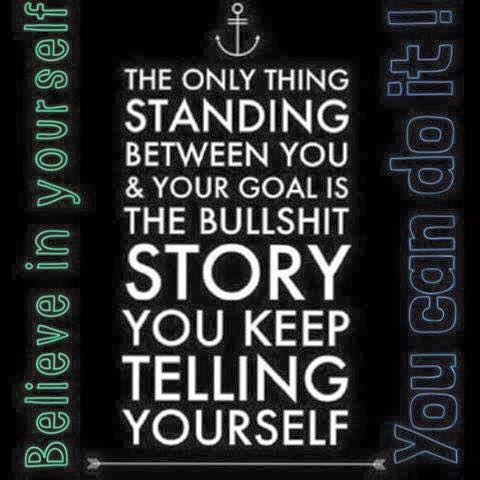
What’s getting in the way of your fitness growth?  Is it the bullshit stories you tell yourself?  Is your actual training plan causing you to lose motivation?  Lately, for me, it’s been a little of both, with a sprinkle of injury mixed in.

Running is often a solitary activity which challenges you on so many levels.  I’ve personally pounded thousands of miles these past two years alone.  This gives me a lot of time to think and get in touch with myself, but it also can be lonely.  While I don’t truly mind a nice long run with my music, there’s nothing like a nice long run with your running friends.  Time goes by so fast when you’re chatting it up and as an added bonus it takes your mind off the other stuff that comes up when running alone.

The problem I’ve had this past year, aside from injury, is that I was doing heart rate training.  This training really forced me to avoid group runs as I’ve had to slow my pace to a crawl to keep my heart rate in the right zone.  Worse still, it’s taken some of the fun and joy out of running for me.  I thought it was the training itself and slow pace of it that bothered me lately, but realize now it’s the connection to people I’m missing most.  Like everything else in life, human connection sparks excitement and motivation.  I’m missing my running tribe.

I’ve decided to rethink some of my training because I’m feeling like I’m in a running slump.  I’m losing motivation because I’m not feeling like I’m part of anything beyond solitary miles of running.  I miss running on the boardwalk with my running friends and running without constantly checking my HR watch to see if I’m in the right zone.  I’ve made running have way too many rules and somehow lost its joy in the process.  It’s time to take back control over how I train and find some balance in my plan.

First, I need to connect to people during some of my runs and move away from worrying that doing that would violate some HR rules.  On these runs, I plan to leave my HR chest strap home and concentrate on the beautiful scenery and conversation.  I also have some running clubs that I joined last year and  while I participated in online conversation, I never went to one run because I was worried about the plan I was doing and the targets I had to hit.  This year I plan to attend the group runs and not care if I’m at the back of the pack and again the chest strap can just stay home.  I will certainly run at a comfortable effort and not overdo it, but I don’t need that darn watching beeping constantly.  There are so many great people in both of my groups who are on a similar journey to mine.  I can’t wait to go, share the journey and connect on my first run tomorrow morning!

Next, I need to balance my training.  I’m not giving up on heart rate training because I know the research shows it is right for me.  Instead of doing only heart rate based runs, I plan to do a mix of different types of runs.  This should increase my motivation and rekindle excitement about running.  I plan to reread Matt Fitzgerald’s 80/20 book and work out a training plan that works for me.  The premise of the plan is to balance your training for growth, including tempo, easy and long runs.  I used to love running pick ups after each miles they really made it more interesting and spread the speed work across miles, helping me improve my pace without overtaxing my body.

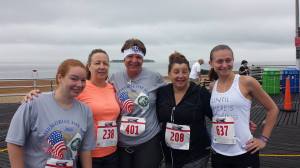
I’m also really looking forward to doing some local fun runs this year.  I had stopped doing them in favor of doing larger races.  Since NYC marathon is my goal race this year, my focus is solely on that race.  I am not planning to do a lot of other races, just local races that I can enjoy.  There are so many wonderful races right here on Staten Island that I truly enjoyed in the past.  No stress with traffic or parking, just convenient fun workouts.  The first of these races is rapidly approaching and I’m super excited to do it with my team – Little Red Runners.  This will be our third year running this Memorial Day race and this year they’ve improved the after party.  Here’s our beautiful team at last year’s run:

13321930_1625238941069228_8012277294065960063_n

Finally, I’m coming to accept that I am a slow runner, always have been – even in my twenties.  It’s truly fine because an eight minute mile and a thirteen minute mile are truly the same thing – a mile.  It really doesn’t matter how long it takes, it matters that I’m doing it. I can put to rest this quest to run an eight minute mile because for now it’s just not going to happen.  I can’t make pace my priority anymore as it only serves to make me feel bad about myself.  Anything that removes enjoyment from my run is no longer welcome.  This journey is about being healthy and I’m not winning any race anytime soon.  My goal has always been to finish the race and stay healthy.  I have to go back to reminding myself of that.  I’ve even washed my favorite shirt and will likely wear it to the Memorial Day race in a few weeks.

FullSizeRender-2

What’s holding you back from fitness growth?  Is it the bullshit stories you’re telling yourself?  Please share below and let’s get back on track together.

Book mentioned in article:

80/20 Running: Run Stronger and Race Faster By Training Slower

Training Tip – KT Tape

KT Tape is an elastic sports tape designed to relieve pain while supporting muscles, tendons, and ligaments.  I fell in love with KT Tape following my ankle surgery.  I absolutely swear by it and use it for any run over 5 miles, or any race I run.  It feels like my armor, or protection, which takes my mind off my ankle.

I remember when I first started seeing sports tape on athletes in the summer Olympics in 2008.  I was obsessed with beach volleyball that year and remember seeing it and thinking it made the girls look like such bad asses.  The colorful tape was all the rage that year and I wondered what it was for beyond a fashion statement.  Until I needed it, I never really looked into it.  This tape is thought to reduce pain and injury when applied correctly.  The goal is to support the muscles and tendons and aid in the flow of fluids around the area.  It is also thought to help stop ankles from rolling, but I don’t bank on that and am super careful about the terrain I run on.  It may be all in my head, but I feel more confident about my ankle when I wear it and that is well worth the price and time to apply.

Application of the tape can be tricky at first.  I actually went to a vendor at the expo prior to my half to get it applied properly.  They taught me a few tricks I didn’t know, like how to put compression socks on over the tape without ruining it.  They also told me you can leave the tape on for a few days at a time, even showering with it on, which would save some money I guess.  I don’t leave it on as I’d look mighty funny in my work attire and KT tape designs.

If you have any areas that you are concerned about, or experience discomfort in, I highly recommend you check out KT Tape.  It may just be the tip you’re looking for.  There are so many options to choose from when looking.  I like the KT Tape brand and go for the funky colors to keep it interesting.  I recommend you google some videos on Youtube to learn how to put it on correctly.  This is an important step.  Here’s a sample video of how to tape your peroneal tendon, a common running tendon injury.

https://www.youtube.com/watch?v=nVVUvbwIUNE

If you have a Physical Therapist you are working with, ask her to teach you how to correctly apply the tape.  It is well worth learning proper technique to ensure you are getting the benefits from using.

Let me know if you are a fan, like me, of this tape.  Please leave a comment in the section below.

Here’s the information on the tape I use:

KT TAPE Original Cotton Elastic Kinesiology Theraeputic Tape – 20 Pre-Cut 10″ Strips, Blue

It is absolutely worth buying the precut strips.

Revise the Plan When You Must

Since I broke my three toes on Christmas, I’ve been struggling to get back into a running rhythm.  Anyone who has broken toes can tell you just how painful this injury can be.  I thought I had it under control as I pushed through on the elliptical in my boot and running on the treadmill with super wide shoes.  I laughed in the face of this injury and anxiously awaited warmer weather to get back outside.  Sometimes though, life has other plans.

Following my first outdoor runs, I quickly realized this wasn’t going to be so easy.  I felt like the months of easy treadmill runs did little to maintain my conditioning.  I felt like my foot and ankle were in a constant state of pain.  I felt like it was two steps forward, three steps back.  I felt like my head was spinning with the bullshit stories I tell myself.  Finally, I felt like I had to pull up my bootstraps and get this fixed.  My plans were in need of a major revision.

First, I needed to address the pain in my ankle because that is super scary to me.  I do not ever want to have that surgery again.  I think I knew the trigger for the ankle pain.  Over the winter, I was trying to switch over to zero drop shoes and believe this was putting unnecessary pressure on my peroneal tendon.  The shoes seemed to work fine on the slow runs on the treadmill, but outside training was just not the same.  I’m now back in my trusted Hoka shoes and hoping I didn’t do any damage to the tendon.

Next, my toes are still causing some pain in my foot.  This concerns me greatly and I’m hoping there’s no nerve damage.  I’m trying to incorporate the yoga toes pose back into my cool down protocols, as well as foam rolling religiously and hoping this will help.  If not, I definitely need to get an MRI in the coming weeks.

Finally, I definitely needed to revise my pre training plan to build up my strength for running.  I’ve been trying to get off some extra pounds gained during the long winter break.  Not too bad, just need to get about 10-15 off for my optimum running weight.  This week I’m down 5 pounds using the Weight Watchers app to track my eating.  Again, not a fan of plans but chose this one because I can eat real food that I cook.  I don’t agree with the severe limiting of healthy fats, but I’m incorporating what I know is right for my body with the plan and so far it’s keeping me honest about my food choices.

I’m using the Couch to 5K app to warm up my body and am on week 2 of the plan.  The pain in my ankle is still there at night, but I do feel like it’s subsiding.  As I do the couch to 5K plan (similar to the one I just finished, Run for Weight Loss, but less intense) I reflect on the walk/run strategy.  For now, I think this may be just the perfect revision to my running training.

Run/walk programs are an effective training method that can help increase fitness.  The stigma attached to it is that it’s not “real running”.  This stigma overlooks the fact that when alternating running with walking, you decrease the amount of impact on your body and potentially decrease risk of injury.  Further, using this strategy you recover quicker from your workouts as your body has built in recovery breaks.  It is also a form of interval training and can increase caloric burn during your workouts.

Running as we know is a high impact sport.  The continuous use of any muscle used the same way (running long in my case), increases muscle fatigue more rapidly. Continuing to run with fatigued muscles, will greatly increase the chance of injury.  Knowing this it makes total sense to me to use a run/walk program to build my fitness for the marathon.  During the walk portion of run/walk, your body has a chance to recover – both heart rate and muscular recovery.   Walking using different muscle groups than running and allows for some muscular recovery during these sessions.

Run/walk interval training is easy to implement.  Basically you run for a designated portion of time, followed by walk period, then repeat the cycle a certain amount of times.  The free couch to 5K app tells you when to run or walk.  I find myself looking forward to those beeps during my runs now.  I was worried I’d have trouble running after a walk period, but it’s actually quite the opposite.  I look forward to the run beep knowing it’s only for a short period of time.  Mentally this method is motivating and the time flies by.  My pace is even slightly faster over the long runs as when fatigued my pace tends to slow down to a crawl, often slower than a walk pace.

I’m excited to see if this method helps me get back on track without pain, or injury.  Are there any run/walk converts out there that want to share their story?  I’d love to feature your story here in an upcoming blog.  Let me know and please feel free to leave a comment below.  Looking forward to hearing your stories.
Great read to learn more about this method of training:

The Run Walk Run Method·


Tuesday Training Tip

Anyone who has been to physical therapy knows resistance bands are no joke.  Those little rubber bands that look so simple can really challenge the best of us.  When I was training for my race last year, my trainer recommended I add resistance bands to my routine.  Resistance bands, like those found in any physical therapy routine, are made of rubber and come in many different resistance levels.  I quickly learned just how effective, dare I say muscles you never knew you had, these little bands can be.

When using resistance bands, you can work any muscle group and build strength.  They are great for travel because they are so light and easy to transport.  When used correctly and consistently, they can be used to develop muscle strength without the need for heavy weights and dumbbells.  If you’ve never tried resistance bands, you may be surprised at how much you can do with them.

Resistance bands do not rely on gravity as free weights do.  This means your muscle works throughout all parts of the motion.  They are quite cost effective, do not take up any space in your home and are quite portable.   Further, they can be used to complete full-body workouts that challenge every muscle group in your body.  I generally use them for work on my hips and legs to develop strength for running and can tell you they are no joke.  The trick is to get the right resistance for your current fitness level.

The resistance bands I purchased were color coded.  Others available are made in different thickness, with the thicker bands having the greater resistance.  The easiest test is to see how you feel when you use them.  If you are able to complete the set and not feel anything, they are too light.  If you can’t complete the full range of motion, they are too strong. Use trial and error in conjunction with how your body feels to get the right resistance.  Once you feel you have it right continue increasing the resistance as you get stronger.  I have mine a year and have gone up only two levels, so there is no rush.

Here is the band set I purchased for around $13.00:


  Limm Exercise Resistance Loop Bands – Set of 5, 12-inch Workout Bands – Best for Stretching, Physical Therapy and Home Fitness – Instructional Booklet & Handy Carry Bag


Here’s my coach doing the first short workout (7 minutes) with the bands.

https://www.youtube.com/watch?v=xgEZEeV0FS4


There’s a ton of free videos available online to get started.  I hope you give these bands a try, you won’t be disappointed.  Let me know if you currently use resistance bands and how they’ve helped you develop strength.

Thursday Tips & Tricks

Sometimes in life we feel slightly off balance.  Sometimes in exercise, being off balance can open up a world of opportunity. When exercising, the ground under us is not always smooth or flat.   This week my training tip is to invest in, or look at the gym for, a Bosu ball to add to you workout routine.

During training for my half marathon, my trainer suggested I invest in a BOSU ball.  As soon as I heard they could strengthen my ankles I ordered one.  I have been having so much fun with this ball and can truly say it made a difference in my strength.  A BOSU ball looks like a half ball, with one side flat.  It is used as a balance board and can be used with either side up as both will provide different challenges.

The BOSU will improve your strength, flexibility and most importantly your stabilizing muscles as you work to keep yourself steady while it moves underneath you.  It was hard for me to even get on the flat side when I first got it and let’s not talk about getting off.  I have never laughed so hard at that and thankfully was in the privacy of my home.

Our stabilizer muscles hold and support our large muscle groups that move our body parts.  They prevent our body from sustaining damage while moving.  They work to keep certain parts of our body steady when other muscles are working.  When working on a BOSU we are able to target these muscles as our body works hard to maintain balance on a moving object.  I specifically love that I’m working these stabilizers as I’ve had ankle surgery and never want to go through that again.  Stabilizer muscles in your ankles keep them from rolling, so it’s important to me to strengthen them, along with the stabilizers in my core, knees and glutes.

The workouts I do on the BOSU are short, targeted and effective.  The ball itself came with a video with many options.  You can do Pilates and Yoga on the ball to bump up your current routine.  My trainer gave me specific videos of what she wanted me to do.  Here’s a link to a quick routine so you can see what it looks like.  I prefer standing on the flat side for more of a challenge, but start near a wall so you can get on and off safely.


Here is the actual BOSU ball set I purchased, it’s not overly large and doesn’t take up much space in my workout area.  It has to be inflated when it arrives, but a pump is included.  Best investment ever!

BOSU Balance Trainer, Blue

I generally use my BOSU following my runs. I don’t do a full workout on it, just targeted exercises. I target my glutes, feet/ankles and hips. You know I love it when it’s packed in my car and brought down to the beach house. It has become something I don’t want to live without, even for a week and I truly feel it has aided in my ankle recovery.

If you add this to your current workout routine, or currently use a BOSU, please leave a comment below.