The China Study: Reducing Health Risks with a Plant-Based Diet

In the next ten years, one of the things you’re bound to hear is that animal protein is one of the most toxic nutrients of all that can be considered. Quite simply, the more you substitute plant foods for animal foods, the healthier you are likely to be. – T. Colin Campbell

Recently, I overheard someone giving out health advice following a game of pickleball. It went something like this, “It’s easy to lose weight, if you want to. I’ll tell you what I did, I eat a lot of olive oil, eggs, meat and fruits and vegetables for snacks.” He then went on to talk about how he puts olive oil on his food because it’s so healthy, and eats meat because he needs a lot of protein and eggs for breakfast every morning. Basically, he was describing a low carbohydrate approach to losing weight, while consuming large amounts of protein and dairy foods. I believe some would call it a Paleo diet.

I happened to be standing there when the conversation occurred. I leaned in and suggested he do some research on the effects of consuming large amounts of dairy and animal protein. His response was, “You can’t get fat by eating meat.” Perhaps that statement has some truth to it, depending largely on the quality and quantity of meat products he is consuming. Sadly, though health is way more than just about being thin or fat. His habit of consuming meat products as a main source of protein, coupled with eggs daily, is setting him up for potential health risk of heart disease, diabetes or cancer. I did suggest he speak with his cardiologist, or a registered dietician, to help him craft a well balanced nutritional plan that meets his specific needs.

So many of us have bought into the food industries ideal of what and how to eat, or not eat, to become thin. Focusing on weight loss, to look a certain way, has certainly led me down many paths in my life. Keto, fasting, shakes and skipping meals, all focused toward reducing the number on my scale had no real impact on my overall health. I used to think thin people were inherently healthy, but I now know that our size doesn’t truly give the full picture of our actual health. Ever hear the term skinny fat?

China Study

When it comes to our health, the association between diet and other diseases such as diabetes and cardiovascular disease has been well documented. For example, the China Project is a survey of death rates for twelve different kinds of cancer for more than 2,400 counties and 880 million (96%) of China’s citizens, conducted jointly by Cornell University, Oxford University, and the Chinese Academy of Preventive Medicine over the course of twenty years.

Dr. T. Colin Cambell, author of The China Study, examined the connection between eating an animal-based diet and developing illnesses such as breast cancer, prostate cancer, colon cancer, diabetes, heart disease, obesity, autoimmune disease, brain disease such as Alzheimer’s and macular degeneration. His study concluded that diets high in protein, particularly animal protein, are strongly linked to diseases such as heart disease, cancer and Type 2 diabetes. Further, he states, “the findings from the China Study indicate that the lower the percentage of animal-based foods that are consumed, the greater the health benefits—even when that percentage declines from 10% to 0% of calories. So it’s not unreasonable to assume that the optimum percentage of animal-based products is zero, at least for anyone with a predisposition for a degenerative disease.”

For me, the idea that stood out the most was Dr. Campbell’s suggestion that the over consumption of protein-rich, animal-based foods is the real culprit of disease. This was what pushed me to finally make the commitment to living a fully plant based life.

Next Steps in Response

The science and research are pretty clear, in both the China Study and the Blue Zone study. You can dramatically reduce your risk of cancer, heart disease, and diabetes and increase your chances for longevity, just by changing your diet. Both of these studies advocated specific changes we can make to increase our health benefits. Personally, I have a predisposition for Alzheimer’s disease, as the women in my family have suffered from it. If making dietary changes gives me a better shot at avoiding, or delaying this fate, I am all in. Here are the next nutritional steps I would recommend to anyone wanting to take action based on these two studies.

  • Reduce, or eliminate animal products – I am fully eating whole food plant based for six (6) months now. That is what I felt I needed to do, based on my current health and familial health history. If you are not ready for that, consider at least drastically eliminating the amount of animal proteins you consume. You really don’t need to eat meat. Despite popular belief, you can get all the protein, fiber, vitamins and minerals you need from plants. Even if you are a serious athlete, you can perform at high levels while living a plant based lifestyle. Venus Williams, Cam Newton and many other athletes have shared their personal experiences with plant based diets.
  • Ensure variety and balance in food choice – I am committed to eating a variety of fruits, vegetables, grains and legumes each week. I east seasonal foods whenever possible and rotate through a variety of choices each week. I try to eat a minimum of 30 different types of plant foods each week, which is truly not hard to do at all. Eat the rainbow as they say. This variety helps keep our gut healthy and has a strong impact on our health. I shared more about this in a previous post Healthy Lifestyle: Food, Exercise, and Joy in My Daily Routine.
  • Increase fiber intake – I am very conscious of the body’s need for high fiber intakes and seek to eat a bare minimum of 30 grams a day. Ideally, I’d like to get closer to 50. Fiber is a critical component of any healthy diet plan and needed for optimal gut health. I share more about fiber in a past post Fiber Fueled. I get my fiber from my food choice, not in a bottle, though if needed there are supplements out there to at least get you started. Before taking anything, please speak to your health professional.
  • Eliminate intake of dairy products – I do not eat any dairy products at all. According to the China Study, there is a link between casein and cancer. I feel much less bloated without dairy products and believe my sleep has improved as well. Cheese is always the hardest to give up, but feeling well matters more to me than eating cheese. If you are not ready to give it up, perhaps you can cut back and make healthier choices when selecting cheeses to consume.

It wasn’t an easy shift to a whole food plant based eating, mainly because I didn’t know what to eat. My best advice is to focus on one meal at a time and give yourself grace as you go. I went cold turkey, but think it’s best to change one meal at a time. Take some time to eat a plant based breakfast each day for a week. Then change your lunch selections the next week. Lastly, rework your dinner. Another idea, if you just want to reduce your intake of animal products would be to implement meatless days into your week. Many people have meatless Monday on their dinner rotation. The China Study concluded that even a reduction of animal protein intake could improve health outcomes, so begin to rework some of your meals to get started. I shared some other ideas in these past posts you may want to read Change Our Thinking About Food, Eat to Live, Cooking to Nourish Your Mind, Body & Soul.

Conclusions

For me, this journey is truly a personal one, a promise I made to myself during the long goodbye said to my mother. As I watched her slip away, I vowed to try anything that would avoid having my children go through this painful existence. Losing a loved one is always hard, but losing them, while they are still here is even harder. Ronald Reagan called it, the long goodbye, in the letter he wrote when sharing his Alzheimer’s diagnosis. That is surely was. You can read more about my mother in these posts I’ve shared The Notebook and The Long Goodbye.

If you wish to read more about my personal transformative journey, I shared information in this post IRAH: Individual Retirement Account for Health – A Personal Transformation Journey.

I hope you will consider starting a personal journey for yourself to reclaim, or improve your health. It all starts with nutrition and what we eat. I hope you will reflect on your food choices and see what impact they are having on your current health. If you have any questions about any of my posts, feel free to reach out to me at laurakump@reclaiminghealth.blog, on Instagram or Facebook, or in the comment section below.

*This post may contain affiliate links for your convenience. As an Amazon associate, I may receive a small commission, at no additional cost to you. This helps me offset the cost of running this blog and I only recommend items I use and love. Thank you for your support.
Family Memories: Plant-Based Sunday Sauce Recipe

“Food for us comes from our relatives, whether they have wings or fins or roots. That is how we consider food. Food has a culture. It has a history. It has a story. It has relationships.” – Winona LaDuke

I often think of cherished moments shared in the kitchen with my family. The experience of cooking together, not only resulted in delightful meals, but has also forged enduring memories that hold special places in my heart. I can often feel the presence of my mother, grandmothers and aunts when I’m in the kitchen. Sometimes it’s the smells of a favorite recipe that takes me back, sometimes it’s the tastes, but it’s always so comforting to feel them with me. Food can evoke so much joy, both in the preparation of and gathering around the table to eat together.

These days, I’m eating differently and I’ve been challenged to feel that connection. My family recipes all include meat, dairy and eggs, so I’ve been trying to forge my own path in the plant based world without them. I know I am creating new family memories for my children and grandson, but also know my family misses some of our family staples. I’ve been trying hard to recreate those recipes, but it has not been an easy task. I know that it can be done and will continue on this journey and plan to collect the recipe for my children, along with the original family version.

Cooking has always been a big part of our family. When I was young, I used to wake up every Sunday morning and smell onions browning. That’s how I knew it was Sunday and a dinner of traditional German food was on the menu. Roast Pork with Spaetzle or Sauerbrauten with Potato Dumplings were staple Sunday dinners. My grandmother, Maria, would be joining us at the table and sometimes my cousins would join us a well. The table was always set with mom’s china and fancy glasses. To this day, whenever I smell onions browning, it takes me back to those childhood Sundays.

Growing up, my neighbor Rita was also a fabulous cook. Rita was an Italian immigrant, newly in the country and when sitting on the porch of our city row house, I could smell incredible smells coming from her front door. She took me in and taught me how she created her famous Sunday Sauce each week and boy was it fantastic. When I married, I began our own tradition of Sunday Sauce, something that continued up until this January, when I made the final shift to whole food plant based eating.

There have been so many great cooks in my family and life, whose memories are now seared into my heart, attached to the dishes and tables we shared. I wish they were all still physically here with me on this next part of my journey, but know they are always in my heart. I often do feel their presence in my kitchen, their gentle hands guiding and encouraging me forward.

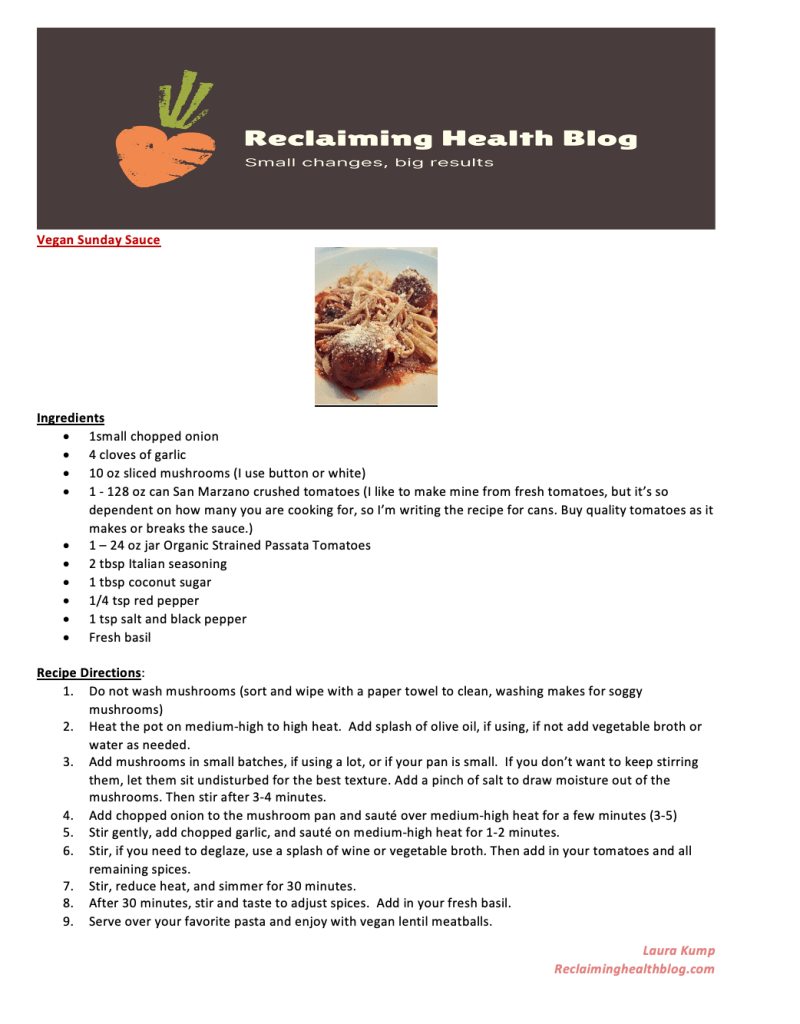
The first family meal I worked on to upgrade, by popular request of my children and grandson, was Sunday Sauce. Gone are the days of cooking it over slow heat with short ribs, sausage and pork ribs. Gone are my famous meatballs, my grandsons favorite, though I would make them for him if he asked, but I prefer not too. I’ve been experimenting with Sunday Sauce for a bit now and think I’ve come up with something that works for us. I am sharing the recipe below and hope you enjoy it. If you change something to make it better, please do share back with me. I am still experimenting with a few things, but believe this recipe is ready to be our families next Sunday Sauce dinner.

I think Rita would be proud of this plant based version of pasta with meatballs. I am working on a different mixture using walnuts and mushrooms as well, but have been pleased with this version. The meatballs are delicious in the air fryer and I don’t use oil when cooking them. The lentils pack a protein punch and I use pasta that is fiber rich and also has protein. I have been experimenting with homemade noodles, but haven’t yet perfected anything there.

I hope you enjoy cooking and playing with ingredients. That is where the memories are made. I hope to create new recipes that embody the essence of our family originals to ensure my family that plant based eating can be delicious, nutritious and healthy.

If you wish to speak with me about this post, or recipes shared, please feel free to reach out to me at laurakump@reclaiminghealth.blog, on Instagram or Facebook, or in the comment section below. Remember, I am newly on this path, so encouragement is always welcome when it comes to recipes and cooking. Thanks for reading and have a great week.

For other cooking posts I’ve written recently, please see Cooking to Nourish Your Mind, Body & Soul and Cookbook Recommendations.

Fork Power

“What you find at the end of your fork is more powerful than anything you’ll find at the bottom of a pill bottle.” ~ Dr. Mark Hyman

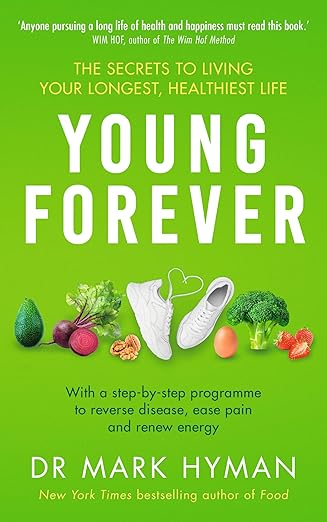
Young Forever, Dr. Mark Hyman

This week, I’ve been watching the 2024 Food Revolution Docuseries, which brings forth information from many experts in the fields of medicine and nutrition. I’ve enjoyed all the presentations, but especially yesterday’s session on Brain Health. This episode discussed the latest scientific information regarding prevention of Alzheimer’s, memory loss and other brain related disease. Those who follow me, know this is a major driving force behind the personal work I am doing on this blog and in my life. Having witnessed first hand what Alzheimers does, to both the patient and the family, I am determined to do anything in my power to prevent this disease. One quote stood out to me during the summit, “you have the power at the end of your fork to delay, or prevent this disease.” The quote, I believe, is attributed to Dr Mark Hyman, well known functional medical doctor and author. His book, Young Forever, provides a simple blue print to live a healthier life, including nutritional changes.

When my grandmother and mother contracted Alzheimer’s, doctors said there was nothing we could do. It was uncurable and would run it’s normal course. When I started researching Alzheimer’s, too late for my mother, I learned that nutrition indeed plays a major role in the onset of the disease. For far too long, research has focused on the treatment of the disease, once the patient is diagnosed. Current research, shared in this docuseries, looked more at prevention of the disease, which is where success may be found. The staggering facts are that women in their 60s are twice as likely to get Alzheimer’s. And, the primary determinant is their diet and lifestyle, yes genetics play a role, but studies now show that diet and lifestyle have more impact than ever thought. Alzheimer’s is not inevitable!

We can all agree that food is a powerful tool in our health journey. Everyone agrees that poor nutrition has an impact on cardiovascular disease, diabetes and overall health and wellness. We now know that the brain is also heavily impacted by poor nutrition. Saturated fats have been linked to high LDL levels and an increased risk of Alzheimer’s. Polysaturated fats (not coconut oil) have been shown to lower risks of Alzheimer’s disease. Here are some of the takeaways from this episode.

Fork Power

Plant strong whole foods have been shown to improve brain health. Eating foods high in Omega 3 fatty acids are needed by the brain on a daily basis. Best plant based sources are chia seeds, hemp seeds, kale, flax and walnuts and these should be eaten daily. When eating nuts and seeds, you don’t need more than a handful a day. Healthy fat, such as avocado, is considered a brain health food. They shared that diets high in meat, especially red meat, have been linked to Alzheimer’s, followed by eggs and high fat dairy products. I’ve shared a lot about my personal journey to whole food plant based eating in past posts found here Change Our Thinking About Food and Sugar Sugar.

Supplementation

I am a vegan, so I do take a supplement to ensure I am getting enough Omega3 fatty acids, Vitamin B, D, Zinc, Magnesium and Iodine. I love the Essential Vitamins brand and take Complement multivitamins daily. I recently put my husband, who is not vegan, on them as well and he speaks often of the increase in energy that he feels. I highly recommend these and love that I don’t have multiple jars of separate supplements anymore.

Hydration

There was a discussion about the importance of hydration for brain health. Specifically, they discussed studies that showed the brain shrinks when dehydrated. We have a greater capacity for mental focus and wellness when we are properly hydrated. They listed water as the best choice for hydration, followed by green tea and coffee, but without dairy, or sugary add ons. I try to drink 80 ounces of water a day, I’m not always successful, but am definitely drinking more than I used to. I fill my 80 ounce container every morning with intention to finish it. I do use the water from this container when making tea. They also said it was more important to hydrate throughout the entire day and not to drink large amounts at one time.

Sleep

Sleep is most overlooked when it comes to its impact on our brain health. Many of us, myself included, struggle with sleep. When at my worst, I definitely became worried by my brain fog and began to question if it was something more. Sleep is the main means for our body to cleanse our organs, including our brains. Restorative sleep is critical to brain health and the major reason I started tracking my sleep. I can see the difference in how I feel on days when my sleep was interrupted vs days when I’ve had a deep and restorative sleep. You can read about my sleep routines on these past blog posts, found here Sleep Your Secret Weapon and Sweet Dreams.

Meditation and Mindfulness

Engaging in a regular yoga and meditation practice can help us manage stress. Living in a chronic state of stress has major impacts on our mental health and wellness. Yoga practices can deliberately activate our parasympathetic nervous system and ease our stress response. I can attest to this personally, as I have shared the negative impact my high stress career, couple with the pandemic had on my health. Living in a chronic state of stress, caused weight gain, brain fog and lack of sleep. I was likely one step away from a breakdown. You can read more about the impact of stress on my health in this post I shared, Stress.

Overall, the docuseries on brain health and research, was insightful and provided validation for life changes I have made. I found it uplifting and inspiring and motivated me to keep on this path I’ve chosen. Hearing the researchers say that Alzheimer’s is not inevitable, provided me hope that through dietary and lifestyle changes, I can indeed delay or prevent this memory robbing disease. I hope you too will spend some time learning about the power found at the end of your fork and on your plate. Your future self will thank you, as will your family.

Feel free to reach out if you have any questions, or comments, about this week’s blog. I do provide links to products I use and recommend, available at no extra cost to you. As an Amazon associate, I may receive compensation for any purchase made, which offsets the cost of running this blog. Thank you for reading and for your continued support of this blog. You can reach me via email at laurakump@reclaiminghealth.blog, on Instagram or Facebook, or in the comment section below.

Growing Wings

“There is freedom waiting for you,

On the breezes of the sky,

And you ask “What if I fall?

Oh but my darling,

What if you fly?”

Erin Hanson

When I was teaching, I absolutely loved being in the classroom. I was first asked to be an Instructional Coach back in my early years of teaching and didn’t want to leave the classroom. My Principal at the time said to me that within my classroom, I would impact the lives of my students for the year they are with me, maybe beyond. If I stepped outside the classroom and worked with educators, I’d have impact on many more students through this work. In the end, I made the transition and loved it, going on to become a Principal a short time later.

My Principal was right in his advice, sometimes we have to step outside our comfort zone and share our knowledge and learning with others. It has been said, that the knowledge we gain, if not shared or used, is knowledge wasted. That’s one of the reasons I started this blog years ago, as both a source of strength for me on my journey and to engage with others on similar paths. It is through these connections that I both learn and share my learning.

Over the past year, I have engaged in the study of nutrition and wellness. I am now a Certified Wellness Coach. I am finishing up my 200 hour yoga teacher certification to become a Yoga Alliance Certified Yoga Teacher and taking an additional 20 hour course on Somatic Yoga for Therapy. Additionally, I am completing an 8 week deep dive into Whole Food Plant Based Nutrition. I know it sounds like a lot, but I have always been a certified knowledge junkie. I love to learn and would have chosen full time student as my best career! I am now beginning to think of ways I can share my learning with others. I’m developing plans to begin sharing my learning in a more systematic way.

What I believe I can offer to the conversation on health and wellness, is a deeply rooted understanding of what high stress, example, from executive level positions, can do to one’s health and wellness. I have lived through that journey and know that most corporations don’t offer plans, or take into account how to provide continuous systems to address wellness. Merely offering discounts on outside plans, or apps is truly not enough, as most people don’t take advantage of them. I am hesitant to dip my toes in the wellness water, as I feel the imposter syndrome voice raising her voice in my ear, but will push through those doubts.

I’d also like to work with women like me, who have tried many times to get this right and failed. I’ve lived that journey as well, starting over time and again. I have learned so much this past year, that I wish I knew during the past eight years of my health journey. Perhaps I would have had more success along the bumpy road. Perhaps, I was meant to fail over and over to push me to learn more and find my way. Perhaps I am right where I’m supposed to be. Many of you have reached out and shared your connections to my journey and that has fueled me forward. I’d love to get some groups going and will launch one in the coming months on my Instagram page. I will offer fully online groups, as well as in person for local people.

I’d like to deepen the sharing of my personal journey and use that as the vehicle to help others get started. Most of us are afraid to put ourselves out there and ask for help. We fear judgement from others who are in optimal shape and fear we are too far gone to be able to make this journey. I am living proof that it is never too late to try again. I am going to put together some specific content to help others get started on their path to reclaiming their health.

As you know, I am a small steps, big results person. I know full well that if it feels complicated, it likely won’t happen. In the coming months, I’ll be working on building some content and will be sharing information here and on my Instagram page. I hope you’ll take this journey with me in some form. I always learn from your journey and feedback. Even if just one person is helped by something I share, I will consider myself successful.

If you have any questions, feedback, or comments on any of my blogs, reach out to me via email at laurakump@reclaiminghealth.blog, on Instagram or in the comment section below.

Try Something New

“I always did something I was a little not ready to do. I think that’s how you grow. When there’s that moment of ‘Wow, I’m not really sure I can do this,’ and you push through those moments, that’s when you have a breakthrough. Sometimes that’s a sign that something really good is about to happen. You’re about to grow and learn a lot about yourself” -Marissa Mayer

As we enter February, we may have lost some of our mojo when it comes to work out promises made at the New Year. The initial excitement about getting into shape may now be starting to wane. I know the crowds at the gym here have started to diminish greatly, as happens every year. It’s the same cycle every year and one that gets even the most well intentioned of us, myself included. This year however, I made a promise to myself that I would not give up on my journey during these cold winter days. This year, I made a promise to myself that I would not have to start over from scratch come spring.

Sometimes when motivation starts to dwindle, trying something new can be just the spark you need to keep going. Switching things up and adding some variety to your routines can be the ticket you to hold on. For me, I have added in very short runs to my week and started a WFPB (whole food, plant based) nutrition course. Both have served to peak my need to learn and grow and push through these moments of wanting to nest in my home under a blanket.

I was not planning to add a plant based certificate to my coursework, but have been struggling with some gut health issues recently. After researching and truly reflecting on it, I felt the time was right to explore my long standing difficulties with getting enough fiber in my diet without supplementation. I have a long history of not loving vegetables and irrational thinking about the sugar found in fruit. I decided it was time to dive deeply into the world of plant based nutrition and felt WFPB was the best place to start. I was definitely not sure I would be able to survive, much less thrive, if I only ate whole plant based foods.

This is my second week of eating WFPB and I must admit that I actually do feel better. I had some diverticulitis symptoms and was beginning to worry, but this week I haven’t felt the nagging pain on my left side following eating. It’s far too soon to tell the true impact, but I am most definitely motivated to keep going. I am excited to continue to learn and try new foods and track my growth in the process.

If you are feeling stuck and losing motivation to eat healthy, workout or do any of the things you loved, consider trying something new and see if it reignites your passion. Is there something you’ve been wanting to do, but haven’t? It can be anything, not just health related items. Have you always wanted to learn to crochet?, Wanted to learn about plant based cooking? Whatever it is, do it! It could be just what you need to climb out of the winter freeze and move into the spring thaw with stronger motivation. 

In my case, I knew my intake of vegetables and fruits was weak. I started thinking about it and researching it. I then took the following steps:

  • Learn – It’s important to engage in the process of learning new information. It is great for your brain and can build excitement around the process, as well as give you the tools you need to try it.
  • Add On – What are you already doing that this new learning will improve? I love to cook and was excited to add new recipes, ingredients and meals to my repertoire. As a health coach, I knew I would interact with clients who have different preferences for their foods and wanted to build a better knowledge around this topic.
  • Connect – Find others who share your passion. One of the blessings of social media is that you can find your tribe as you learn and grow. I found a group of WFPB people who have offered support and ideas as I learn. 
  • Push Through – Decide to do it and really try to stick to it. Focus on progress not perfection and do what you feel you can commit to right now. In my case, I went cold turkey, but that is because I am not working full time. If I was still working, I would have likely committed to add one WFPB meal to each day. 

Whatever you decide to do, give yourself grace. The goal is to spark motivation, not overwhelm yourself. Remember, it’s the small steps that add up to big change, but that won’t happen if we get overwhelmed. For example, if you want to learn to crochet, don’t set out to make an afghan right from the start. It’s likely best to start with making one chain of stitches. Once you have that down, move to making one full square block. Finally, over time you will move to making an afghan blanket. Using these small steps over time, you will hold on to your motivation as you celebrate those successful moments along the way.

I’m excited to hear about your new passions and how they helped motivate you to keep moving forward. Please do reach out to share them with me at laurakump@reclaiminghealth.blog , on Instagram @reclaiminghealthblog , or in the comment section below.