Reclaiming Health: How Alzheimer’s Shaped My Wellness Journey

Your mother is always with you…
She’s the whisper of the leaves
as you walk down the street.
She’s the cool hand on your brow
when you’re not well.
Your mother lives inside your laughter.
She’s crystallized in every tear drop.
She’s the place you came from,
your first home…
She’s the map you follow
with every step that you take.
She’s your first love
and your first heart break…
and nothing on earth can separate you.
Not time, Not space
Not even death
will ever separate you
from your mother
You carry her inside of you

-Deborah Culver

I have many new followers and subscribers and thought it was a good time to introduce Reclaiming Health Blog. This is not a money making blog, rather it is a labor of love. I find it very therapeutic to write and document my wellness journey. The road traveled is not always easy, as long time readers know, but the will is strong. I’m thankful to those who are here and would love to hear about they why behind your wellness journey.

In this post, I will discuss my why. We all arrive to the wellness journey at different points in our lives. My why was cultivated as I slowly lost my mother on her Alzheimer’s journey. I made a vow then that I would do anything I could to not have my children take that same walk with me. I’m on a mission to reclaim my health, hence the title of the blog. ReclaimingHealthBlog.com, is a space in which I share my journey with others. It allows me to interact with others and also hold myself accountable to the work, but how did I get here?

When I had my last running injury, my mother was well into her Alzheimer’s journey. I sustained a torn tendon that required surgery. Following surgery, I was on crutches and unable to walk. I remember being in a lot of pain as well. My dad brought my mom out to my house to visit me as I couldn’t drive to them. I remember trying to get up to get something and feeling pain. My mother, who was mostly nonverbal at this point, suddenly jumped up from the couch and said, “Can I help you?” It was such a profound moment with her and reassured me that her love was still strong, despite this cruel and heartless disease.

The day I went into the hospital for surgery, I remember sobbing and saying this was the first time in my life that my mother wouldn’t be able to comfort me. I felt her loss so deeply. Alzheimer’s is one of the hardest journeys to witness, and sadly I’ve witnessed it twice. As a young newly married mother, I watched my grandmother fade away. Then, a mere 30 years later I was watching the same happen with my mother. It was at that point, I began to realize I could be next.

This realization has been the driving force behind this blog and my health journey. I have read, studied and learned that there are ways I can possibly reduce my risk for getting Alzheimer’s. I’ve learned that what I once thought was a disease of pure genetics, can actually be delayed or avoided through lifestyle changes. If there is even a small chance I can avoid this fate, why wouldn’t I try? What have I got to lose?

Watching my mother leave was very painful for our family. She was an amazing mother, wife and friend. When one progresses through this disease, they lose their memories and then their voice. My mother was physically there, but she was gone at the same time. She didn’t recognize any of us and couldn’t communicate. I didn’t get to hear her voice for her last 5 years with us. Truly this was a long goodbye.

When I sat at the care center with my family during those last years, I often left sobbing. It was so sad to see so many people living with Alzheimer’s. It was then that I began reading, researching and learning everything I could about this disease. I made a vow to my mother and myself that I would do whatever I could to live a brain healthy lifestyle.

Sadly, my story is not unique. In the United States, an estimated 500,000 new cases of Alzheimer’s disease are diagnosed each year. In fact, Alzheimer’s is the fifth-leading cause of death among Americans age 65 and older. In 2023, an estimated 6.7 million Americans are living with Alzheimer’s disease. These statistics are staggering. In my family alone, we lost my grandmother, mother and father in law to Alzheimer’s.

After attending the 2024 Food Revolution Docuseries, I realized there was hope.It was the first time I heard talk about prevention, and that that should be more of the focus. I’d long been following work done to find a cure and each time a trial failed, I’d feel helpless. Hearing that lifestyle and nutritional changes can have an impact, gave me renewed hope. This learning has fueled me to live better and share my experience through this blog.

I do not have all the answers and I am not a doctor. I know what resonates with me and am trying my best to continue to learn and grow. I believe the research that says nutrition and lifestyle can prevent Alzheimer’s in some cases. I am hopeful that I am one of those cases. I plan to continue to attend seminars and take courses to learn more about brain health.

I’ve written blog posts that share my learning and specific actions taken, and will continue to do so. Generally, I post one blog per week.

Posts I’ve Written About My Brain Health Journey:

Fork Power

Longevity and Brain Health: Lessons from My 93-Year-Old Father

The China Study: Reducing Health Risks with a Plant-Based Diet

IRAH: Individual Retirement Account for Health – A Personal Transformation Journey

My Mother’s Story:

I wrote this post just after my mother died. It’s a very personal piece.

The Notebook

Resources to Learn About Brain Health:

I took a course recently with  Dr. Dean and Dr. Ayesha Sherzai, co-directors of the Brain Health and Alzheimer’s Prevention Program at Loma Linda University Health. Through their research, they have found that lifestyle choices can have a long-term impact on brain health.  You can read more about the work being done at Loma Linda Memory Center at the links below:

https://lluh.org/neurology/our-services/memory-center

https://news.llu.edu/health-wellness/fight-against-alzheimers

I’ve also taken courses and attended the 2024 Food Revolution docuseries. You can visit their site at the link below:

https://foodrevolution.org/

Next Steps:

My next steps are always evolving as I learn and grow. I plan to continue on my whole food plant based journey and definitely notice improvement in how I feel. I am working with a Registered Dietitian who specializes in plant based lifestyles, to ensure that I get the right nutritional balance in my meals. I continue to follow up with blood work periodically and am due to have testing done this month. I also continue to spend as much time as I can with my children making beautiful memories, which I plan to keep.

If you are on a similar path, or have information to share on this topic, please reach out to me in the comment section below. I look forward to hearing from you and continuing this journey to wellness together.
Longevity and Brain Health: Lessons from My 93-Year-Old Father

“Caring for your body, mind, and spirit is your greatest and grandest responsibility. It’s about listening to the needs of your soul and then honoring them” – Kristi Ling

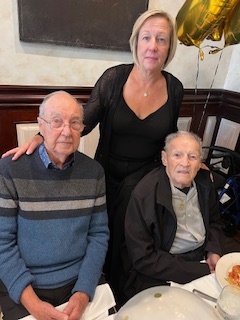
My father is 93 years young, living independently and able to walk for exercise. He lives a fairly active lifestyle, going every day to the local senior club. They go on trips each week which gives him a chance to get out and socialize. He has some age-related ailments, but for the most part, he is in great shape.

left to right, My Dad (blue shirt, 93), Me, My Uncle (90)
My father has always been a purpose driven man, getting his Bachelor and Masters Degree in his early 50s, while raising three children. He was a Police Officer in NYC and didn’t need to do that, but his drive pushed him to do so. My father always believed in education and building knowledge. When my mother was diagnosed with Alzheimer’s Dad’s sole purpose was to care for her. He did everything for her and treated her as if nothing had changed. When she was in a care center full time, his purpose was to be there every single day without fail and he was. See a post on his dedication here, The Notebook.

At my first session of a new six week learning program, the doctors were talking about longevity and brain health. It was stated that, research found people who had longevity, and were still cognitively sharp, engaged in common behaviors. Specifically, they engaged in physical exercise, ate more plant-centered diets and engaged their brains in complex tasks, leading a purpose driven life. When I heard that, I immediately thought of my father, who at 93 is cognitively sound.

My whole life I have taken after my father. I pray I have his longevity and cognitive health, for the women in my family have not been as lucky. My purpose, or why, is to avoid, or delay this fate. This purpose motivates me to learn, grow and move my body every day. I’ve learned that the risk of getting Alzheimer’s is not mainly driven by genetics. Approximately 3% of the total number of Alzheimer’s patients have specific genetic disease risks that cannot be avoided. Over 95% do not have that risk factor, meaning lifestyle and diet matter most in avoiding, or delaying onset of cognitive decline. (Sherazi, Dr.)

Diet and lifestyle matter, for what we do today and most importantly for our future. Here is what was shared regarding lifestyle choices for brain health and longevity.

Movement

We all should aim to move our bodies every single day for a minimum of 30 minutes. Brisk walking is highly recommended, as is tennis and racquet sports such as pickleball. The type of exercise we engage in matters. For brain health, it is recommended that we do the following:

  • Frequency – We need a regimented system of exercising, meaning organized and scheduled. Should be a minimum of 4-5 days per week for at least 30 minutes a day. Personally, I believe that brisk walks should be done daily for at least 30 minutes. The best time, in my opinion, is first thing in the morning to let the sunlight reset your circadian rhythm.
  • Strength – We lose muscle mass as we age. We need to engage in muscle-building routines, such as circuit machines, use of body weight or dumbells. We should work all the muscles in our body, but for brain health specific attention should be given to our legs. These large muscles keep us physically moving and are connected to vascular health.
  • Aerobic – We need to get our hearts pumping regularly as this increases blood flow through our bodies. Swimming, jogging or any other activity that increases your heart rate should be engaged in at least 3 times per week.
  • Consistency – This is a lifestyle, not a reach your target weight and stop. We are signing up to do this for life, as our life depends on it. I move every single day, as does my 93-year-old dad. When we stop moving, we start declining. Make a doable schedule and stick to it. I use my calendar and book it on there and I’m retired. If you are working, you will need to book this time for yourself and make it happen. For too many years, I skipped workouts. Those days are over.
  • **As with all recommendations it is imperative you speak to your health care provider about your specific abilities and limitations. Start slow and build up to these recommendations. I started with a slow walk around the block.

I’ve written many blogs on this topic if you’d like to read more, Move to Live, Healthy Lifestyle: Food, Exercise, and Joy in My Daily Routine

Lifestyle

  • Food – the research is clear that eating more plant based foods is good for our health. When my grandmother was alive, she advocated eating our fruits and vegetables, so this is not new. Processed foods need to be greatly reduced, better yet eliminated. Eat whole foods whenever possible. I eat whole food plant based and have been for six (6) months. I also do not eat any dairy products. I feel better than ever and will continue on this path. If giving up meat is not for you, you can greatly reduce your reliance on it as your main source of protein and increase your meatless days. Eat food that loves your brain, leafy greens and berries to name two. For more information on brain healthy food, see this https://www.health.harvard.edu/healthbeat/foods-linked-to-better-brainpower. Past blogs on my food choices – Change Our Thinking About Food, Eat to Live
  • Socialization – Far too many elderly people become isolated, due to various reasons. Ensure you have systems to keep you engaged with others built into your retirement plans. That is the main reason my husband and I moved when we retired. We loved our home, but knew the challenges to stay fully engaged and active would cause too much time alone at home. We had friends, but they were working still and to do anything, we would have had to constantly leave our area. We now have a full array of things to do right here in our community. Join a club, or senior center if you do not. Like my dad, who never wanted to join one, it gives him something to do each day and he’s around people. Isolation is not good for our brains.
  • Sleep -Quality sleep is one of the most critical aspects of our health. It is when our body rests, recharges and when our brain organizes and cleans out waste. Many people struggle to get fully restorative sleep, myself included. I am doing much better these days. I went into greater detail about getting quality sleep in the blog post – Sweet Dreams. I highly recommend you read it and work on your sleep, your life and brain health depend on it.
  • Stress – Stress almost killed me and it destroyed my health, no doubt about it. It takes a huge toll on us emotionally, physically and healthwise. We need to reduce our stress. Exercise, yoga, meditation and mindfulness all help. I wrote about these in great detail in these posts – Finding Myself, Just Breathe

Purpose

Some studies suggest that having a sense of purpose in life can be associated with increased longevity and a healthier life. A 2019 Harvard Health study found that people with a higher sense of purpose were less likely to die during a four-year study period, and less likely to die from heart, circulatory, or blood conditions. A 2022 study of older adults in the United States found that people with the strongest sense of purpose had a 15.2% lower risk of death, and that this association was stronger in women than men. 

I recommend your purpose be grounded in your why. Why do you want to be healthy? Why does this matter? Why do you get up each day? This will serve to motivate you to keep going when the going is tough. Believe me, my why keeps me focused and working toward my goal. It matters to me. Find what you are trying to achieve and ask why. Frame your decisions around that why.

I love learning and was an educator my whole career. I have been keeping my brain active in retirement, taking courses, along with completing my yoga certification. I am cooking in different ways now and needed to learn how to do that as well. All of the courses I’ve taken were connected to my why – to live a long, healthy, active life and keep my memories. I do not want to be a burden to my family, nor do I want them to watch me slip away, as my mother and grandmother did. I hope you will find your why and join me on this journey to reclaim your health.

I’d love to hear from you about your journey. Feel free to reach out to me via email at laurakump@reclaiminghealth.blog. You can find me on Instagram and Facebook as well, or just leave a comment below.

Fork Power

“What you find at the end of your fork is more powerful than anything you’ll find at the bottom of a pill bottle.” ~ Dr. Mark Hyman

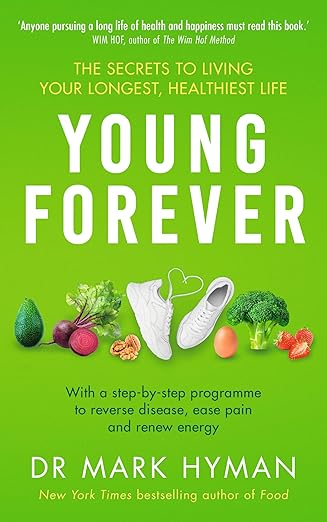
Young Forever, Dr. Mark Hyman

This week, I’ve been watching the 2024 Food Revolution Docuseries, which brings forth information from many experts in the fields of medicine and nutrition. I’ve enjoyed all the presentations, but especially yesterday’s session on Brain Health. This episode discussed the latest scientific information regarding prevention of Alzheimer’s, memory loss and other brain related disease. Those who follow me, know this is a major driving force behind the personal work I am doing on this blog and in my life. Having witnessed first hand what Alzheimers does, to both the patient and the family, I am determined to do anything in my power to prevent this disease. One quote stood out to me during the summit, “you have the power at the end of your fork to delay, or prevent this disease.” The quote, I believe, is attributed to Dr Mark Hyman, well known functional medical doctor and author. His book, Young Forever, provides a simple blue print to live a healthier life, including nutritional changes.

When my grandmother and mother contracted Alzheimer’s, doctors said there was nothing we could do. It was uncurable and would run it’s normal course. When I started researching Alzheimer’s, too late for my mother, I learned that nutrition indeed plays a major role in the onset of the disease. For far too long, research has focused on the treatment of the disease, once the patient is diagnosed. Current research, shared in this docuseries, looked more at prevention of the disease, which is where success may be found. The staggering facts are that women in their 60s are twice as likely to get Alzheimer’s. And, the primary determinant is their diet and lifestyle, yes genetics play a role, but studies now show that diet and lifestyle have more impact than ever thought. Alzheimer’s is not inevitable!

We can all agree that food is a powerful tool in our health journey. Everyone agrees that poor nutrition has an impact on cardiovascular disease, diabetes and overall health and wellness. We now know that the brain is also heavily impacted by poor nutrition. Saturated fats have been linked to high LDL levels and an increased risk of Alzheimer’s. Polysaturated fats (not coconut oil) have been shown to lower risks of Alzheimer’s disease. Here are some of the takeaways from this episode.

Fork Power

Plant strong whole foods have been shown to improve brain health. Eating foods high in Omega 3 fatty acids are needed by the brain on a daily basis. Best plant based sources are chia seeds, hemp seeds, kale, flax and walnuts and these should be eaten daily. When eating nuts and seeds, you don’t need more than a handful a day. Healthy fat, such as avocado, is considered a brain health food. They shared that diets high in meat, especially red meat, have been linked to Alzheimer’s, followed by eggs and high fat dairy products. I’ve shared a lot about my personal journey to whole food plant based eating in past posts found here Change Our Thinking About Food and Sugar Sugar.

Supplementation

I am a vegan, so I do take a supplement to ensure I am getting enough Omega3 fatty acids, Vitamin B, D, Zinc, Magnesium and Iodine. I love the Essential Vitamins brand and take Complement multivitamins daily. I recently put my husband, who is not vegan, on them as well and he speaks often of the increase in energy that he feels. I highly recommend these and love that I don’t have multiple jars of separate supplements anymore.

Hydration

There was a discussion about the importance of hydration for brain health. Specifically, they discussed studies that showed the brain shrinks when dehydrated. We have a greater capacity for mental focus and wellness when we are properly hydrated. They listed water as the best choice for hydration, followed by green tea and coffee, but without dairy, or sugary add ons. I try to drink 80 ounces of water a day, I’m not always successful, but am definitely drinking more than I used to. I fill my 80 ounce container every morning with intention to finish it. I do use the water from this container when making tea. They also said it was more important to hydrate throughout the entire day and not to drink large amounts at one time.

Sleep

Sleep is most overlooked when it comes to its impact on our brain health. Many of us, myself included, struggle with sleep. When at my worst, I definitely became worried by my brain fog and began to question if it was something more. Sleep is the main means for our body to cleanse our organs, including our brains. Restorative sleep is critical to brain health and the major reason I started tracking my sleep. I can see the difference in how I feel on days when my sleep was interrupted vs days when I’ve had a deep and restorative sleep. You can read about my sleep routines on these past blog posts, found here Sleep Your Secret Weapon and Sweet Dreams.

Meditation and Mindfulness

Engaging in a regular yoga and meditation practice can help us manage stress. Living in a chronic state of stress has major impacts on our mental health and wellness. Yoga practices can deliberately activate our parasympathetic nervous system and ease our stress response. I can attest to this personally, as I have shared the negative impact my high stress career, couple with the pandemic had on my health. Living in a chronic state of stress, caused weight gain, brain fog and lack of sleep. I was likely one step away from a breakdown. You can read more about the impact of stress on my health in this post I shared, Stress.

Overall, the docuseries on brain health and research, was insightful and provided validation for life changes I have made. I found it uplifting and inspiring and motivated me to keep on this path I’ve chosen. Hearing the researchers say that Alzheimer’s is not inevitable, provided me hope that through dietary and lifestyle changes, I can indeed delay or prevent this memory robbing disease. I hope you too will spend some time learning about the power found at the end of your fork and on your plate. Your future self will thank you, as will your family.

Feel free to reach out if you have any questions, or comments, about this week’s blog. I do provide links to products I use and recommend, available at no extra cost to you. As an Amazon associate, I may receive compensation for any purchase made, which offsets the cost of running this blog. Thank you for reading and for your continued support of this blog. You can reach me via email at laurakump@reclaiminghealth.blog, on Instagram or Facebook, or in the comment section below.