
Understanding the Injury Recovery Cycle: A Personal Journey

I’ve been taking a much needed mental health break these past few weeks, enjoying some down time. I received some bad news from the doctor regarding my injury recovery just prior to Thanksgiving. Hearing the words, degenerative damage, really sent me spiraling. I had been trying to hold on and push through, so hearing those words felt like a gut punch. Ironically, as bad as it was to hear, it was what I needed to move forward.

I’ve really been in a rut this last month. As my recovery time wore on, I became quite frustrated and deflated. I spent a lot of time trying to kick start my motivation and couldn’t quite get anything going. Having been through this before, I recognized that my mental wellness was suffering. While quite common during injury recovery, that should not be underestimated.

My thoughts recently have centered around injury recovery time and mental wellness of athletes. I am not a high level athlete, but I have always enjoyed participating in sporting events and working out. I thrive when I train and engage in these events, physically and mentally. I think it is the structure of training that fuels me. I love to workout for a purpose – i.e., to run longer distances, or run a distance in a shorter time. I strive to lift a heavier weight or to add a set to the lift. Knowing the end goal really pushes me to do the work.

Recently, I had been focused on my performance in pickleball. I’ve been working out at the gym to improve my performance, as well as drilling and playing games. I made steady progress and was truly enjoying the sport. It felt great to be part of the pickleball community. When the injury occurred, I assumed it would be a quick recovery. As the time passed and I still experienced pain, I began to try to navigate my way through.

I’ve come to understand that there is a cycle many athletes go through when recovering from injury. It doesn’t matter what level you are, though I imagine it’s far worse when you are an elite athlete. What matters is that, much grief, there are stages you move through as you work toward recovery. The mental aspect of this process is what I have been focusing on.

I have a competitive personality. I thrive when I am striving to accomplish a goal. I love to figure things out and especially love the learning process of it all. When I was a runner, I wanted to learn everything I could to make me a better runner. Same, in my professional life. I was always striving to learn and grow. My personal identity was strongly tied to my ability to run the distance, or improve my school. With an athlete mindset, I dealt with life through my sport, it is part of who I was. I was a runner, I was a Principal, I was an athlete.

The athletic part of my life became a strong coping mechanism for me, both growing up and as an adult. What a fabulous stress reliever to go out early in the morning for a long run, or workout. I started most of my days with an early morning gym session, run or walk. Therefore, when I get injured, it can feel like a personal threat to my identity. Suddenly, it feels like my life is altered and my routines disrupted. The morning athletic time is no longer an option, leaving me feeling isolated and sad.

I want to share my journey through this injury cycle. I hope it helps anyone else dealing with a similar situation.

Stages of Injury Cycle

Much like grief, there is a cycle people can experience when they experience an injury. Those, like me, who engage in training outside of professional sports, are no exception. The cycles do not necessarily follow a linear order. Instead, we go through them in response to our personal experiences. Here are the stages and my response to each.

1. Denial

The day I sustained the injury, I knew it wasn’t good. But, I thought if I stretched, I would be fine. When stretching did not help, I knew enough to leave the court. I went home and iced my foot, followed by compression and elevation. I thought for sure I’d be fine in the morning. I planned to take the next day off and expected to be ready to play by Saturday. I truly didn’t think it was anything serious. Honestly, I still haven’t canceled my playing commitments. I’m still going week by week, hoping to be back on the court. Denial of the injury is quite common and considered the first step in the recovery process.

2. Anger

As the days went on and turned into weeks, I started to get frustrated. I could barely walk to the corner without feeling pain. I didn’t understand why the pain wasn’t getting better and refused to stop trying to walk. Each day I got angrier about this inconvenience. I was angry at myself for not doing a proper warmup before playing and blamed myself for the injury. I was angry at my body for failing me. I was angry that I was missing so much playing time.

3. Bargaining

At this point, I was desperate to be done with the injury. I decided to rest for a few days and see if that improved my recovery. It was as if I said to my body, I’ll give you a week of rest, then will you heal? I remember thinking I just need to stop exercising entirely. I’ll recover quickly and it’ll be worth it. When that didn’t work out, I’ll admit I was back to anger. That’s what I say the cycles are not experienced in a linear fashion. When my bargain failed, I was right back to being angry. I was thinking, I gave you what you wanted, why are you not doing your part. It is quite frustrating!

4. Depression

Right before Thanksgiving I felt like I was at my lowest. It have been 8 weeks and I still wasn’t feeling better. Every day I had pain and I was ready to just give up. I remember hobbling in to the doctor’s office that morning and telling him I needed help. I shared with him everything I had done to improve and that nothing was working. I said there must be something he could recommend. I was on the verge of tears and said, soon I’ll be chubby and depressed. I will admit he was very patient with me and truly explained things to me. That is when degenerative issues came up. My feet have logged a lot of running miles. Many years of long distance running and training were not kind to my body.

5. Acceptance

This was the lowest point of my journey. I also think it was the moment that slapped sense into me. It felt like there was a moment of clarity for me here. I understood better the timeline and the reality of my injury. I also understood that it was not my fault entirely and I had done nothing wrong. As I drove home from the doctor’s office, I was extremely upset. When I got home, I got my gym bag packed and headed to the gym.

I decided that day, that I had to do something different. I was going down a slippery slope and needed to find something that wouldn’t cause pain. That day, I did something I’d been resisting. I put on my swim suit and got back in the pool to swim laps. I knew that meant I accepted my injury for what it was. I also knew that I still needed something athletic to engage in to improve my mental wellness. Swimming is something I’d done in the past when recovering from tendon repair surgery. I can’t say I love it, but it is very therapeutic and a great workout too.

Next Steps

I am two weeks past the news that this injury is way more than I anticipated. I have created a new schedule for my workouts. I have been able to lift weights throughout the injury, just modifying for anything that puts pressure on the foot. I’ve now added one mile lap swims two days a week. I also tried a Barre class locally and was able to do the class without pain.

My new routine has been so helpful for my mental wellness. I am focused on my recovery and finding ways to engage in movement is an essential component for me. I am now working out again, six days a week with one full day of rest. I started dry needling at the doctor’s recommendation. It is a bit painful, but I do feel it is helping.

My best advice is to find solace in setting new goals and focusing on other areas of your life. Injury recovery is tough, especially when you are used to being highly active. It is hard to accept that you are not able to just push through. Take that energy and use it to fuel your recovery. For me, setting new goals and focusing on other ways to move has been a lifeline.

I would be very interested to hear about your journey with injury. What have you found helped you the most? Please share in the comment section below, via email at laurakump@reclaiminghealth.blog, or on Instagram.
Transform Your Health by Accepting Yourself

As part of any health journey, I believe we need to address our inner critic and make peace with our true self. Removing our masks and accepting ourselves as we are, not striving to be who others say we should be, can be so empowering. For far too long, I was trying to change my outer self, without addressing my inner self. I think this is why I failed, time and again on my health journey. 

Read part two of the post I shared last week, by clicking the box below – Kritajna Hum: I am gratitude. If you missed part one, you can find that here. I hope you feel inspired to reflect on your inner critic and find ways to embrace your self, just as you are right now. It could be the key to moving forward towards wellness, it was for me.

Looking forward to spending some quality time with my family this week, cooking and hanging out. I hope you have some time off as well. Please do share in the comments any thoughts you have on this two part series. As always, I look forward to hearing your thoughts and feedback. Remember you are perfect just as you are. Feel free to email me at laurakump@reclaiminghealth.blog if you’d like to discuss your wellness journey, or have any questions about my posts.

The Compound Effect

“You will never change your life until you change something you do daily. The secret of your success is found in your daily routine.”
― Darren Hardy, The Compound Effect

As the fall weather is upon us, I am cleaning closets and thinking of the approaching winter season. Fall is my favorite time of the year. I start to organize and purge what not longer fits, including more than just clothing. Life is always about evolving and growing as we go and fall is the perfect time to slow down and reflect. In that manner, I have decided this week’s post will be a repost of one of my most popular blogs from this year. In this post, I speak about the importance of consistency and holding firm to my journey as I move through the winter season. Let’s all use the fall to prepare for the winter ahead. Much like the squirrels gathering their food for the winter, I believe we need to gather our motivation for the days ahead. I hope you enjoy the reread of this much loved post.

I first read Darren Hardy’s book many years ago as a new school leader. The Compound Effect outlined, is the strategy of being consistent with smart, tiny choices over time that will produce significant results. As I read the book I was focused on leadership, yet in the back of my mind I kept connecting back to my health journey. The concept is that smaller steps over a long period of time will have a greater, more beneficial and successful effect on your life than bigger steps in a shorter period of time (that most people will not stick to). Today as I view the predictable dwindling off of the New Year’s resolutionists at the gym I am reminded of this concept.

For many years, I was that person. The one who gets all pumped up for the reclaiming health journey. Those who have followed me over time know that every spring I have a rebirth and start over. Then, every winter I slowly fade away and fall backwards. This year has been different, albeit not easier. The temptation to fall back has reared its head repeatedly, especially on these 18 degree days. Using the concept of the compounding effect, I know that consistency is the key to achieving and maintaining momentum. I have held tight to that concept on my darkest of days this winter and continued with the small, simple habits and daily routines that will add up to a healthier life. My goal this year was to make it through the winter with habits in tact and see where I am come spring. As we are nearing February, I am very hopeful that this year will be different for me. 

Consistency is not easy if you make your habits too lofty, the key is to keep things simple and doable. When I selected daily habits, I’d say I even set the bar lower than I knew I could accomplish this winter. This helped me through the harder days and gave me added bonus boosts when I achieved more and kept me motivated. We all know success fosters motivation and failure often motivates quitting. For my movement goal, I merely set a minimum of a 30 minute walk in nature goal for every day of the week. This goal has been the easiest one to maintain, rain or shine. Setting a doable goal like this sets you up for success and avoids repeated failure that can serve to make you feel like a failure and give up. Obviously, it’s not my only fitness goal, but it’s the one I will never skip. Walking and being in nature cannot be undervalued on any health journey.

Another doable goal I set was to improve my nutrition through simple choices for my meals. I made a commitment to have a healthy breakfast every day. To make it easier, I decided to to a morning smoothie with protein and healthy nutrients, using simple recipes found in Joyfull, by Radi Devlukia. This sets me up for my morning workout and keeps me full until lunch. There are so many great smoothie recipes, but if that feels overwhelming just use a high quality protein powder shake, such as this one from Complement. I like the chocolate flavor when drinking plain and unflavored when using with the recipes from Joyfull. I have been super consistent with this goal as well. No cooking required for this breakfast and the variety of smoothies is endless. For lunch, I generally eat the main meal of the day to allow more time for digestion. I eat a whole food plant based diet consisting of protein, legumes, fruits, vegetables and whole grains. This also is very easy to do as salads are super easy to put together. 

On this cold winter day, I remind you that it’s not about perfection. It’s about the effort we put in and more importantly, the consistency we apply to our health journeys. Approach every day with a clean slate. If you ate too much yesterday (me eating pizza during the football playoffs), it’s all good, just return to your daily routine today. You slept in and didn’t do your gym workout this morning, get up do your 30 minute walk and return to the gym on your next scheduled day. Perhaps your body needed the rest. What we can’t do is give up and stop. Just keep to your routines as best you can and watch the compound effect unfold. 

If you have any questions or comments, please do reach out. I love getting emails at laurakump@reclaiminghealth.blog about your journey. Take a photo of nature from your 30 minute walk and tag me on Instagram at reclaiminghealthblog with #30minutesinnature . Let’s do this together, motivate each other and reach spring feeling healthier. It is only two months away!

Unlock Your Wellness Goals with Effective Scheduling

 “In essence, if we want to direct our lives, we must take control of our consistent actions. It’s not what we do once in a while that shapes our lives, but what we do consistently.” –Tony Robbins

This week, I walked into a yoga class feeling like the Tin Man from Wizard of Oz. I had a tough weight lifting session on Sunday, and boy was I feeling it. I had trouble putting on my socks for the class, that’s how stiff I was. When I started the class, I couldn’t sit comfortably and wondered how it had gotten this bad. Then it hit me, that I couldn’t remember the last time I took this class. Thankfully, my yoga teacher knew exactly what was needed and when I walked out of class an hour later, I felt much better.

Yoga is an important component in my wellness program. I have tight muscles and need to work to lengthen them. The deep and intentional stretching I gain from yoga has improved my flexibility and helped prevent injuries. Additionally, yoga keeps me grounded and focused on my emotional wellness. Whenever I don’t engage in regular practice, I notice a huge difference in how my body feels.

Later in the day, I was still thinking about this and couldn’t come up with any reason why I neglected to do my stretching. It was simply poor time management and veering from my schedule that caused me to miss yoga. Coming out of August, following my daughter’s wedding, I had COVID. This derailed me for a few weeks and getting out of my routines seemed to have lasting implications.

I bet so many of you can relate to this experience and have found yourself wondering why there never seems to be enough time in your schedule. We all lead busy lives and time seems to get away from us. Clearly, I hadn’t managed my time well these past two weeks. But, there is always learning found in these bumps in the road and now I’m highly motivated to focus on time management.

After reflecting on my time use, I noticed an increase in my screen time usage. I need to reevaluate this and move back to a more structured planning approach. I’ve decided to use the following strategies to renew my focus on my wellness:

Calendar:

The calendar will me the main tool I used to schedule and track my fitness goals. I will use the calendar in my phone, as it is always with me. I will schedule all training sessions, as well as personal appointments on the same calendar. When I wake each morning, I will check the calendar, prior to going out for my long walk. This will put the days events front and center in my mind.

Routines:

The secret of your success is found in your daily routine. Doing the same things on the same day, or in the same order, sets you up for success. Daily habits played an important role in my professional success. They will also play an important role in achieving my wellness goals.

My current wellness routines include, daily long walks each morning and assigning days of the week to specific activities. This repetitive use of time helps the activities become habitual.

Less is More:

I am an overdoer by nature. This causes me to become fatigued and has led to sport injuries in the past. Scheduling on the calendar, will help me to visually see how much I am doing each week. It will help me avoid overdoing and ensure I have ample recovery and rest periods each week.

Give Yourself Grace:

Missing a workout session happens, but when it becomes a pattern it can derail you. I can use the calendar I create to reflect on my daily progress, ensuring I’ve accomplished my daily and weekly goals. Based on this, I can make further adjustments as necessary and give myself grace for the things that come up. It’s always about progress, not perfection, but tracking and measuring can help with my focus.

Set Goals:

What gets measured, gets improved. Goals are the anchor to our wellness journey. If you’d like to join me on this wellness journey, I recommend you start by thinking about your personal wellness goals. If you haven’t already done so, consider doing the following:

  • Set a goal for your long term wellness. Ask yourself, What is my primary goal for long term wellness? What can I do right now to support that goal?
  • List what you currently do for fitness. From that list pick two primary fitness activities that best support your long term wellness goal right now. Those are the two you will schedule onto the calendar first.
  • Check your calendar for available time slots. Start building your calendar around your two main activities.

In Conclusion:

Time management can certainly feel like a juggling act, especially when we lead such busy lives. Creating a routine and schedule can alleviate some of the stress you may be feeling. It an also keep you focused on your wellness goals. Without this focus, it is far too easy to let things slide.

I implore you to prioritize your health when scheduling your week. Be as creative as you can and look for those pockets of time. For me, it was the hours I spent looking mindlessly at the phone. I used to start my day sipping coffee in bed, watching the news and sipping coffee. I’d scroll the internet and enjoy the quiet. But, that was two to three hours a day. It’s perfectly alright to sip coffee in bed, but across my week that was fourteen hours of time I was using.

I now rise, dress, walk for an hour, then come home and sip coffee. Getting up earlier can definitely give you some nice quiet opportunities for fitness. Be creative as you look at your week with new eyes. I know you can find some time slots to use toward your wellness. Your future self will certainly thank you!

Drop me a comment in the section below and tell me what you plan to do to find time for your wellness goals. I look forward to reading your ideas, so please do share.

Transform Your Diet: Embrace Whole Food Variety

“Eating healthy food fills your body with energy and nutrients. Imagine your cells smiling back at you and saying: ‘Thank you!’” – Karen Salmansohn

Imagine eating a peanut butter sandwich every day for lunch. That is exactly what I did for years. Honestly, it didn’t bother me because I enjoy them and they’re easy. How many of us eat the same food on repeat? I know I did and never gave it a thought. Learning how important variety in food choices are to my wellness has opened my mind to trying new things.

I’ve learned it’s important to eat a variety of foods as part of my whole food plant based lifestyle. Recently, I heard that you should try to eat 30 different whole foods across your week. I am, however, a creature of routine and habit, especially when it comes to food selection. The thought of having that much variety in my week did give me something to reflect upon. Initially, when thinking about increasing variety in my diet, I focused on using it to push me out of my comfort zone. I tend to eat the same few foods repeatedly. Now I know, that eating a variety of foods is more important to my wellness than I once thought. With this knowledge, I am now planning my meals with far more variety than before. It’s a work in progress for sure, as old habits die hard.

My Food Struggles

I was raised in the 1960s and raised in a family where dinner consisted of meat, starch and one vegetable. At some point, the popularity of convenience foods caused some changes to our daily menu. Vegetables readily available in cans were now seen as the better option due to their shelf lives. My mother’s favorite vegetable was the french cut string beans and they must’ve often been on sale because we ate them often. Just thinking about them still makes me gag.

It was during these years that I developed my strong aversion to eating vegetables. I wouldn’t eat them, other than corn, for decades after I left home. I wouldn’t even try them. In truth, I only started eating broccoli and nothing more until this year when I transitioned over to a plant based lifestyle. Imagine, a vegetable hater is now living a plant based lifestyle. Most people who know me chuckle over that.

My Food Transition:

In January, I took a six week course on living a Whole Food Plant Based lifestyle. As I learned about its connection to brain health, I knew I would make this transition. I was unsure how and what I would eat, but thankfully there were many resources out there to help me. I found ample recipes to try, especially on Forks Over Knives. The trouble was I was avoiding most recipes that didn’t call for broccoli.

You see, when I first transitioned to a plant based lifestyle, I liked broccoli, spinach and corn. I also would eat salad. I assumed it didn’t matter that I ate the same thing every day, as long as I ate vegetables and fruit. I made broccoli every day and put spinach in my smoothie each morning and had a salad for dinner. As I continued learning, however, I realized how critical it was to eat a variety of foods, especially when eating plant based. This may seem like basic knowledge to you, but it was life changing for me.

Variety of Foods:

I’ve spent the last nine months learning about this lifestyle I’ve chosen. I’ve heard many criticisms of it, with the top being difficulty getting the proper nutrients. This criticism can be true, if you are not careful which is why I continue to learn, study and monitor my health markers. One aspect that is critical is to ensure you eat a variety of foods. This is critical in any lifestyle, but even more so in a plant based one. Different foods provide different nutrients, so eating a variety of foods can ensure that you get the proper nutrients.  Many plant-based protein sources lack one or more essential amino acids, so eating a variety of plant-based proteins throughout the day also helps ensure you get enough of all the essential amino acids. 

When planning for meals across the week, it is essential to focus on both variety and the nutrients your food will provide. This can sound like a daunting task, but there are many resources you can use to help guide you. One resource I found very enlightening was My Fitness Pal. I use the paid version of this app and kept a food log on it for months. Keeping a food log on this app helped me see the nutritional breakdown of my food. It was there that I began to notice what nutrients come from each food variety.

Using this food log, I noticed I had a lot of overlap for some nutrients and gaps in others. Nutrients I was supplementing for were revealed to be at extremely high levels just from the food I was eating. This meant I was both wasting money on them and potentially causing harm to my health. I highly recommend using something like this app to get you started. This awareness led me to seek out further guidance with a Registered Dietitian who specializes in Plant Based Nutrition. If that is not an option for you, I highly recommend you work with your health provider to monitor your nutrition levels through blood work.

Like everything else, I suggest you start with small changes to your eating habits to gradually increase the variety of foods you are eating. There are so many foods to choose from, but just try to add one new food in each week. Here is a great list of nutrients found in vegetables.

59 Different Types of Vegetables and Their Nutrition Profile

Tips to Increase Variety :

  • Eat the rainbow, and try to include at least three different colors of foods on your plate. 
  • Swap out your side dishes. Here’s a great list to choose from – 57 Vegan Side Dishes
  • Try recipes from different countries. I now eat Indian, Asian and Thai cuisine often, something I never would have tried in the past.
  • Choose one new vegetable a week to try. There are so many recipes online to try. I started with Forks Over Knives which has many recipes.
  • Try new ways to cook vegetables each week, such as air fry, roasting, grill, stir fry, etc.
  • Experiment with less-common grains. Here’s a great list to choose from – 17 Grains You Never Heard of

Next Steps:

As I transition to increasing the variety of food I eat, I am keeping things simple. Each week, I purchase at least one new vegetable to try. I am planning my menu for the week to include new recipes and one new food item. Once I increase my vegetable options it will be easier to plan meals. This week I made a chili recipe into which I was able to add a few vegetables. Traditionally, I find soups and chili recipes are the easiest way for me to sneak vegetables in. I also purchased a copper roasting pan to roast vegetables. I absolutely love this pan and use it often. The pan also has a basket which allows for good air flow and since I rarely use oil it prevent sticking. I highly recommend this pan – Copper Roasting Pan.

Here are a few articles you can read to get more information on this topic:

4 Exciting Reasons to Rotate Your Food

What is a Plant Based Diet and Why Should You Try It

The Importance of Variety in Your Diet

I hope you’ll take some time this week to reflect on your food selections. Are you eating the same things over and over, like I was? If you are, start to think about the importance of eating a variety of foods across your week. I’d love to hear what your thoughts are on this topic. Are you a creature of habit like I was, or a food explorer? Please feel free to reach out to me via email at laurakump@reclaiminghealth.blog, on Instagram or Facebook, or in the comment section below.

Consider answering one of these questions in the comment section below –

What did you notice about the variety in your food selections?

How will you increase the variety of foods, especially vegetables, that you eat? Please do share.

The Impact of Giving Up Running on My Health Journey: A Reflective Journey

“Movement will give you access to joy that will dramatically improve the quality of your life.” – Kelly McGonigal

I’ve been reflecting a lot recently on my current health journey. I feel like I’ve learned so much about myself through this reflection. It’s no secret that this last journey has been by far my hardest. There were many causes that led me to my lowest point, I can not just name one. It was like the perfect storm, a particularly bad or critical state of affairs, arising from a number of negative and unpredictable factors. In isolation, each event that happened was life changing. In combination, they served to wreak havoc on my mental and physical health.

The past four years have been some of the hardest in my life, but as they say, what doesn’t kill you makes you stronger. I am finally in a space where I can reflect on all I’ve learned through my experience. To share, my perfect storm consisted of the following events coming together, 1) physical injury that caused me to give up running; 2) COVID pandemic; 3) death of my mother.

I’d like to reflect today on the impact giving up running had on my overall wellness, as I believe it was deeper than I ever imagined.

Physical Injury

I was always a runner. I was up and out early mornings with my father as we ran around the neighborhood park. The loop was 1 1/3 miles and we did 3 loops to start our day. Later, I ran track in school and found I wasn’t good at the short, fast events, but I could run long distance. I’ve run 5k, 10k, Half Marathon and Marathon races. Running was a great sport for me, as I loved the time spent outside in nature. It truly is meditative.

During 2017 and 2018, I was training for the NYC Marathon. Both years, I did not make it to the starting line as I sustained a femoral stress fracture up near the hip joint. This injury required 12-16 weeks non weight bearing, followed by physical therapy. In 2018, I also sustained three broken toes. My body was definitely telling me it was time to cut back on running, but I had always wanted to run the NYC Marathon.

In 2019, I knew I wouldn’t be able to cover the training distance needed to get to the starting line, but was determined to get there. I used a different approach that year, cutting back on training run distance and working more on my functional strength, stamina and cardio. I signed up for CrossFit and used that as my main method of training, coupled with shorter runs, no more that 10 miles. That year, I was able to complete my goal and finish the NYC Marathon.

As excited and proud as I am about that goal, I know that I sacrificed my body to achieve it. I finished this race with another femoral stress fracture and this one seemed by far to be the most painful. I was back on crutches and back to the healing process. I knew that would be my last race and promised my family I would give up long runs. What I didn’t realize was how hard it would be to give up running and what role running played in my health journey.

Mental Wellness

When I returned to work, following the marathon, I was back on crutches. I was mad at my body and mad at myself for doing this to myself again. I truly felt that my body had failed me and didn’t understand why. Knowing my training and running days were over, I seemed to have less interest in recovery or maintaining my fitness levels. I had what I describe as a pity party and ate anything I wanted regardless of the fact that I wasn’t moving at all.

Going through COVID shutdowns and the death of my mother a few months later, I had no motivation to heal or do anything. If I couldn’t run, I didn’t want to do anything. I gained so much weight during this time and looked like a different person. When I look back now at the photographs, I don’t even recognize myself.

I didn’t understand that movement, not just running, had played a pivotal role on my wellness and its absence would have a profound impact on me.

Movement

I now realize the role movement played in my life beyond just running races. Movement was critical to my overall wellness, both mentally and physically. If I look back, I was running 4 miles most mornings with my dad around the park before the sun was up. Training for long races, required me to do long distances before work, meaning I was up and running most mornings before the sun was up. I’ve seen so many sun rises out on the road and never realized how important seeing them was to my overall mental health.

When I knew I wouldn’t be running anymore, I gave all that up without realizing it was the glue that held me together. Post-marathon depression may not be a clinical diagnosis, but it’s real. To put it into context, when you accomplish any goal that you worked toward for years, it’s only normal that a letdown occurs when it’s over. Add to this the knowledge that it was your last running event and you can see how deep the loss is.

When I finally pushed myself to get back out there, I was walking. It was different for sure, both in distance covered and effort, but it felt good to lace up my shoes. I like to say walking saved me. I wish I had known just how important movement was to my health. I never acknowledged that, just saw it as training or a work out session.

I’ve learned that, movement is vital for overall wellness as it significantly improves both physical and mental health by reducing the risk of disease, boosting mood, managing stress, and improving cognitive function. Essentially, it contributes to a better quality of life across various aspects of health. My journey can attest to these facts. When I stopped moving, my health declined both physically and mentally. In its absence, I was not well. When I started moving again, my wellness both mentally and physically improved.

Movement can take many forms, and there’s no one-size-fits-all approach.  Movement can include things like, walking your dog, mowing the lawn, sweeping or raking leaves, working out at the gym, swimming, playing pickleball, taking a yoga class. Honestly, the possibilities are endless. The more time we spend moving and not sitting the better we will feel.

Movement in My Day

  1. Walking – I walk outside twice a day, once when I first get out of bed, before the sun rise and once in the afternoon. I do this regardless of the weather, but do have access to a treadmill should I need to stay indoors.
  2. Pickleball – I play pickleball almost every day, either drills or competitive games.
  3. Weight Training – I am currently lifting twice a week, but will be adding in a third session soon.
  4. Yoga – I try to grab a yoga class whenever I have time.

Possible Movement at Work

  1. Walking – Walk around the block after you park your car before entering the building. Walk at lunch.
  2. Walking pad – They now sell walking pads that you can place under your desk to allow you to get your steps in. I haven’t used one to recommend, but here is a an option that looks portable enough – Walking Pad Compact Size
  3. 1 minute Exercise sessions – Set your timer for 60 minutes. When the timer goes off take a short walk, or do some air squats, or wall push ups in your office. Just get up out of the chair.

Conclusion

I find being outdoors walking in the early morning, before sunrise, to be magical. It’s so quiet and still out there and it’s truly unlike any other time of the day. I’ve been starting my day like this for over 50 years now and didn’t realize how critical it was to my health, until I stopped doing it. I am so thankful to be back out there and know that it’s helped heal me. I hope you find time to experience that time of stillness and beauty in your health regime. There are many proven benefits you will get, mentally and physically. For further reading, consider this article:

6 Proven Scientific Benefits of Walks at Sunrise or Sunset

I’d love to hear about your journey. What has helped you along the way? What roadblocks are you facing? Feel free to reach out to me at laurakump@reclaiminghealth.blog, on Instagram or Facebook, or in the comment section below.

Prioritizing Health: A Personal Journey to Wellness and Balance

“Your health account, your bank account, they’re the same thing. The more you put in, the more you can take out.”– Jack LaLanne

I’d like to follow up on last week’s blog, in which I discussed staying true to my personal wellness choices (Staying True to Whole Food Plant-Based Lifestyle: A Reflection). I’ve been reflecting all week on why this time, unlike others, I felt strong enough to stand firm in my decision. I believe I’m stronger now because I have a clear vision for what my balanced lifestyle entails. A balanced lifestyle is a way of living that aims to improve our wellness in all aspects of life, including: relationships, fitness, health, and emotional happiness. 

A Balanced Lifestyle Includes:

Sleep

Getting 7 to 8 hours of sleep each night is an important pillar in my life. Sleep can have so many implications on health, both negative and positive. I’ve struggled with sleep over the years and made it one of my first goals when I began this journey. Forming stronger sleep routines has truly changed my life. You can read more about the work I’ve done to improve my sleep in these two posts – Sleep Your Secret Weapon, Sweet Dreams. At the moment, I’ve been hitting my 8 hour sleep goal, but this is an area I still focus on.

Stress Reduction

Stress reduction is another key pillar. Stress without doubt wreaked havoc on my health. It was so bad that I wasn’t sure I’d ever get back to a healthy lifestyle. I was overweight, not sleeping, and most likely depressed. This was the lowest point of my health journey and I knew the only way to heal was to reduce my stress. I knew I not continue in my current situation.

COVID really changed the world and I was not exempt from that. A high stress job, coupled with personal events, created massive amounts of stress in my life. In 2023, three and a half years out from the onset of COVID shutdowns, I decided to walk away from the career I loved and devote my time and energy to my health. I’ve written about stress and my health in this blog post – Stress.

Social Connections

We are meant to journey through this life with others. Fostering and cultivating social connections and relationships is my third critical pillar. When we are too busy, or too tired to engage socially, we are missing out on an important part of wellness. Social connections can create feelings of belonging, being loved and valued. Who doesn’t want that? But, like everything else, relationships take work and time investments. It is definitely worth the effort, as strong social connections can have significant impact on our overall health. I’ve written more about social connections in this blog post – The Vital Role of Social Connections in Health and Wellness. I hope you’ll take the time to read it and then reach out to a friend, or loved one.

Nutrition

Eating a balanced diet, that your body responds too, is also an important pillar. Finding what works best for your body is the critical work we all need to do. There is not a one size fits all approach to nutrition and far too many competing options, which can be confusing. I’d recommend you spend your time figuring out the best path for you.

I chose my path, in consultation with my health professionals, by keeping a food journal and taking notes on how my body responded to certain foods. I noticed changes to my sleep, inflammation or bloating, along with other responses my body had to food. I used this knowledge to make the decision that for me, the best path was to shift to a whole food plant-based lifestyle. I’ve written about this nutrition journey in these posts – Change Our Thinking About Food, Eat to Live, The China Study: Reducing Health Risks with a Plant-Based Diet.

Movement

Movement has long been thought to be the most important piece of my health journey. While it is still one of my key pillars, I now know that it can’t be my only pillar, as I can’t use exercise to avoid everything else. I move my body daily and choose activities I enjoy. Walking twice a day is a staple daily activity that is non negotiable. I love playing pickleball as it’s great exercise and fosters strong social connection. Finally, I engage in yoga and strength training.

We all definitely need to move to stay healthy. It can’t be the only pillar we rely on though. Believe me, I tried to out run a bad diet for most of my life. I listen more to my body these days and pay attention, especially when I need to rest. That is something I never did in the past, to the point of consistently getting injured. I’ve written about my daily exercise routines in these blog posts – Move to Live, Healthy Lifestyle: Food, Exercise, and Joy in My Daily Routine

Prioritizing Health

A balanced lifestyle should include prioritizing your health above all else. It’s not about worrying over everything you do and labeling decisions good or bad. It’s about understanding the impact your lifestyle choices have on your wellbeing. I learned the concept of creating an IRHA – Individual Retirement Health Account, and make continuous deposits towards my longterm health. If you are living in balance, your deposits will outweigh your withdrawals. We all will make withdrawals as we live, but they are balanced out by many deposits along the way. I’ve written about this concept in this blog post – IRAH: Individual Retirement Account for Health – A Personal Transformation Journey

Next Steps

Ultimately, health balance is a deeply personal journey—one that requires self-reflection, and an unwavering commitment to your well being. It’s about finding what works for you and prioritizing your health. I hope you will take that first step. Here are a few more resources to get you started:

Baby Steps

Reclaiming Health: The Power of Taking the First Step

Longevity and Brain Health: Lessons from My 93-Year-Old Father

Healthy Lifestyle: Food, Exercise, and Joy in My Daily Routine

If you’d like to share your journey with us, please reach out via email at laurakump@reclaiminghealth.blog. I’d love to hear what’s working and not working for you. You can also reach out on Instagram, or Facebook, or in the comment section below.

Embracing Personal Accountability for a Healthier, Fulfilled Life

“Personal accountability requires mindfulness, acceptance, honesty and courage.” – Shelby Martin

Personal success can be achieved through taking accountability for our actions. This shift takes time and is one I’ve embraced on this health journey. It’s also one I hadn’t embraced in the past.  It’s hard to come to terms with the reality that you and you alone are responsible for the decisions you make each day, but personal accountability is the key to living a healthy, fulfilled, and meaningful life. Even though it can be challenging, accepting personal accountability will enable you to learn from mistakes and make adjustments to your journey.

Our consistency and day to day life decisions play a huge role in the progress we make and results we achieve. Believe me, I know it feels better to blame work stress, genetics, health or other outside reasons for my failure to make progress. Blaming others or making excuses can lead to giving up when things get hard. There are certainly cases where outside factors are a key reason one is not achieving results, despite putting in the work. I would never want to minimize that, but, today I’d like to talk about accepting personal accountability for your health journey.

My Journey

I’ve been on this health journey for what feels like a lifetime. I’ve honestly tried everything there was to try. I worked with countless nutritionists who wanted to sell me endless products. Everyone seemed to have their own angle on what I needed to do. I would try what they said, not see results fast enough and give up, then blame them. I believed every advertisement I saw that spoke to those who haven’t had results, but would if they only tried their new approach. I worked out endlessly, ate clean and couldn’t seem to ever stay on track. It wasn’t until I shifted my mindset from doing what someone else said I needed to do, to taking control over my own journey, that I began to have success.

Think about this, every single decision you make in a day is in your own hands. I decide every day whether I will sleep in, get up, work out, eat out or cook. I needed to accept responsibility for the decisions I made. Recognizing and honoring this was a necessary first step toward making lasting changes in my health. It was also a powerful tool toward changing unwanted behaviors and ways of thinking about myself.

Many of us spend our days drowning in negative self talk, blame and procrastination. On this journey toward reclaiming our health, we first need to address the elephant in the room – blame and excuses. Yes, it is far easier to say I’m still overweight because I’m a middle aged woman, or my parents were overweight, or, or, or. Accepting these excuses and reasons for our struggle can lead us to accepting where we are, giving up on trying to change our way of life. I know this first hand, as I had given up on even trying. I began to accept that this was just how I was going to be.

Personal Accountability

Personal accountability is the practice of accepting responsibility for your actions, words, and behaviors, and the consequences that result. It involves taking ownership of situations, and doing your best to improve, whether the outcome is good or bad. People who are personally accountable don’t blame others or make excuses, and they try to make amends when things go wrong.

Personal accountability does not mean we place blame, or shame on ourselves. Rather, it is meant to be a means to accept that despite where you are right now on your health journey, including the reasons for being there, you have the power and responsibility to improve your health and make lasting changes.

Roadblocks

Two of the most common reasons for not achieving our goals can be tied to lack of consistency and not having a strong enough purpose – your why.

Consistency:

I’ve written about the importance of consistency on your health journey. This blog is worth your read – The Compound Effect. Consistency is your super power. Quite simply, the small decisions and moves you make over time will determine your rates of success. It’s a lifestyle, not a diet or program.

This hit home for me once when a doctor asked me about my activity levels. I replied that, I run 3 miles most mornings, swim other mornings and ride my bicycle. She said that’s a great way to start your day, but what do you do for the rest of the day? I had to pause and think. I often sat and read, worked on the computer, binged Netflix, etc. Most of my activity for the day was completed by 10:00 AM each day, leaving me feeling like I had put the work in. Sadly, I was thinking of exercise as something I needed to get done.

Exercise is part of an active lifestyle, not something you do to check off a box on your daily list. The more you move, the healthier you will be. I now move throughout my day, not just in the morning. For example, I take a brisk walk when I wake each morning for about 30 minutes, about 1 mile. I then often relax and have breakfast. A few hours later, I head down to the pickleball courts and play games or practice for about 2 hours. I then cook our main meal of the day and we eat lunch. I relax, do some reading, or computer work and then take my afternoon walk, about 1.5 miles. When I return, I either go down to the pool, or go into town to the beach area. We have a light dinner and I walk with the dog for a bit to end the day. Then it’s either relaxing evening home, or we go out. As you can see, I am moving all throughout the day. You can change the walking to bike riding in the nicer weather, or yoga for pickleball. Honestly, it doesn’t matter what you do, as long as you are consistently moving your body.

Purpose:

MY WHY -Having  strong reasons for getting healthy can help improve your focus and drive. Losing weight for a special event, while motivating in the short term, won’t sustain you over the long haul. Generally after the event is over, so is your motivation and drive to continue. Further, we often feel we have achieved our goal and begin slowly to loosen up on our decisions.

Center your purpose around longer term goals to keep you grounded when the going gets tough. In my case, my why is to maintain optimum health as I move into the next phase of my life. When I declare my why I say, “I WILL hold on to my memory and live a long, active life.”    This is my motivation and my drive.  It pushes me out of bed when I don’t want to get up and exercise.  It pushes me to think about what I am putting in my mouth.  It helps me hold on to the gains I’ve made these past years and continuously pushes me forward. It helps me not stray far off the path, even though there are bumps along the way.

Next Steps

Success on this journey will require action. This action includes accepting personal responsibility and not allowing yourself to make excuses when you fail to follow through

Here are a few of the ways I have been holding myself accountable.

Planning

They say a goal without a plan is just a dream. Planning is the biggest key to success on any health journey. When I fail to plan, I always end up making decisions that aren’t in my best interest, especially around food choice. Planning for me includes shopping for healthy food, planning for meals and scheduling workouts. Using a calendar and developing a schedule is the easiest way I get my daily workouts in. Blocking out times to move my body has been essential. I wake up, brush my teeth, throw on shoes and go for a brisk walk every day. I do this before I do anything else. It’s now a habit. After lunch, I go for another walk every day. I sometimes bring my phone and catch up with a friend. Build your routines into your daily calendar and you will see improvement in your consistency.

Menu planning and food shopping go hand in hand. If I don’t plan out my meals I end up cooking whatever is easy, not necessarily healthy. Whenever I am off target I know that it means I haven’t been diligent about shopping and planning. I am not a meal prep person, I just don’t like to have the food all prepared for the week. I like to cook easy, simple meals to avoid the one long day of prep. For example, yesterday we ate Miso-glazed Eggplant with Farro . On the table in 45 minutes, delicious and easy. Whichever approach works for you, this area of planning is essential for success.

Share the Journey

Writing this blog over the years has allowed me to share my journey. It’s picked me back up when I’ve fall down and holds me accountable. I find writing very therapeutic, as I work through issues I am facing myself. Making my journey public has held me personally accountable. I can’t write about things others should do if I don’t do them myself. This blog keeps me grounded in my why. One of the best ways to stay strong and focused is to share your journey with a friend or loved one. Find yourself a partner and support each other along the way.

Positive Self Talk

Blame, negativity and excuses are hard to stave off. I’m working hard on using positive self talk to replace them whenever they rear their ugly heads. Find yourself a means to use positivity and gratitude to keep your spirits up. This will be a difficult journey and there will be times when your emotions take over. Having an outlet, or means to keep it positive will go a long way towards keeping you moving forward. I’ve written blogs on this topic, which can be found here Kritajna Hum: I am gratitude, Things I’m Letting Go Of

Tracking Progress

At the gym I always hear this, “What get’s measured gets improved.” Tracking progress will greatly improve your motivation and drive. Don’t just weigh yourself and lament over lack of weight loss. Measure all progress – This week I worked out six out of seven days, Today I ate three healthy meals, I slept through the night, etc. There are so many areas of our life that we can look to for progress. The scale is only one way to track our progress. In past blogs I’ve talked about taking your measurements as an alternative to the scale. Taking photographs is another positive way to see progress. Recognizing our daily and weekly successes helps change our thinking around success.

Move to Live

The more we move, the better we will feel. Movement across the day is an important pillar of my journey. I plan it into each day and have cultivated strong habits around movement. Dr. William Sears clearly states, “sit less, move more, live longer”, which definitely is the plan here. I’ve written a blog post on this topic and you can visit it here – Move to Live. I hope you will take the time to read this and lace up your shoes for a walk.

Reach Out

I hope you are connecting to your current health journey. Moving forward is always our goal. In reflecting on where you are right now, perhaps ask yourself, “What are some ways you currently hold yourself accountable?”,  “How do you maintain your positivity?”, “Do I move throughout the day?”, and “Who can I share this journey with?”.

I’m always interested in hearing your thoughts.  Please take a moment to share your ideas with me at laurakump@reclaiminghealth.blog, on Instagram or Facebook, or in the comments below.  Also, consider sharing this blog with a friend who is on this path with you.

Reclaiming Health: The Power of Taking the First Step

“The first step to getting somewhere is deciding that you are not going to stay where you are.” -J.P. Morgan

Several times a month, I get asked the same question, “How did you get started?”. It is a question I’ve asked as well, many times to many people on my health journey. Getting started always feels like the hardest part, especially when you feel so far removed from your healthiest self. I was literally at rock bottom at the start of this journey. I truly had given up and felt there was no way for me to get back to being healthy. I came to the point where I accepted myself as I was, which is fine, but also had no plan to do any work to regain my health. I felt I was past the point of no return.

I wish I could have given my friend the answer she wanted, but I know it’s not that simple. There is not one way to take this journey, and my way may not be the way that works for her. The simplest answer I can give to the question of where to start is just to start. Think of yourself as you want to be, healthy and happy. Ask yourself, what would it take for me to get to that place. Pick one thing you can do right now, this minute, that will move you toward that version of you. For me, I put on my running shoes and started walking. I was way past the point of being able to run, too heavy and out of shape. But, I knew I could walk, so I put on the shoes and walked around the block. That was all I could master at that point and that was more than enough.

A month later, I walked around the block of my school every morning when I got to work to add a second walk to my day. Then, I dusted off my old Fitbit and set a goal to reach 5,000 steps a day. I didn’t always make it, but I felt better about myself for even trying. After I retired, we moved to a community in Delaware and they had a health club. At that point, I added some weight lifting using the machines they had. I did that three times a week.

A year and a half later, I feel so much healthier and am so glad I took those first steps. Imagine how I would feel if I hadn’t. If you are also wondering what to do to get started, my best advice to you is to just start. Here are a few ideas to help you.

Getting Started

  1. Set Realistic Goals – For me, I was so unhealthy, I knew I could not return to running, as much as I wanted to. It would not be realistic for me to try to use running as my exercise of choice. In order to start, I needed to use a different form of movement. Walking was the best choice for my current fitness level. Select a movement that you feel you can do at your current fitness level. Do not over do it, or you will quit. Just move your body every day and increase gradually.
  2. Be Consistent – Consistency is your ticket to success. If you aren’t consistent, chances are you will not be successful. This is a commitment to a lifestyle, not a quick fix. I made the commitment to do at least 30 minutes of exercise every day. Since I was walking, that meant I would walk every day, rain or shine and I did. I wrote about the importance of consistency here The Compounding Effect. I know that consistency was a huge part of my success.
  3. Give Yourself Grace – You cannot change everything at once. That is an important concept to wrap your head around. I did not become unhealthy overnight. It was a combination of many things, but it happened over time. You cannot become healthy overnight, but you can over time. Give yourself the grace to work at this. You will have days where you make unhealthy choices. Just today, I ate some Nutella on a spoon. It happens. Give yourself grace and don’t let one decision deride your goal of improving your health. Just keep moving forward, one day at a time.
  4. Think About Your Habits – I really needed to evaluate my daily habits. This involved looking at my movement patterns, which at that time were nonexistent. It also meant looking at my eating patterns, which involved takeout and restaurants. Examine your habits and ask yourself if they are helping or hindering your health journey. Again, don’t try to change everything overnight, but begin to make plans to make small changes. For me, I started with my breakfast patterns. I changed those first, as they were the worst and easiest place to start. Then, I worked on my lunch. Finally, I made a drastic change and embraced a new lifestyle of eating whole food plant-based. I have not looked back in the past eight months.
  5. Sleep – If you don’t sleep well, you will have a hard time regaining your health. Sleep is critical to your health as it is when your body cleans and restores. I tried so many different approaches and one day my doctor finally said, if you don’t address your sleep you will not see real change. The road to sleep has been challenging, but I am making progress. I have a set sleep schedule and really try to stick to it, within reason. I wrote extensively about sleep in these past posts, Sleep Your Secret Weapon, Sweet Dreams

It is my sincere hope that you find your way to take those first steps, because they may be the hardest. I am so glad I did because if I didn’t I honestly don’t know where I’d be right now. It’s not an easy journey, but the rewards have been so exciting. I’m feeling healthier and I have energy to do more than I have in years. I’m looking forward to continuing on my path and am proud of the progress I have made. If you want to reclaim your health, I hope you’ll take those first steps. I’d love to hear about your journey and am here to cheer you on. Feel free to reach out to me via email at laurakump@reclaiminghealth.blog, on Instagram or Facebook, or in the comment section below. Let’s do this!

Longevity and Brain Health: Lessons from My 93-Year-Old Father

“Caring for your body, mind, and spirit is your greatest and grandest responsibility. It’s about listening to the needs of your soul and then honoring them” – Kristi Ling

My father is 93 years young, living independently and able to walk for exercise. He lives a fairly active lifestyle, going every day to the local senior club. They go on trips each week which gives him a chance to get out and socialize. He has some age-related ailments, but for the most part, he is in great shape.

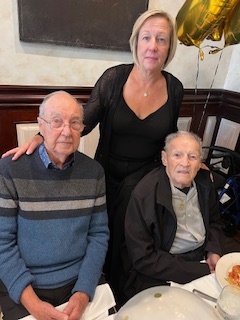
left to right, My Dad (blue shirt, 93), Me, My Uncle (90)

My father has always been a purpose driven man, getting his Bachelor and Masters Degree in his early 50s, while raising three children. He was a Police Officer in NYC and didn’t need to do that, but his drive pushed him to do so. My father always believed in education and building knowledge. When my mother was diagnosed with Alzheimer’s Dad’s sole purpose was to care for her. He did everything for her and treated her as if nothing had changed. When she was in a care center full time, his purpose was to be there every single day without fail and he was. See a post on his dedication here, The Notebook.

At my first session of a new six week learning program, the doctors were talking about longevity and brain health. It was stated that, research found people who had longevity, and were still cognitively sharp, engaged in common behaviors. Specifically, they engaged in physical exercise, ate more plant-centered diets and engaged their brains in complex tasks, leading a purpose driven life. When I heard that, I immediately thought of my father, who at 93 is cognitively sound.

My whole life I have taken after my father. I pray I have his longevity and cognitive health, for the women in my family have not been as lucky. My purpose, or why, is to avoid, or delay this fate. This purpose motivates me to learn, grow and move my body every day. I’ve learned that the risk of getting Alzheimer’s is not mainly driven by genetics. Approximately 3% of the total number of Alzheimer’s patients have specific genetic disease risks that cannot be avoided. Over 95% do not have that risk factor, meaning lifestyle and diet matter most in avoiding, or delaying onset of cognitive decline. (Sherazi, Dr.)

Diet and lifestyle matter, for what we do today and most importantly for our future. Here is what was shared regarding lifestyle choices for brain health and longevity.

Movement

We all should aim to move our bodies every single day for a minimum of 30 minutes. Brisk walking is highly recommended, as is tennis and racquet sports such as pickleball. The type of exercise we engage in matters. For brain health, it is recommended that we do the following:

  • Frequency – We need a regimented system of exercising, meaning organized and scheduled. Should be a minimum of 4-5 days per week for at least 30 minutes a day. Personally, I believe that brisk walks should be done daily for at least 30 minutes. The best time, in my opinion, is first thing in the morning to let the sunlight reset your circadian rhythm.
  • Strength – We lose muscle mass as we age. We need to engage in muscle-building routines, such as circuit machines, use of body weight or dumbells. We should work all the muscles in our body, but for brain health specific attention should be given to our legs. These large muscles keep us physically moving and are connected to vascular health.
  • Aerobic – We need to get our hearts pumping regularly as this increases blood flow through our bodies. Swimming, jogging or any other activity that increases your heart rate should be engaged in at least 3 times per week.
  • Consistency – This is a lifestyle, not a reach your target weight and stop. We are signing up to do this for life, as our life depends on it. I move every single day, as does my 93-year-old dad. When we stop moving, we start declining. Make a doable schedule and stick to it. I use my calendar and book it on there and I’m retired. If you are working, you will need to book this time for yourself and make it happen. For too many years, I skipped workouts. Those days are over.
  • **As with all recommendations it is imperative you speak to your health care provider about your specific abilities and limitations. Start slow and build up to these recommendations. I started with a slow walk around the block.

I’ve written many blogs on this topic if you’d like to read more, Move to Live, Healthy Lifestyle: Food, Exercise, and Joy in My Daily Routine

Lifestyle

  • Food – the research is clear that eating more plant based foods is good for our health. When my grandmother was alive, she advocated eating our fruits and vegetables, so this is not new. Processed foods need to be greatly reduced, better yet eliminated. Eat whole foods whenever possible. I eat whole food plant based and have been for six (6) months. I also do not eat any dairy products. I feel better than ever and will continue on this path. If giving up meat is not for you, you can greatly reduce your reliance on it as your main source of protein and increase your meatless days. Eat food that loves your brain, leafy greens and berries to name two. For more information on brain healthy food, see this https://www.health.harvard.edu/healthbeat/foods-linked-to-better-brainpower. Past blogs on my food choices – Change Our Thinking About Food, Eat to Live
  • Socialization – Far too many elderly people become isolated, due to various reasons. Ensure you have systems to keep you engaged with others built into your retirement plans. That is the main reason my husband and I moved when we retired. We loved our home, but knew the challenges to stay fully engaged and active would cause too much time alone at home. We had friends, but they were working still and to do anything, we would have had to constantly leave our area. We now have a full array of things to do right here in our community. Join a club, or senior center if you do not. Like my dad, who never wanted to join one, it gives him something to do each day and he’s around people. Isolation is not good for our brains.
  • Sleep -Quality sleep is one of the most critical aspects of our health. It is when our body rests, recharges and when our brain organizes and cleans out waste. Many people struggle to get fully restorative sleep, myself included. I am doing much better these days. I went into greater detail about getting quality sleep in the blog post – Sweet Dreams. I highly recommend you read it and work on your sleep, your life and brain health depend on it.
  • Stress – Stress almost killed me and it destroyed my health, no doubt about it. It takes a huge toll on us emotionally, physically and healthwise. We need to reduce our stress. Exercise, yoga, meditation and mindfulness all help. I wrote about these in great detail in these posts – Finding Myself, Just Breathe

Purpose

Some studies suggest that having a sense of purpose in life can be associated with increased longevity and a healthier life. A 2019 Harvard Health study found that people with a higher sense of purpose were less likely to die during a four-year study period, and less likely to die from heart, circulatory, or blood conditions. A 2022 study of older adults in the United States found that people with the strongest sense of purpose had a 15.2% lower risk of death, and that this association was stronger in women than men. 

I recommend your purpose be grounded in your why. Why do you want to be healthy? Why does this matter? Why do you get up each day? This will serve to motivate you to keep going when the going is tough. Believe me, my why keeps me focused and working toward my goal. It matters to me. Find what you are trying to achieve and ask why. Frame your decisions around that why.

I love learning and was an educator my whole career. I have been keeping my brain active in retirement, taking courses, along with completing my yoga certification. I am cooking in different ways now and needed to learn how to do that as well. All of the courses I’ve taken were connected to my why – to live a long, healthy, active life and keep my memories. I do not want to be a burden to my family, nor do I want them to watch me slip away, as my mother and grandmother did. I hope you will find your why and join me on this journey to reclaim your health.

I’d love to hear from you about your journey. Feel free to reach out to me via email at laurakump@reclaiminghealth.blog. You can find me on Instagram and Facebook as well, or just leave a comment below.