“Caring for your body, mind, and spirit is your greatest and grandest responsibility. It’s about listening to the needs of your soul and then honoring them” – Kristi Ling
My father is 93 years young, living independently and able to walk for exercise. He lives a fairly active lifestyle, going every day to the local senior club. They go on trips each week which gives him a chance to get out and socialize. He has some age-related ailments, but for the most part, he is in great shape.
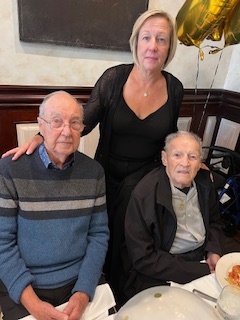 left to right, My Dad (blue shirt, 93), Me, My Uncle (90)
My father has always been a purpose driven man, getting his Bachelor and Masters Degree in his early 50s, while raising three children. He was a Police Officer in NYC and didn’t need to do that, but his drive pushed him to do so. My father always believed in education and building knowledge. When my mother was diagnosed with Alzheimer’s Dad’s sole purpose was to care for her. He did everything for her and treated her as if nothing had changed. When she was in a care center full time, his purpose was to be there every single day without fail and he was. See a post on his dedication here, The Notebook.
At my first session of a new six week learning program, the doctors were talking about longevity and brain health. It was stated that, research found people who had longevity, and were still cognitively sharp, engaged in common behaviors. Specifically, they engaged in physical exercise, ate more plant-centered diets and engaged their brains in complex tasks, leading a purpose driven life. When I heard that, I immediately thought of my father, who at 93 is cognitively sound.
My whole life I have taken after my father. I pray I have his longevity and cognitive health, for the women in my family have not been as lucky. My purpose, or why, is to avoid, or delay this fate. This purpose motivates me to learn, grow and move my body every day. I’ve learned that the risk of getting Alzheimer’s is not mainly driven by genetics. Approximately 3% of the total number of Alzheimer’s patients have specific genetic disease risks that cannot be avoided. Over 95% do not have that risk factor, meaning lifestyle and diet matter most in avoiding, or delaying onset of cognitive decline. (Sherazi, Dr.)
Diet and lifestyle matter, for what we do today and most importantly for our future. Here is what was shared regarding lifestyle choices for brain health and longevity.
Movement
We all should aim to move our bodies every single day for a minimum of 30 minutes. Brisk walking is highly recommended, as is tennis and racquet sports such as pickleball. The type of exercise we engage in matters. For brain health, it is recommended that we do the following:
- Frequency – We need a regimented system of exercising, meaning organized and scheduled. Should be a minimum of 4-5 days per week for at least 30 minutes a day. Personally, I believe that brisk walks should be done daily for at least 30 minutes. The best time, in my opinion, is first thing in the morning to let the sunlight reset your circadian rhythm.
- Strength – We lose muscle mass as we age. We need to engage in muscle-building routines, such as circuit machines, use of body weight or dumbells. We should work all the muscles in our body, but for brain health specific attention should be given to our legs. These large muscles keep us physically moving and are connected to vascular health.
- Aerobic – We need to get our hearts pumping regularly as this increases blood flow through our bodies. Swimming, jogging or any other activity that increases your heart rate should be engaged in at least 3 times per week.
- Consistency – This is a lifestyle, not a reach your target weight and stop. We are signing up to do this for life, as our life depends on it. I move every single day, as does my 93-year-old dad. When we stop moving, we start declining. Make a doable schedule and stick to it. I use my calendar and book it on there and I’m retired. If you are working, you will need to book this time for yourself and make it happen. For too many years, I skipped workouts. Those days are over.
- **As with all recommendations it is imperative you speak to your health care provider about your specific abilities and limitations. Start slow and build up to these recommendations. I started with a slow walk around the block.
I’ve written many blogs on this topic if you’d like to read more, Move to Live, Healthy Lifestyle: Food, Exercise, and Joy in My Daily Routine
Lifestyle
- Food – the research is clear that eating more plant based foods is good for our health. When my grandmother was alive, she advocated eating our fruits and vegetables, so this is not new. Processed foods need to be greatly reduced, better yet eliminated. Eat whole foods whenever possible. I eat whole food plant based and have been for six (6) months. I also do not eat any dairy products. I feel better than ever and will continue on this path. If giving up meat is not for you, you can greatly reduce your reliance on it as your main source of protein and increase your meatless days. Eat food that loves your brain, leafy greens and berries to name two. For more information on brain healthy food, see this https://www.health.harvard.edu/healthbeat/foods-linked-to-better-brainpower. Past blogs on my food choices – Change Our Thinking About Food, Eat to Live
- Socialization – Far too many elderly people become isolated, due to various reasons. Ensure you have systems to keep you engaged with others built into your retirement plans. That is the main reason my husband and I moved when we retired. We loved our home, but knew the challenges to stay fully engaged and active would cause too much time alone at home. We had friends, but they were working still and to do anything, we would have had to constantly leave our area. We now have a full array of things to do right here in our community. Join a club, or senior center if you do not. Like my dad, who never wanted to join one, it gives him something to do each day and he’s around people. Isolation is not good for our brains.
- Sleep -Quality sleep is one of the most critical aspects of our health. It is when our body rests, recharges and when our brain organizes and cleans out waste. Many people struggle to get fully restorative sleep, myself included. I am doing much better these days. I went into greater detail about getting quality sleep in the blog post – Sweet Dreams. I highly recommend you read it and work on your sleep, your life and brain health depend on it.
- Stress – Stress almost killed me and it destroyed my health, no doubt about it. It takes a huge toll on us emotionally, physically and healthwise. We need to reduce our stress. Exercise, yoga, meditation and mindfulness all help. I wrote about these in great detail in these posts – Finding Myself, Just Breathe
Purpose
Some studies suggest that having a sense of purpose in life can be associated with increased longevity and a healthier life. A 2019 Harvard Health study found that people with a higher sense of purpose were less likely to die during a four-year study period, and less likely to die from heart, circulatory, or blood conditions. A 2022 study of older adults in the United States found that people with the strongest sense of purpose had a 15.2% lower risk of death, and that this association was stronger in women than men.
I recommend your purpose be grounded in your why. Why do you want to be healthy? Why does this matter? Why do you get up each day? This will serve to motivate you to keep going when the going is tough. Believe me, my why keeps me focused and working toward my goal. It matters to me. Find what you are trying to achieve and ask why. Frame your decisions around that why.
I love learning and was an educator my whole career. I have been keeping my brain active in retirement, taking courses, along with completing my yoga certification. I am cooking in different ways now and needed to learn how to do that as well. All of the courses I’ve taken were connected to my why – to live a long, healthy, active life and keep my memories. I do not want to be a burden to my family, nor do I want them to watch me slip away, as my mother and grandmother did. I hope you will find your why and join me on this journey to reclaim your health.
I’d love to hear from you about your journey. Feel free to reach out to me via email at laurakump@reclaiminghealth.blog. You can find me on Instagram and Facebook as well, or just leave a comment below.
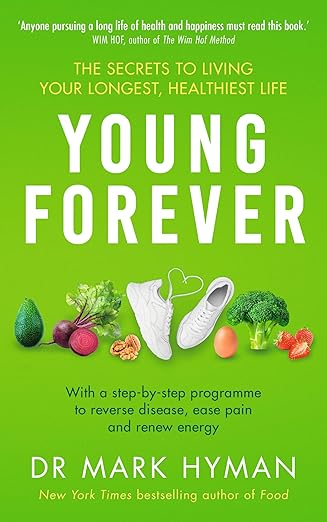 Young Forever, Dr. Mark Hyman
 Reclaiming My Health