
Fork Power

“What you find at the end of your fork is more powerful than anything you’ll find at the bottom of a pill bottle.” ~ Dr. Mark Hyman
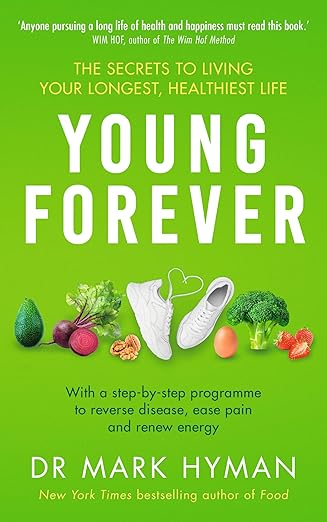
Young Forever, Dr. Mark Hyman

This week, I’ve been watching the 2024 Food Revolution Docuseries, which brings forth information from many experts in the fields of medicine and nutrition. I’ve enjoyed all the presentations, but especially yesterday’s session on Brain Health. This episode discussed the latest scientific information regarding prevention of Alzheimer’s, memory loss and other brain related disease. Those who follow me, know this is a major driving force behind the personal work I am doing on this blog and in my life. Having witnessed first hand what Alzheimers does, to both the patient and the family, I am determined to do anything in my power to prevent this disease. One quote stood out to me during the summit, “you have the power at the end of your fork to delay, or prevent this disease.” The quote, I believe, is attributed to Dr Mark Hyman, well known functional medical doctor and author. His book, Young Forever, provides a simple blue print to live a healthier life, including nutritional changes.

When my grandmother and mother contracted Alzheimer’s, doctors said there was nothing we could do. It was uncurable and would run it’s normal course. When I started researching Alzheimer’s, too late for my mother, I learned that nutrition indeed plays a major role in the onset of the disease. For far too long, research has focused on the treatment of the disease, once the patient is diagnosed. Current research, shared in this docuseries, looked more at prevention of the disease, which is where success may be found. The staggering facts are that women in their 60s are twice as likely to get Alzheimer’s. And, the primary determinant is their diet and lifestyle, yes genetics play a role, but studies now show that diet and lifestyle have more impact than ever thought. Alzheimer’s is not inevitable!

We can all agree that food is a powerful tool in our health journey. Everyone agrees that poor nutrition has an impact on cardiovascular disease, diabetes and overall health and wellness. We now know that the brain is also heavily impacted by poor nutrition. Saturated fats have been linked to high LDL levels and an increased risk of Alzheimer’s. Polysaturated fats (not coconut oil) have been shown to lower risks of Alzheimer’s disease. Here are some of the takeaways from this episode.

Fork Power

Plant strong whole foods have been shown to improve brain health. Eating foods high in Omega 3 fatty acids are needed by the brain on a daily basis. Best plant based sources are chia seeds, hemp seeds, kale, flax and walnuts and these should be eaten daily. When eating nuts and seeds, you don’t need more than a handful a day. Healthy fat, such as avocado, is considered a brain health food. They shared that diets high in meat, especially red meat, have been linked to Alzheimer’s, followed by eggs and high fat dairy products. I’ve shared a lot about my personal journey to whole food plant based eating in past posts found here Change Our Thinking About Food and Sugar Sugar.

Supplementation

I am a vegan, so I do take a supplement to ensure I am getting enough Omega3 fatty acids, Vitamin B, D, Zinc, Magnesium and Iodine. I love the Essential Vitamins brand and take Complement multivitamins daily. I recently put my husband, who is not vegan, on them as well and he speaks often of the increase in energy that he feels. I highly recommend these and love that I don’t have multiple jars of separate supplements anymore.

Hydration

There was a discussion about the importance of hydration for brain health. Specifically, they discussed studies that showed the brain shrinks when dehydrated. We have a greater capacity for mental focus and wellness when we are properly hydrated. They listed water as the best choice for hydration, followed by green tea and coffee, but without dairy, or sugary add ons. I try to drink 80 ounces of water a day, I’m not always successful, but am definitely drinking more than I used to. I fill my 80 ounce container every morning with intention to finish it. I do use the water from this container when making tea. They also said it was more important to hydrate throughout the entire day and not to drink large amounts at one time.

Sleep

Sleep is most overlooked when it comes to its impact on our brain health. Many of us, myself included, struggle with sleep. When at my worst, I definitely became worried by my brain fog and began to question if it was something more. Sleep is the main means for our body to cleanse our organs, including our brains. Restorative sleep is critical to brain health and the major reason I started tracking my sleep. I can see the difference in how I feel on days when my sleep was interrupted vs days when I’ve had a deep and restorative sleep. You can read about my sleep routines on these past blog posts, found here Sleep Your Secret Weapon and Sweet Dreams.

Meditation and Mindfulness

Engaging in a regular yoga and meditation practice can help us manage stress. Living in a chronic state of stress has major impacts on our mental health and wellness. Yoga practices can deliberately activate our parasympathetic nervous system and ease our stress response. I can attest to this personally, as I have shared the negative impact my high stress career, couple with the pandemic had on my health. Living in a chronic state of stress, caused weight gain, brain fog and lack of sleep. I was likely one step away from a breakdown. You can read more about the impact of stress on my health in this post I shared, Stress.

Overall, the docuseries on brain health and research, was insightful and provided validation for life changes I have made. I found it uplifting and inspiring and motivated me to keep on this path I’ve chosen. Hearing the researchers say that Alzheimer’s is not inevitable, provided me hope that through dietary and lifestyle changes, I can indeed delay or prevent this memory robbing disease. I hope you too will spend some time learning about the power found at the end of your fork and on your plate. Your future self will thank you, as will your family.

Feel free to reach out if you have any questions, or comments, about this week’s blog. I do provide links to products I use and recommend, available at no extra cost to you. As an Amazon associate, I may receive compensation for any purchase made, which offsets the cost of running this blog. Thank you for reading and for your continued support of this blog. You can reach me via email at laurakump@reclaiminghealth.blog, on Instagram or Facebook, or in the comment section below.

Move to Live

“…but I now consider exercise to be the most potent longevity “drug” in our arsenal, in terms of lifespan and healthspan. The data are unambiguous: exercise not only delays actual death but also prevents both cognitive and physical decline, better than any other intervention.”
― Peter Attia, Outlive: The Science and Art of Longevity

When I was an educator, we had an initiative called, Move to Improve that was instituted by the city as a means to draw attention to health and wellness. The main focus was on the benefits of exercise to student health and its connection to improved learning. When I think of moving these days, my focus is still on the connection of exercise to my overall wellness, but also am focused on healthy longevity. Nutrition is often thought of as the most important of the health pillars, however, movement could actually be far more important. Dr William Sears, lists movement as a key component in his pillars for healthy living and states, “sit less, move more, live longer“.

Doing less sitting and moving more, can be tied to living longer. Replacing 30 minutes per day of sedentary time with 30 minutes of physical activity at a light intensity was associated with a 17% lower risk of early death in a study published in the American Journal of Epidemiology. Thirty minutes (30) would be your minimum movement per day and is a good starting point for many beginning a health journey, after long periods of being sedentary. It can be an simple as a 30 minute walk per day to begin. It is where I began my journey as well, and a commitment I made to myself, that no matter what the day brings, I would get at least a 30 minute walk every day outside in nature. I have kept this promise to myself for over a year now and it has had a huge impact on both my physical and emotional wellness.

Obviously, the hope is that you continue to increase your movement as you feel healthier and more able. I will share my journey to increase movement over the past year below. I would caution you to ease into any new routine and always have a physical with your medical professional before staring any exercise program.

Walking

Terribly out of shape, this former long distance runner needed to start slowly after a year and a half of not moving following a running injury. I made a commitment to myself to walk AT LEAST 30 minutes outside in nature every day. I simply walked my dog for 30 minutes every day. Being outside in nature is great for mental wellness, so please do leave the headsets home and enjoy the sights and sounds.

Tracking Movement

I’ve shared before that I wear a Fitbit tracker on my wrist every day. I now shoot for 10,000 steps each day, but when I started out I shot for 5,000, then increased to 8,000. It’s best to set goals that you will meet at first, because that will motivate you to continue. The tracker counts all movement, so even just walking in your house will get you credit. I never realized how sedentary I truly was until I wore the tracker. The one I linked is currently on a great sale now at Amazon at 25% off. I also wear this to bed to track my sleep (see my post on sleep here) every night, so it’s a win win device for wellness.

Yoga

I was far away from the shape I was in when I used to do daily power yoga classes, but that was just fine. I returned to my yoga practice, taking it slowly. I started out with very gentle Hatha yoga classes, which involved seated poses and stretching of muscles. As I improved, I moved to gentle flow classes and gradually increased the difficulty. Yoga is truly a key to my overall wellness program. It keeps my muscles supple, strengthens, improves breathing through breath work and improves my emotional wellness. I highly recommend yoga to anyone seeking to improve their wellness. It is accessible to any one, as you can modify it to suit your body. You can even take a chair yoga class when starting. Don’t hesitate to take yoga, you don’t have to be “fit” to start, just start. (Read my post on yoga here.)

Strength Training

As we age we lose muscle mass, strength and function, starting as young as 30 years old. The good news is that we can offset these loses through strength training. You don’t have to join Crossfit to build muscle, though it is a fabulous workout. Light weights, body weight movements, or use of circuit machines are a great option to add into your wellness routine. I try to do light weight training, combined with body weight exercises at least 2x a week. I did not start this immediately when returning to exercise, rather, when I felt ready, added it in. I use light dumbells, the Smith machine barbell at the gym, push ups and hanging pull ups mainly in my current routine. Start with a 3 pound dumbell and work your way up from there.

Aerobic Exercise

In order to improve fitness, strength, stamina, mood and cardiovascular health, I worked my way back to including aerobic exercise in my weekly exercise routine. It took me several months to get there, as I slowly increased my readiness. I love playing pickball and play at least 3 times each week, year round. I would love to get back to running regularly, but will never run long distance again. It’s just not necessary. I have been running one mile occasionally and it does feel good. Building our aerobic capacity is an important component of your wellness journey, so begin to think about what you enjoy doing. There are many options including, swimming, biking, interval training, running, tennis, pickleball, etc.

Balance

Balance is key. Do not overdo fitness, especially at first. Remember, we are in this for the long term, quite literally. Make a plan for your week and ensure you include rest days. That doesn’t mean you are sedentary, you still should have at least 30 minutes of movement. Remember walking is the easiest and most powerful tool in your fitness regime.

In his book, Outlive:The Art and Science of Longevity, Peter Attia, MD provides us with a guide to understanding why and what we should be doing to potentially offset chronic disease and live a longer and healthier life. He writes and explains in quite clear and understandable language. I am truly grateful to have come across this book and thoroughly enjoyed reading it. I highly recommend you become more informed about aging and longevity, even if you are under 30. It is critical to understand that the choices we make have implications on us in the future. Changing our stance from treating illnesses we develop later in life, to living better now to prevent their development will serve us all well. I for one have been on this path for quite some time now and am still far from an expert. I am just living my best life and planning for my future self. I hope you’ll take the time out to read this book, but if not, I hope you’ll take time out to reexamine your daily movement and exercise routines. Your future self will thank you, as will your family who will enjoy more quality time spent with you.

If you have any questions, or comments about my blog, please do feel free to reach out to me at laurakump@reclaiminghealth.blog, on Instagram, Facebook, or in the comment section below.

*As an Amazon associate, I may receive compensation for any of the links I have provided. This helps offset the cost of running my blog, so I thank you in advance.

Sugar Sugar

Sugar caused obesity, tooth decay, and diabetes long before anyone ever heard of a calorie. – Case Against Sugar

In the book, Case Against Sugar, Gary Taubes states,Sugar is not just a delicious pleasure. It is a toxic substance that is wreaking havoc on our bodies and our brains.” Sugar is lurking in all foods, especially processed foods. When you start reading food labels for more than just the calorie counts, you find sugar has many fancy names to hide behind. Next time you go shopping, pick up any item you are buying and scan the food labels. Look down beneath where you usually look and seek out the list of ingredients. There you will likely find many words you cannot even pronounce and many different names for sugar. These include common names, such as sucrose and high-fructose corn syrup, as well as barley malt, dextrose, maltose and rice syrup, among others. Healthline Nutrition provides a list of 56 names for sugar on their website found here.

One of the good things about eating whole food plant based, or whole food diets is that by eliminating processed foods, we are eliminating a main source of sugar intake. There are different schools of thought on sugar intake when eating whole foods, but I believe in eliminating all refined sugars and natural sweeteners such as Stevia, honey and agave. There is research to support the use of those and also research that supports the dangers of using. For me, I made a personal decision to avoid them. You will make your own personal decisions regarding those sweetener options. The only thing I use for sweetening, when necessary in recipes, are fresh dates, date syrup and pure maple syrup. I don’t use them often and find myself using less and less as my taste buds change.

Just a word about fruit, as I know many people won’t eat fruit due to fructose. According to Michael Greger, M.D., only commercially-produced fructose, not whole fruit-derived fructose, associates with a decline in liver function and an increase in high blood pressure. This short video, If Fructose is Bad, What About Fruit?, shares his thoughts. Additionally, his ground breaking book, How Not to Die, has been deemed, “Absolutely the best book I’ve read on nutrition and diet” by Dan Buettner, author of The Blue Zones Solution. For a simple read on nutrition and food choices, I highly recommend this easy to understand and refreshing book, Chew on This, by Brook Bussard, MD.

Here are some simple steps I used to reduce sugar:

  • Read Labels – Look for added sugar in the ingredients list to ensure no sugar has been added during processing. Products are considered to be high in sugar if they have more than 22.5g of total sugars per 100g. They are considered low if they have 5g or less of total sugars per 100g.
  • If it’s in the house it’s in the mouth – Don’t buy any refined sugars, or sweet treats that contain high levels of sugar. If you have it you will use and eat it. If you need something sweet after dinner, have a few black grapes or piece of fruit instead.
  • Coffee Creamers & Nut Milks – I don’t buy any coffee creamers or nut milks. I have been making my own for the past 6 months and can’t believe how easy and delicious it is. The important piece here is I have full control over what goes in my coffee and nut milks and it’s not chemicals or sugar! This machine was a bit pricey, but I like that I can also make smoothies and purees in here. I’m also saving money on store bought milks. Very versatile machine and super easy! No need to strain or soak the nuts. 8 in 1 Nut Milk Machine
  • Eat Plant Based Diet – I am eating 100% plant based, but that is my personal choice, based on science. If you are not ready for that, just increasing your plant and fruit intake can have an impact on your sugar reduction. That is because plant-based diets are low in saturated fat (a culprit behind insulin resistance) and high in fiber, which helps the body to regulate blood sugar and properly absorb nutrients. Plant-based diets also reduce the risk of being overweight or obese, a primary risk factor for Type 2 diabetes. Get a free plant based guide from Forks Over Knives.
  • Drink More Water – I drink half my body weight in ounces each day. It’s not always easy, but I do my best. Currently, I fill and use this 80 ounce jug to ensure I meet my goals. I hated having all those plastic bottles and often lost count of what I was drinking. Just a note, I do use the water in it for any coffee, or tea I consume in the day. I don’t drink any other types of drinks, including alchohol.
  • Cook – I’ve long advocated home cooking for healthier options and ingredient control. Here are two recent blogs on this topic. Cooking to Nourish Your Mind, Body & Soul and Cookbook Recommendations.

I believe reducing refined sugar intake has had a positive impact on my health and weight loss. Becoming more aware of what I am putting in my body has been a true help. The weight continues to come off, but more importantly, I feel better. I hope you’ll consider looking at your current intake of sugar. You will be surprised at all the places it is hiding. Let me know how it goes and if you have any questions, reach out to me at laurakump@reclaiminghealth.blog. If you find sugar lurking on a food label, take a photo and tag me on Instagram, so we can learn together. I’d love to hear how you do!

*This post may contain affiliate links and as an Amazon Associate, I may receive compensation for them. This helps offset the cost of running this blog, so I thank you for your support.

Sweet Dreams

“AMAZING BREAKTHROUGH! Scientists have discovered a revolutionary new treatment that makes you live longer. It enhances your memory and makes you more creative. It makes you look more attractive. It keeps you slim and lowers food cravings. It protects you from cancer and dementia. It wards off colds and the flu. It lowers your risk of heart attacks and stroke, not to mention diabetes. You’ll even feel happier, less depressed, and less anxious. Are you interested?”
― Matthew WalkerWhy We Sleep: The New Science of Sleep and Dreams

During my time as a school leader, I worked with many talented professional developers. One thing we always did was, “get our house in order” before making change. You can’t just add new initiatives without taking stock of what you already have in place. We call this cleaning our house to prepare for the work. The same premise holds true as we move through our health journey. Before adding new initiatives, we need to take stock of where we are at, and see what we already have in place. It can be less complicated to build upon what we have, or make simpler changes. Other times, we need to do a deep cleaning and just start over. In order to know which direction you need to go, you need to take stock of your current state of health.

Taking Stock

When taking stock of your health, I recommend you start with a complete physical from your health care provider. If you prefer, seek out a functional medical expert in your area and make an appointment. Sadly though, most of these practitioners don’t take medical insurance making it unaffordable for many of us. In any event, you want to have a full panel of bloodwork done to check in on your cholesterol, glucose, hormone and nutritional levels. This testing can give you a clear baseline and idea of your current state of health.

Another, critical measure of our health is our sleep patterns. Most of us are not aware of the importance of sleep to our well being, I know I wasn’t. Sleep is so foundational to our health, that a lack of sleep can wreak havoc on it. It’s not just about the amount of time we sleep we get each night, rather it’s about the quality of that sleep.

Matthew Walker, in his New York Times bestselling book, Why We Sleep:The New Science of Sleep and Dreams lays out clearly for us the true scope of the importance of sleep. He examines how sleep affects our physical and mental well-being, including how to prevent disease and slow the effects of aging, while increasing longevity. Further, he provides actionable steps that will help you sleep better every night.

In all honesty, nothing I have done in my eight (8) year journey to reclaim my health, has had more of an impact than improving my sleep.

How to Assess and Measure Sleep

They say, what get’s measured, gets improved and this applies to your sleep as well. Without some form of measurement, how would you truly know the quality of your sleep. I assessed and measured my sleep in two distinct and different ways.

  • Sleep Study – I went to a sleep doctor at the beginning of last year to have a sleep study conducted. You can have this done at the center, where you spend the night and they monitor your sleep. I chose to do the study in my home, in my own bed. The doctor provided me with a ring, that was worn on my finger throughout the night. The data went through my cellphone and the doctor then provided me with a report on the quality of my sleep.
  • Daily Monitoring – I wanted to continue monitoring my sleep on a regular basis to notice patterns in my sleep, specifically disruptions. This has helped me immensely, in that I can identify what impacts my sleep each night. Identifying these conditions can help me make changes to improve. I wear a Fitbit Versa 3 watch to monitor my daily activity and health. This watch provides me a comprehensive report on my sleep each night, along with monthly reports that identify trends. I have worn the watch for over 5 years and not had any issues with it. It has been one of the best purchases I made. If you want a smaller faced version of this watch, I recommend the Fitbit Charge 5. That will be what I purchase when it’s time to upgrade, but since mine is working well I’m keeping it.

What Keeps Us From Sleeping Well

Interrupted sleep, or lack of sleep, can be caused by many factors. For me personally, I was living with constant stress from my professional life, especially during and post COVID. This stress caused me to be unable to fall asleep and stay asleep. Each night, my mind wold be racing with worry over tasks to complete, or concerns over children and their families. I would lay awake each night and it would be common to find I sent an email, posted on Twitter, or Instagram at 3 AM. It was eye opening to see how many colleagues and friends were also awake to interact with at that time.

Each of us has a unique experience with sleep, including the cause for any sleep disturbances.

Impact on My Health

The inability to get a good night’s sleep for extended periods of time took a huge toll on my health. I was exhausted physically, mentally and emotionally. I started to get serious brain fog and began to wonder if I was showing early signs of dementia. It was frightening to me when I felt this confusion, especially given our family history of Alzheimer’s. I had great difficulty losing weight and my doctor told me point blank, if I didn’t get my sleep in order, I wasn’t going to see results. It was so frustrating to me and only caused more anxiety and worry for my brain to go over each night. I felt like I was on a merry go round ride and couldn’t get off.

Ways I’ve Improved My Sleep

  1. Daily Routine – Consistency in our rhythms and routines can foster predictability to our body. I have a specific bedtime each night, 10 PM, and stick to it whenever possible. I wake at the same time daily, generally around 5 AM these days.
  2. Sleep Routine – I turn off electronic devices, including phones, an hour before going to bed. I do not watch TV in bed and try not to watch news, or violent shows before going to bed.
  3. Food Routine – I eat my main meal of the day at lunchtime. My dinner is lighter and this helps me sleep better. I have a cup of Organic Chamomile Tea after dinner to begin winding down my body. Before I get into bed each night, I drink 4 ounces of Rootcology Magnesium supplement. This helps me relax and provides needed minerals to my body.
  4. Room Routine – My bedroom is kept cool, quiet and dark, with no nightlights. This is important, as being comfortable is a critical component of sleep. My phone is face down on my night table and set to Sleep Mode. If I wake at night to use the bathroom, I do not look at the phone to see what time it is. This only caused anxiety and lack of sleep in the past.
  5. Alcohol – This really needs its own blog post, but I will mention it here. I do not drink alcohol anymore. When tracking, it was clear as day that it impacted my sleep in a huge way. Yes, you may fall asleep easier, but you won’t sleep well. If I do have a drink, I won’t have it later in the day and I will have no more than one.
  6. Massage – I use Banyan Sleep Easy Oil every night and apply when I get into bed. I massage a small amount on my temples and the soles of both feet each night. You only need a very small amount of this oil and I put on when I get into bed to avoid getting it on my floor. Banyan makes very high quality Ayurvedic products that I personally use.

Matthew Walker’s book gives other specific ideas from which you can choose. These are the main areas I personally worked on this past year and I have seen strong improvement in the quality of my sleep and overall health. I have lost 60 pounds and my LDL cholesterol went down 30 points. I have made nutritional changes as well, but know from past experience, without sleep improvement I would not have had these results. I hope you consider reading the book and making some improvements to your sleep. It will be worth the investment!

If you have any questions, or want to discuss more ideas for better sleep, do not hesitate to reach out to me via email at, laurakump@reclaiminghealth.blog, on Instagram or in the comment section below.

*As an Amazon Associate, I may receive compensation on any links provided. This helps support the running of this website and I thank you for your support.

Miracle Morning

“Good morning is not just a word. It’s an action and a belief to live the entire day well. Morning is the time when you set the tone for the rest of the day. Set it right!” — Fain Blake

In his book, The Miracle Morning, Hal Elrod argues that everyone is capable of achieving their dreams in every area of life. The answer is found through committing yourself to a morning self care routine, which can empower anyone to transform any area of their life in a surprisingly short time. Mornings have long been my favorite time of day, especially early morning before the sun rise. I just love the quiet and stillness of the morning, before the world has awakened. I’ve witnessed so many beautiful sunrises, especially here at the beach and I’m most productive in the morning.

Hal Elrod, in his book, describes a specific morning routine you can follow each day. I have followed that routine for many years effectively. Lately, I’ve made some tweaks to my morning routine, to reflect my current exploration and learning about health and nutrition. I’m leaning into Ayurvedic teachings and exploring some simple morning routines. The Little Book of Grounding: Seventy-Five Simple Ways to Restore Balance to Your Mind–Body–Spirit Using Ancient Ayurvedic Teachings for Today’s World, by Karen Sibal, is a great place to start if you want simple information and advice about Ayurvedic teachings. It is currently being offered digitally for free on Amazon.

What is Ayurvedic Nutrition

Translated from Sanskrit, Ayurveda means “science of life.” Ayurveda is a complete system of medicine in India, which includes the prevention and treatment of disease. One focus is on nourishing the body through food, eating for balance and harmony with nature and using nutrition to address health concerns, along with conventional care.

Ayurvedic Eating Principles

In her new cookbook, JoyFull: Cook Effortlessly, Eat Freely, Live Radiantly, Radhi Devlukia-Shetty shares in a practical manner, principles of an Ayurvedic lifestyle, with a focus on food and simple morning wellness routines.

Ayurvedic Principles:

  • Eat Seasonally – Nature provides us with food for every season. Eating from these seasonal foods will help balance your energy. When we eat seasonally, we are said to be better nourished.
  • Eating Organic – Buy locally grown foods which are organic. Realistically, this can be challenging depending on your location. Frozen fruit and vegetables, along with no salt canned bean options can fill any gaps. Also, if you cannot afford organic, use guides for the most important produce to spend the extra money on. One such list is known as the Dirty Dozen shopping guide, found for free on EWG’s website.
  • Cycles of Nature – Our bodies follow the circadian rhythms of nature. Eating your meals in alignment with this rhythm is important. Breakfast is the warm up for the day and your digestive fires. A warm breakfast such as stewed apples, or a smoothie are good to get your body moving. Lunch, is the beginning of our highest energy part of the day and we should consume our largest meal at this time. Dinner time finds our body getting ready to transition towards sleep. This meal should be a light meal, so as not to interfere with this transition, or the quality of our sleep.
  • Snacks – It is believed that we get all our nutritional needs from our meals during the day, making snacks unnecessary.

Morning Routine

After reflecting on my morning routine, coupled with these ideas, I made a few changes. The new self-care routine, is based on information provided in the Joyfull Cookbook. Here is my current daily routine:

  • I wake each day at 5:00 A.M.
  • Self-Care & Reflexology Routine :
  • I stand on my Daiwa Felicity Foot Massager Reflexology Mat with Magnetic Therapy Acupressure Disc while I wash my face, brush my teeth, dry brush my skin and apply massage oil. This disc is used for reflexology, which is a therapy that applies gentle pressure to specific points along your feet to help you feel better. The theory is that this will ease stress, and help your body work better. I wear thin socks when doing this and am working towards being barefoot on it.
  • Mouth care – I use a tongue scraper to remove the film from the night off my tongue. It is believed that tongue scraping removes debris and bacteria from the tongue, improving mouth health and bad breath. It may also improve your sense of taste. I then brush my teeth and follow this up with oil pulling, using a perfect blend of oil, vitamins and herbs that leaves my breath, teeth and gums invigorated for hours.
  • Skin & Body Care – I wash my face. I then begin to dry brush my entire body, using upward strokes towards the heart. I make circular motions with the brush on joints and the stomach area. Dry brushing is said to exfoliate and detoxify skin. Once I have dry brushed my entire body, I apply massage oil , working it into the skin, using massaging strokes. This oil moistures your skin and has a warming effect on me. If I am going out early, I shower following dry brushing and apply the oil after my shower.
  • Breakfast – When I enter my kitchen, I light my scented candle on the stove and begin to prepare my food. Most days, I have a smoothie because it’s easy, but I do rotate in some Chai Oatmeal (Recipe found in Joyfull).
  • Morning Movement – I go for an early morning walk, often the sun is just starting to rise. Some days, I go a little bit later after journaling, reading and reflecting. It really depends on the events I have planned for the day. If journaling and reading, I sit in my chair with my scented candle nearby. I plan to add some breath work here, but have not started yet.

This morning routine really is very simple, but powerful, my favorite kind of routine. It helps me enter the day in a great frame of mind and energy. I have been far less stressed, so it definitely is easing stress and anxiety for me. If I didn’t say this already, I do not have the morning news on during any of the routine. I like to sit in the quiet of my home. I’m very excited to see how the new skin routine helps my dry winter skin!

If you’d like to try any of the routines mentioned above, I highly recommend you consider purchasing the Joyfull Cookbook as a great tool. The recipes are fantastic, nourishing and easy to prepare. Radhi’s simplicity in explaining her beliefs and morning routines are an added bonus. The cycle of the body aligned with nature, really made sense to me. I had been eating my main meal at lunch for years, but it was helpful understand why it is important.

If you have any questions about my morning routine, or where to start, please do not hesitate to contact me via email at laurakump@reclaiminghealth.blog, on Instagram or in the comment section below. Let’s make use our morning routines to capture the energy, strength and beauty of the sunrise.

*All items are linked in the post, and as an Amazon Associate, I may receive compensation for any purchase made. I thank you for the support as it helps cover my expenses for running this website.

Svadhyaya – Study of Self

“Knowing yourself is the beginning of all wisdom.” – Aristotle

The word svadhyaya means to engage in the study of self. It is deep work that seeks to go beyond the mind’s explanation of who we are, to find the true essence of ourselves at our core. It is work that can help us realize who we truly are, through recognizing our habits and thought processes.

Throughout our lives we are guided by voices inside that seem to know right from wrong. Some call this our conscience, others the divine. I call that inner voice our ego as many times we are acting out of a sense of self preservation, proving we are indeed deserving and good enough. I also call it the inner critic, the voice that criticizes, doubts and causes us endless anxiety. We live our entire lives with these conversations going on in our minds, but rarely take the time to study them. It is, however, through engaging in the study of self, we can become more aware of the things we do that harm us, and also those which serve us on our journey to reclaim our health. 

Ways to Engage in Self Study

The practice of svadhyaya requires complete honesty in our reflections when we view ourselves. We need to stand strong throughout this journey, because the work is not always comfortable. We also need to remind ourselves daily to give ourselves grace and not revert to self criticism. As with anything, we are not seeking perfectionism in self study, but rather the freedom that truly knowing ourselves can provide. Here are some basic ways to get started on your study of self:

Being a Witness

This is an important stance to take at the start of our journey. We spend most of our lives reacting to situations without thinking. Being a witness means we take a step outside ourselves, to witness from a nonjudgemental stance. Our work is to notice how we are acting, feeling and what we are thinking. The point right now is just to notice, not judge or seek to change. It helps to write down what you notice so you can begin to see the patterns of you. For example, I noticed that I avoid conflict in my relationships. In looking at how I engage with others, I noticed that when I perceived conflict of any kind, I avoided the relationship. I believe this is done for self preservation, as a way to avoid being hurt, but I am still exploring this pattern.

Reading to Learn

You can choose what you want to read to grow and become more self aware. There is no shortage of great texts to learn from including, scripture, self-help books, websites, podcasts, etc. As you read, or listen, reflect upon how these words and messages resonate with your beliefs and actions. The work is not the reading, but rather the act of reflecting on the messages. The first books I read, back at the beginning of my learning, were The Four Agreements by Don Miguel Ruiz and When Things Fall Apart, by Pema Chodron. I also read The Secret Thoughts of Successful Women by Valerie Young. I joined a women’s book club to grow and learn about new books. I read so many great books over the years as part of this online club. You can check it out here – https://www.badasswomensbookclub.com/

On the Yoga Mat

I’ve found I learn the most about myself on the yoga mat. When I engage in a practice, I witness patterns that parallel how I respond to life situations. For example, when I experience discomfort holding a pose I notice my mind races as it seeks to get me out of that pose. Pigeon pose is one that I am most uncomfortable in and one that I avoid in my practice whenever I can. This avoidance mirrors my avoidance of conflict in relationships as I seek to avoid discomfort. Additionally, when I practice yoga and focus on my breathing, I notice how often I hold my breath, leading me to wonder how my breathing works throughout the day. You will notice all the places that your body is holding tension and begin to unravel those.

These are just a few ways to get started on your journey of self study. I am at the beginning myself, though I’ve practiced yoga for years on and off. I have long focused on the exercise aspect of my yoga practice, but now feel ready to dive into the inner work that comes with it. I hope you will consider joining me on this journey to self.

If you have any questions about this post, or how to get started, please do not hesitate to reach out via email at laurakump@reclaiminghealth.blog, Instagram or in the comment section below. Namaste

*As an Amazon Associate I may receive compensation for any affiliate links provided. This helps me offset the cost of running this website, so I thank you for your support.

Just Breathe

“Yoga is not about touching your toes. It is what you learn on the way down.” – Jigar Gor

John Hopkins Medicine released the following list of nine health benefits resulting from engaging in a yoga practice:

  • increased strength, balance and flexibility
  • helps with back pain
  • eases arthritis symptoms
  • benefits heart health
  • improved relaxation and sleep
  • increased energy and improved moods
  • manage stress
  • connection to supportive community
  • promotes better self-care

The health benefits of yoga are truly remarkable and include more than just the nine listed. In fact yoga, when practiced regularly, can improve many more aspects of your life. I have practiced yoga on and off for over thirteen years (13) and am still learning just how beneficial it is to me on my health journey.

Branches of Health Journey

I like to think of my health journey as containing three distinct branches:

  • Nutrition
  • Movement – including yoga practice
  • Connection to Nature – including attitude

Nutrition

Nutrition is the driving force to our health. I’ve discussed in past blogs how proper nutrition is critical to our body. For me, right now, I am in week six of my shift to Whole Food Plant Based eating and my gut health has improved. I have more energy and my sleep seems to have some bright spots. I never thought I’d be able to shift to this lifestyle, but I have and I believe it has made an improvement. I will follow up with lab work and a doctor visit in the coming weeks to check in and make adjustments as necessary. That said, I have also discussed that one lifestyle does not work for all bodies. You will need to find what works best for you, under the guidance of a health coach, nutritionist or doctor.

Connection to Nature

Connection to Nature is a critical component of my health journey and one I have also wrote about in past blogs. I believe our bodies and mental wellness are connected to the patterns and beauty of nature. I ensure I get a minimum of thirty (30) minutes each and every day outside in nature, irregardless of the weather. That said, I would not go outside and walk in a hurricane or any other extreme weather pattern. I would go outside in the rain and snow though and do quite often. There is calming of my mind to be found outside, especially on the wooded trails and at the beach. These walks have a meditative quality for me, settling and grounding me emotionally. I highly advocate you make this one of your health goals.

Movement

Movement is one of the secrets to longevity. Dr William Sears stresses that we must move our bodies to maintain our health. Of course, genetics, nutrition, overall health are to be considered, but we must move to stay healthy. Movement doest not need to be extreme exercise, something I’ve learned the hard way. Rather, we simply need to commit to move our bodies daily for a minimum of thirty (30) minutes. You can pair this goal with your connection to nature goal, as they both require a minimum of thirty (30) minutes daily.

Crafting a Health Plan for Movement

When I craft my health plan for movement, I include some weight training, daily walking, short run 1-2 times a week and pickleball. The key to my movement plan however, is my yoga practice. Whenever I move away from yoga, I notice a huge difference in my physical and emotional well being. Yoga is truly a mirror to our current state of health.

When we have certain health concerns we may be sent for an MRI or X-ray, which allows our doctor to see what is happening inside our body. Yoga, can allow us to see inside our selves. Whenever I step on my mat and begin a practice, I can notice my breathing patterns. I can also feel tightness in certain parts of my body. I think of this as noticing where I have blockage, or what is holding me back. As you learn and practice yoga more often, you will learn a lot about yourself. You learn how to quiet the endless chatter in your mind, through breath, which can help you reduce stress or anxiety. You will learn how to concentrate better and move through the places where you feel stuck. You will truly connect with your body and mind in ways you never experienced before.

Yoga

Yoga is transformational for your body in so many ways. I highly recommend when crafting your plans for movement you add it to your program. Yoga is for every body and there are many options for you to choose from. If you are physically limited right now, look for chair yoga options, or use the props provided, such as straps and blocks. Personally, I like Hatha classes and traditional Iyengar yoga classes. I have indulged in and enjoyed Baptiste Power yoga classes, though they are quite physical. The options are there for you to select from. I recommend starting with gentle classes to learn the proper alignment for poses and that you work with a highly qualified yoga instructor. When I first started, I had some private sessions with a yoga teacher who worked with me on my alignment. I am far from perfectly aligned in my practice, but that is why it is called a practice. The key is to be consistent and continue learning. I am currently at the next stage of my learning and adding Yoga Alliance Certified Yoga Teacher to my health resume. I learn by doing and by teaching. I look forward to sharing my practice with others in the future.

Dag Hammarskjold said, “The longest journey of any person is the journey inward.” I believe our journey to reclaim health should include the study of self in a yoga practice. It is my hope that you join me on the mat and begin that study, for I believe that is where many of the answers we are seeking are to be found.

Looking forward to hearing your comments about this week’s blog. Feel free to email me at laurakump@reclaiminghealth.blog , on Instagram or in the comment section below.

Importance of Rest

“If you don’t give your mind and body a break, you’ll break. Stop pushing yourself through pain and exhaustion and take care of your needs.”

Unknown

I am an overachiever by nature. I get excited about new adventures, jump in without a thought and often become obsessive about them. I know this about myself and have worked hard to manage my enthusiasm. It’s not always easy, but I have paid the price in the past for not doing this work.

Rest is a critical component of any health journey and one that many overlook. You know the pattern, you start exercising and go to the gym every single day, feel guilty if you don’t go, so you push through the signs that your body is tired. This pattern often leads to injury, causing you to stop going to the gym. When I was running long distance and training for marathons, I fell into this pattern as well. I used to run through pain, thinking I couldn’t afford to miss a training day and that the pain would loosen up as I went – think “push through”. What that led to, three times on three separate training plans, was a stress fracture. What that caused was me being unable to run at all for months.

After my third femoral stress fracture, suffered during the 2018 NYC Marathon, which I finished in spite of being in pain from about mile 20, I had a hard recovery. It really hit me mentally harder than the others. I truly felt that my body had failed me. I now realize, I had failed my body. My body was telling me it was tired, but I refused to listen. That day, in particular, I knew I was in trouble at mile 20, but refused to not finish. My injury could have been much milder, had I listened and stopped, but instead I faced 6 weeks on crutches, followed by months of physical therapy and a lot of mental anguish. I know now that the body needs rest and we need to listen to the signs when we are pushing ourselves too hard.

As Spring arrives, I know I will see many of you out there walking and running, so thought it was a good time to remind us all, that we need to build intentional rest into our wellness plans. Here are a few of the things I do that have worked to keep me focused:

Sleep

The first area we need to study and learn about is our sleep patterns. I have no issue falling asleep, but my sleep is restless and I wake super early – think 3 AM. I went to a sleep doctor to ensure I did not have any medical issues preventing me from sleeping. Following that, I decided to take matters into my own hands. I went back to wearing my Fitbit watch and tracking my sleep. Fitbit has a great sleep app and while it may not be completely accurate, it gives me an idea of how I am sleeping.

In looking at my sleep, I noticed that my strengths were in my consistency. I have a consistent bedtime and spend enough time sleeping. My scores in those two areas are consistently high. My deep and REM sleep are usually within a good range. The area I needed to work on was the amount of restorative sleep I get each night. This explained why, despite sleeping a good amount of time, I was waking up feeling tired most days.

In order to address this, I began tracking my sleep in a journal and keeping track of what I ate, drank or did the day before, if my restorative sleep number was low. It was clear as day to see, that alcohol was one of the main culprits of disrupting my restorative sleep. Once I stopped drinking, I noticed an immediate improvement in this area. If I do have a drink now, I try to limit how late in the day I consume alcohol. These simple acts have had a good impact on the quality of my sleep.

Listening to My Body

Our bodies send clear signals when they are tired, pain being the most obvious. While muscle soreness is to be expected when starting a new exercise program, pain is not a signal to be overlooked. If you have a hard workout and feel sore the next day, take a rest day. This day can include some gentle stretching, gentle yoga, a sauna or hot tub session, hot bath or a slow long walk. It doesn’t mean sit on your couch all day, but it does mean you need to change your routine. I cannot state it enough, listen to your body’s signal and slow it down.

Fitbit also provides a readiness for workout score each day, based on your sleep patterns and exercise you’ve already done for the week. I found this information helpful as sometimes my body did not clearly a signal that it was tired, so I kept doing more and more exercise. Again, this doesn’t mean I sit on my couch all day watching Netflix. Rather, it means I intentionally choose different types of exercise to perform on days my readiness score is low.

I hope you consider taking a look at your sleep and perhaps tracking it, along with your exercise. This information can be extremely helpful in ensuring you are getting enough quality sleep and rest for your body to recharge. You will thank yourself for doing it and most likely feel better. My husband took a week off from pickleball this past week, as he kept telling me he felt “beat up.” After much insistence, he listened and took the week. When he returned yesterday, rather than coming home saying how badly he played because of the week off, he came home and said he had a great day. I am hopeful he now sees the benefit of intentional rest.

If you’d like to reach out to share your thoughts on resting as part of your wellness program, feel free to email me at laurakump@reclaiminghealthblog.com, contact me on Instagram, or in the comment section below. I’d love to hear how things are going for you as we move into Spring and what you have planned.

Change Our Thinking About Food

“I realized that the answer to the supposedly incredibly complicated question of what we should eat wasn’t so complicated after all, and in fact could be boiled down to just seven words: Eat food. Not too much. Mostly plants.”

Michael Pollan, Food Rules An Eater’s Manual

Recently a friend and I went out for breakfast and had a long chat about food. Specifically, we talked about the impact diet rules had on our thoughts around eating. She spoke about not eating fruit or carbohydrates from years of doing keto diets. Many diets, like keto, have hard rules about what one can and cannot eat, or do. These rules are presented, much like the gospel, as the answer to all our problems. One of the most commonly known rules, no carbohydrates allowed, has shaped the eating habits of millions of people and not always in a good way.

I have another friend who did the Atkins diet for years, which according to her interpretation, mandated no carbohydrates ever. She ate iceberg lettuce (not much nutritional value) and roasted chicken breast every day for years. I asked why she couldn’t eat vegetables instead of this type of lettuce and she informed me that vegetables had “a lot of carbohydrates” and iceberg lettuce was “mainly water”, making it a better choice. I remember trying to talk some sense into her, but she would not be swayed. She ate very little food throughout the day, as it was hard to “find things that had no carbohydrates.” I watched as she got very thin and honestly, sickly looking. I watched as her hair starting falling out, likely from lack of nutrition. It was truly disturbing for me to watch and she wouldn’t listen to any of my pleas to reconsider. My friend is not alone in letting diet rules shape her thinking, causing unintended consequences on their health as a result. These types of hard rules are something I have an issue with, and believe are causing food misconceptions that can do more harm than good.

The diet industry has in large part been the driving force behind many of these misconceptions, through the unchecked offerings of quick fixes and holy grails to being thin. There is no one way to be healthy that works for every body, as every body is unique and has individual needs, especially if you have a medical condition. That said, I’d like to take a look at a few of the major “rules” most followed and offer an alternative option to think about.

No Carbohydrates

This is one of the most popular diet rules people follow to lose weight. I would steer clear of any rule, or diet, that is based on completely eliminating an entire food group. The main issue is that the body needs carbohydrates to function properly. They are our main energy source and in fact our brains get at least 20% of their energy from carbohydrates.

That said, not all carbohydrates are the same, meaning we can make healthier food choices in this category. Although refined carbs can be harmful when consumed in excess, whole-food sources of carbs are incredibly healthy. Therefore, the quality of carbohydrates we eat are more important than the quantity. Rather than elimination of this much needed food group, it is recommended that we reduce our intake of refined carbs (white bread, white flour pasta, cookies, soda) in the diet and replace them with complex carbohydrates such as whole grains, fruits, vegetables and legumes.

Good vs. Bad Foods

There are truly no bad foods, as all foods have something in them that our body can use for nutrition. Obviously there are healthier choices we can make, but labeling foods good and bad can have a huge impact on our mental health. If I go out to eat, I should not feel guilty if I eat a piece of bread, eat a potato or drink a glass of wine. Attaching moral labels to food consumption is just not healthy for anyone, as that can lead to feelings of guilt and shame about ourselves, based on what we eat.

I prefer here to think about progress, not perfection when making food selections. Instead of avoiding perceived bad foods, I focus on making healthier choices. If I want to eat something less healthy, like a piece of bread, I eat it in moderation. Depriving myself of it will only make me resentful and want it more. There is no guilt to be had in eating food, just make informed choices when planning your meals. Don’t try to eat perfectly 100% of the time. Rather, do your best to select healthier foods and know that occasionally you may eat something less healthy. If I look at my personal eating, I went from eating mostly take in, or restaurant food, to cooking 90% of my meals. I have zero guilt when I do go out to eat and I try to select healthier options, but if there is something I really want, I will order it without hesitation.

Eat Everything on Your Plate

I was raised to believe that not finishing everything on my plate was bad. I was told that there were people starving in the world, who would be more thankful for the food and that not eating all of mine was wasteful. I am sure many of you can relate to that thinking. My parents were not bad people, that was just the thinking at the time, but we know better now. There is no reason to eat more than you need to eat to feel satisfied. Portions are mostly too big, especially in restaurants, even at home. Our body knows when it has had enough and we should listen to it. I have gotten much better at not forcing myself to “clean” my plate when eating.

When I eat, I have slowed down to give myself a chance to feel full. There is a delay in the body recognizing it has been fed, so slow down, take your time and I bet you will find you eat less. When plating food at home, I have significantly reduced the portions I initially serve. There is always food for seconds, if we are still hungry, so no need to pile it on the plate. When I dine out, I generally ask for a take home box when the food arrives. I put half of my food in the box before eating. I eat half the meal, pause, then if I am still hungry I eat more. If not, my box is packed and ready to go home.

Changing Our Thinking

Any food rule that is restrictive can do more harm than good. Restrictive rules seek to rule our choices with hard rules, such as – no carbs, can’t have fruit or elimination of entire food group. To overcome these rules, we need to start by looking at our own thinking and ask, “What rules am I living by?”, “What role does that have on how I feel about myself?” and “How does that shape my food selection?” Consider writing these thoughts down to help you really think about the impact this thinking has had on you.

To truly break free from these rules, one needs to create a healthier relationship with food. These past four weeks, I have been really examining my own thinking around eating. As I have said in this blog, I have been eating primarily whole food, plant based items to see if my gut health improves. That said, when I first shifted, I was overly focused on tracking my macronutrient intake. I engaged in the above reflection around my food thinking and came to realize, I had some food misconceptions deeply ingrained in my thought process. It is definitely a work in progress, but I am studying the research and trying to educate myself as a means to make healthier choices.

If you connected to something in this blog, please do reach out. I love the messages I get about your journeys. It’s always great to hear your thoughts and ideas and to know I am not alone on this path. You can reach me on by email at laurakump@reclaiminghealthblog.com, on Instagram or in the comment section below.

Try Something New

“I always did something I was a little not ready to do. I think that’s how you grow. When there’s that moment of ‘Wow, I’m not really sure I can do this,’ and you push through those moments, that’s when you have a breakthrough. Sometimes that’s a sign that something really good is about to happen. You’re about to grow and learn a lot about yourself” -Marissa Mayer

As we enter February, we may have lost some of our mojo when it comes to work out promises made at the New Year. The initial excitement about getting into shape may now be starting to wane. I know the crowds at the gym here have started to diminish greatly, as happens every year. It’s the same cycle every year and one that gets even the most well intentioned of us, myself included. This year however, I made a promise to myself that I would not give up on my journey during these cold winter days. This year, I made a promise to myself that I would not have to start over from scratch come spring.

Sometimes when motivation starts to dwindle, trying something new can be just the spark you need to keep going. Switching things up and adding some variety to your routines can be the ticket you to hold on. For me, I have added in very short runs to my week and started a WFPB (whole food, plant based) nutrition course. Both have served to peak my need to learn and grow and push through these moments of wanting to nest in my home under a blanket.

I was not planning to add a plant based certificate to my coursework, but have been struggling with some gut health issues recently. After researching and truly reflecting on it, I felt the time was right to explore my long standing difficulties with getting enough fiber in my diet without supplementation. I have a long history of not loving vegetables and irrational thinking about the sugar found in fruit. I decided it was time to dive deeply into the world of plant based nutrition and felt WFPB was the best place to start. I was definitely not sure I would be able to survive, much less thrive, if I only ate whole plant based foods.

This is my second week of eating WFPB and I must admit that I actually do feel better. I had some diverticulitis symptoms and was beginning to worry, but this week I haven’t felt the nagging pain on my left side following eating. It’s far too soon to tell the true impact, but I am most definitely motivated to keep going. I am excited to continue to learn and try new foods and track my growth in the process.

If you are feeling stuck and losing motivation to eat healthy, workout or do any of the things you loved, consider trying something new and see if it reignites your passion. Is there something you’ve been wanting to do, but haven’t? It can be anything, not just health related items. Have you always wanted to learn to crochet?, Wanted to learn about plant based cooking? Whatever it is, do it! It could be just what you need to climb out of the winter freeze and move into the spring thaw with stronger motivation. 

In my case, I knew my intake of vegetables and fruits was weak. I started thinking about it and researching it. I then took the following steps:

  • Learn – It’s important to engage in the process of learning new information. It is great for your brain and can build excitement around the process, as well as give you the tools you need to try it.
  • Add On – What are you already doing that this new learning will improve? I love to cook and was excited to add new recipes, ingredients and meals to my repertoire. As a health coach, I knew I would interact with clients who have different preferences for their foods and wanted to build a better knowledge around this topic.
  • Connect – Find others who share your passion. One of the blessings of social media is that you can find your tribe as you learn and grow. I found a group of WFPB people who have offered support and ideas as I learn. 
  • Push Through – Decide to do it and really try to stick to it. Focus on progress not perfection and do what you feel you can commit to right now. In my case, I went cold turkey, but that is because I am not working full time. If I was still working, I would have likely committed to add one WFPB meal to each day. 

Whatever you decide to do, give yourself grace. The goal is to spark motivation, not overwhelm yourself. Remember, it’s the small steps that add up to big change, but that won’t happen if we get overwhelmed. For example, if you want to learn to crochet, don’t set out to make an afghan right from the start. It’s likely best to start with making one chain of stitches. Once you have that down, move to making one full square block. Finally, over time you will move to making an afghan blanket. Using these small steps over time, you will hold on to your motivation as you celebrate those successful moments along the way.

I’m excited to hear about your new passions and how they helped motivate you to keep moving forward. Please do reach out to share them with me at laurakump@reclaiminghealth.blog , on Instagram @reclaiminghealthblog , or in the comment section below.