Finding Balance: My Journey to Mental Wellness

“Your visions will become clear only when you can look into your own heart. Who looks outside, dreams; who looks inside, awakes.” – Carl Jung

As we moved into 2025, I took a much-needed mental health break from blogging. I focused my energy instead on personal reflection and growth. Coming off a difficult injury recovery, I knew that I wasn’t in a good place and needed that time. I had a micro tear in the arch of my foot, which was not responding to PT. Could it be that I was not going to bounce back this time? Was this part of the aging process? Would I no longer be able to engage in the activities I loved? Would I live in constant pain?

Choosing to step away and focus on my wellness was a hard, but necessary decision. I needed to put myself first and ensure that I didn’t give up on the journey to reclaim my health. I had done that when I gave up running, after my last marathon. This led me to the unhealthiest point in my life – overweight, stressed and depressed.

Healing Plan

In January 2025, I went to my doctor frustrated and in tears. I told him candidly that I needed to find something to help me heal this foot. I told him how hard it was not to be able to engage in the activities I loved. I expressed clearly that it was affecting my mental wellness. I needed a plan of action to heal my foot, because I still had pain with gentle walking.

We discussed alternative treatments that I could try and I settled on dry needling and electric stimulation. By February, after painful dry needling, I was able to walk without a limp. The PT gave me the green light to try gentle yoga classes and see how the foot felt. I then added a beginner Barre class, which offered great stretching of the foot. By late February, I walked back on the pickleball court for the first time in months.

Self-Reflection

During the months I was struggling, I engaged in a lot of self-reflection and journaling. Self-reflection can help you get unstuck by giving you a clearer understanding of what’s holding you back. By examining your thoughts and feelings, you can identify patterns or fears that are keeping you from moving forward. It helps you recognize your strengths and areas where you might need improvement. By understanding these aspects, you can set realistic goals and take action to achieve them.

Reflecting on my history, I realized that my identity was strongly tied to my ability to engage in sports. When that was removed, I tended to give up on living a healthy lifestyle. It also affected my mental wellness and confidence. Therefore, my motivation was coming from external sources, not intrinsic sources.

I believed my pursuit of wellness was driven by my commitment to health, but discovered it was fueled by my need to compete. Therefore, rooted under all that was my need to be valued. This understanding has helped me set healthier sports goals as I move forward. It’s definitely a work in progress, but I am making better choices when planning my fitness goals these days.

Begin Your Self-Reflection Journey

As in my case, starting a self-reflection journey can be transformative. Here are three tools that helped me, and can help you, to get started on your journey.

1. Set Aside Regular Time: Dedicate a specific time each day or week for self-reflection. Choose a quiet place where you won’t be interrupted, allowing yourself the space to think clearly and deeply about your experiences and feelings.

This was hard for me, but early morning seems to work best. I need to have the house alone to truly have space to self-reflect without distraction.

2. Start a Reflection Journal: Write down your thoughts, experiences, and emotions in a journal. Reflect on what happened, how you felt, and what you learned from your experiences. This process not only helps in organizing your thoughts but also provides a reference for observing patterns over time.

I purchased journals in bulk to always have on hand. I used a separate journal for self-reflection.

3. Ask Yourself Reflective Questions: Use guiding questions to delve deeper into your thoughts and actions. Questions like “What did I learn today?”, “What am I grateful for?”, or “What could I have done differently?” can help you explore different aspects of your experiences and gain new insights.

In my case, I asked, “When have I felt like this before?”, “What could I have done differently?”.

Reflections on My Journey to Heal

Reflecting on my journey through injury and self-discovery, I’ve come to appreciate the impact of self-reflection on my personal growth. By taking a step back, I’ve set myself on a path toward a more balanced and fulfilling lifestyle. While the journey is ongoing, I am empowered by the self-awareness I’ve gained, which will guide my wellness journey.

Whether you’re facing similar challenges, or starting self-reflection, every step moves you toward a healthier self. Please share your experiences in the comment section to inspire and connect with us all. As always, feel free to reach out to me directly at laurakump@reclaiminghealth.blog.

Transforming Setbacks into Strength: My Weight Loss Story

“Strength doesn’t come from what you can do. It comes from overcoming the things you once thought you couldn’t”. – Rikki Rogers

When you are on a weight loss journey, the path is often littered with obstacles, and injuries can feel like major setbacks. I know this first hand, as I’ve had major injuries throughout my journey. I’ve suffered three (3) femoral stress fractures and one (1) peroneal tendon repair surgery during my time as a long distance runner. These repeated injuries were behind my decision to step away from running and contributed to my emotional struggles and significant weight gain. I’ve learned the hard way, that the way you approach these challenges can make all the difference. A resilient mindset not only helps you navigate your physical limitations, but also empowers you to maintain motivation and sustain progress.

Embracing a positive outlook can transform an injury from a roadblock into an opportunity for growth, demonstrating that mental strength is just as vital as physical strength. I am working through this right now, as my recent MRI shows I have peroneal tendinitis in the arch of my right foot. There is also evidence of micro tears. For the past two years, I have been paying pickleball extensively, walking and doing yoga. I have been pain and injury free and thought I was over the hurdle of dealing with these types of injuries.

In the past, I allowed injuries to let me give up, so I know that I have to work hard to keep my focus and maintain a positive mindset. My last injury sent me on a downward spiral and left me 80 pounds heavier. I lost most of that weight and do not want to lose any momentum. I have been reminding myself daily, that this is just a bump in the road, not the end.

I have been doing a lot of reflection on moving through this setback. I focused on finding ways to use resilience. With that in mind, I needed a simplistic definition of what resilience is and how I could use it. I crafted the following plan to maintain motivation and mental strength, as I move toward recovery. What follows is my thought process and the plan I crafted to use moving forward.

What is Resiliency

Resilience is the ability to adapt and recover from setbacks, and it can be applied to both weight loss and overcoming injury.  Resilience is the ability to manage stress in effective ways. It’s not a choice of attitude, or something you’re born with. Rather, it is skills that can be developed by repeating specific behaviors.

This understanding led me to reflect on what skills I could employ as I navigate through my injury downtime.

Using Resilience When Overcoming Injury

With that definition in mind, what resilience skills could I employ when overcoming an injury, while trying to lose weight? Here are a few examples: 

  • Practice self-compassion: Be kind to yourself and prioritize mental and emotional well-being 
  • Shift your perspective: Remind yourself that the injury is temporary. 
  • Continue to move your body: Modify movements to continue moving your body in any way that you can 
  • Follow through with a rehabilitation program: Put in the work to build strength 
  • Maintain a positive attitude: Focusing on the progress you’re making, not just the end goal

With these skills in mind, I made a list of specific actions I would take. I then narrowed it down to those I felt most reflect my personal struggle.

My Resiliency Action Plan

For each of the skills, I developed a specific action. My recovery time is 4-6 weeks and I will adjust this plan as necessary.

  • Practice self-compassion: I will recognize when I engage in negative self talk. I will notice and reframe those thoughts, thinking about what I would say to someone else who was in my shoes.
  • Shift your perspective: I will remind myself daily that this too shall pass. I will engage in reading and other activities I enjoy to pass the time.
  • Continue to move your body: I will pay careful attention to any pain I feel in my foot, as I engage in movement. I am able to continue with weight training routines, modifying anything that would involve that foot. I am able to take short and slow walks, skipping or modifying if I feel any pain during or after.
  • Follow through with a rehabilitation program: I will attend all PT sessions and follow up at home between appointments.
  • Maintain a positive attitude:  I will use the calendar to track my progress and celebrate milestones along the way.

In Conclusion

In conclusion, overcoming obstacles on your weight loss journey requires resilience and a positive mindset.

  • Setbacks are natural, so celebrate small victories and learn from challenges.
  • Stay flexible and adjust your goals as needed, and
  • Don’t hesitate to lean on your support system.

Remember, this journey is about more than just numbers; it’s about becoming a healthier, happier you. Keep pushing forward and embrace every step!

What strategies have you found most helpful in overcoming obstacles on your weight loss journey, and how did they change your perspective on setbacks? Please share in the comment section below, or send me an email at laurakump@reclaiminghealth.blog.

Reclaiming Health: How Alzheimer’s Shaped My Wellness Journey

Your mother is always with you…
She’s the whisper of the leaves
as you walk down the street.
She’s the cool hand on your brow
when you’re not well.
Your mother lives inside your laughter.
She’s crystallized in every tear drop.
She’s the place you came from,
your first home…
She’s the map you follow
with every step that you take.
She’s your first love
and your first heart break…
and nothing on earth can separate you.
Not time, Not space
Not even death
will ever separate you
from your mother
You carry her inside of you

-Deborah Culver

I have many new followers and subscribers and thought it was a good time to introduce Reclaiming Health Blog. This is not a money making blog, rather it is a labor of love. I find it very therapeutic to write and document my wellness journey. The road traveled is not always easy, as long time readers know, but the will is strong. I’m thankful to those who are here and would love to hear about they why behind your wellness journey.

In this post, I will discuss my why. We all arrive to the wellness journey at different points in our lives. My why was cultivated as I slowly lost my mother on her Alzheimer’s journey. I made a vow then that I would do anything I could to not have my children take that same walk with me. I’m on a mission to reclaim my health, hence the title of the blog. ReclaimingHealthBlog.com, is a space in which I share my journey with others. It allows me to interact with others and also hold myself accountable to the work, but how did I get here?

When I had my last running injury, my mother was well into her Alzheimer’s journey. I sustained a torn tendon that required surgery. Following surgery, I was on crutches and unable to walk. I remember being in a lot of pain as well. My dad brought my mom out to my house to visit me as I couldn’t drive to them. I remember trying to get up to get something and feeling pain. My mother, who was mostly nonverbal at this point, suddenly jumped up from the couch and said, “Can I help you?” It was such a profound moment with her and reassured me that her love was still strong, despite this cruel and heartless disease.

The day I went into the hospital for surgery, I remember sobbing and saying this was the first time in my life that my mother wouldn’t be able to comfort me. I felt her loss so deeply. Alzheimer’s is one of the hardest journeys to witness, and sadly I’ve witnessed it twice. As a young newly married mother, I watched my grandmother fade away. Then, a mere 30 years later I was watching the same happen with my mother. It was at that point, I began to realize I could be next.

This realization has been the driving force behind this blog and my health journey. I have read, studied and learned that there are ways I can possibly reduce my risk for getting Alzheimer’s. I’ve learned that what I once thought was a disease of pure genetics, can actually be delayed or avoided through lifestyle changes. If there is even a small chance I can avoid this fate, why wouldn’t I try? What have I got to lose?

Watching my mother leave was very painful for our family. She was an amazing mother, wife and friend. When one progresses through this disease, they lose their memories and then their voice. My mother was physically there, but she was gone at the same time. She didn’t recognize any of us and couldn’t communicate. I didn’t get to hear her voice for her last 5 years with us. Truly this was a long goodbye.

When I sat at the care center with my family during those last years, I often left sobbing. It was so sad to see so many people living with Alzheimer’s. It was then that I began reading, researching and learning everything I could about this disease. I made a vow to my mother and myself that I would do whatever I could to live a brain healthy lifestyle.

Sadly, my story is not unique. In the United States, an estimated 500,000 new cases of Alzheimer’s disease are diagnosed each year. In fact, Alzheimer’s is the fifth-leading cause of death among Americans age 65 and older. In 2023, an estimated 6.7 million Americans are living with Alzheimer’s disease. These statistics are staggering. In my family alone, we lost my grandmother, mother and father in law to Alzheimer’s.

After attending the 2024 Food Revolution Docuseries, I realized there was hope.It was the first time I heard talk about prevention, and that that should be more of the focus. I’d long been following work done to find a cure and each time a trial failed, I’d feel helpless. Hearing that lifestyle and nutritional changes can have an impact, gave me renewed hope. This learning has fueled me to live better and share my experience through this blog.

I do not have all the answers and I am not a doctor. I know what resonates with me and am trying my best to continue to learn and grow. I believe the research that says nutrition and lifestyle can prevent Alzheimer’s in some cases. I am hopeful that I am one of those cases. I plan to continue to attend seminars and take courses to learn more about brain health.

I’ve written blog posts that share my learning and specific actions taken, and will continue to do so. Generally, I post one blog per week.

Posts I’ve Written About My Brain Health Journey:

Fork Power

Longevity and Brain Health: Lessons from My 93-Year-Old Father

The China Study: Reducing Health Risks with a Plant-Based Diet

IRAH: Individual Retirement Account for Health – A Personal Transformation Journey

My Mother’s Story:

I wrote this post just after my mother died. It’s a very personal piece.

The Notebook

Resources to Learn About Brain Health:

I took a course recently with  Dr. Dean and Dr. Ayesha Sherzai, co-directors of the Brain Health and Alzheimer’s Prevention Program at Loma Linda University Health. Through their research, they have found that lifestyle choices can have a long-term impact on brain health.  You can read more about the work being done at Loma Linda Memory Center at the links below:

https://lluh.org/neurology/our-services/memory-center

https://news.llu.edu/health-wellness/fight-against-alzheimers

I’ve also taken courses and attended the 2024 Food Revolution docuseries. You can visit their site at the link below:

https://foodrevolution.org/

Next Steps:

My next steps are always evolving as I learn and grow. I plan to continue on my whole food plant based journey and definitely notice improvement in how I feel. I am working with a Registered Dietitian who specializes in plant based lifestyles, to ensure that I get the right nutritional balance in my meals. I continue to follow up with blood work periodically and am due to have testing done this month. I also continue to spend as much time as I can with my children making beautiful memories, which I plan to keep.

If you are on a similar path, or have information to share on this topic, please reach out to me in the comment section below. I look forward to hearing from you and continuing this journey to wellness together.

Reclaiming Health: The Power of Taking the First Step

“The first step to getting somewhere is deciding that you are not going to stay where you are.” -J.P. Morgan

Several times a month, I get asked the same question, “How did you get started?”. It is a question I’ve asked as well, many times to many people on my health journey. Getting started always feels like the hardest part, especially when you feel so far removed from your healthiest self. I was literally at rock bottom at the start of this journey. I truly had given up and felt there was no way for me to get back to being healthy. I came to the point where I accepted myself as I was, which is fine, but also had no plan to do any work to regain my health. I felt I was past the point of no return.

I wish I could have given my friend the answer she wanted, but I know it’s not that simple. There is not one way to take this journey, and my way may not be the way that works for her. The simplest answer I can give to the question of where to start is just to start. Think of yourself as you want to be, healthy and happy. Ask yourself, what would it take for me to get to that place. Pick one thing you can do right now, this minute, that will move you toward that version of you. For me, I put on my running shoes and started walking. I was way past the point of being able to run, too heavy and out of shape. But, I knew I could walk, so I put on the shoes and walked around the block. That was all I could master at that point and that was more than enough.

A month later, I walked around the block of my school every morning when I got to work to add a second walk to my day. Then, I dusted off my old Fitbit and set a goal to reach 5,000 steps a day. I didn’t always make it, but I felt better about myself for even trying. After I retired, we moved to a community in Delaware and they had a health club. At that point, I added some weight lifting using the machines they had. I did that three times a week.

A year and a half later, I feel so much healthier and am so glad I took those first steps. Imagine how I would feel if I hadn’t. If you are also wondering what to do to get started, my best advice to you is to just start. Here are a few ideas to help you.

Getting Started

  1. Set Realistic Goals – For me, I was so unhealthy, I knew I could not return to running, as much as I wanted to. It would not be realistic for me to try to use running as my exercise of choice. In order to start, I needed to use a different form of movement. Walking was the best choice for my current fitness level. Select a movement that you feel you can do at your current fitness level. Do not over do it, or you will quit. Just move your body every day and increase gradually.
  2. Be Consistent – Consistency is your ticket to success. If you aren’t consistent, chances are you will not be successful. This is a commitment to a lifestyle, not a quick fix. I made the commitment to do at least 30 minutes of exercise every day. Since I was walking, that meant I would walk every day, rain or shine and I did. I wrote about the importance of consistency here The Compounding Effect. I know that consistency was a huge part of my success.
  3. Give Yourself Grace – You cannot change everything at once. That is an important concept to wrap your head around. I did not become unhealthy overnight. It was a combination of many things, but it happened over time. You cannot become healthy overnight, but you can over time. Give yourself the grace to work at this. You will have days where you make unhealthy choices. Just today, I ate some Nutella on a spoon. It happens. Give yourself grace and don’t let one decision deride your goal of improving your health. Just keep moving forward, one day at a time.
  4. Think About Your Habits – I really needed to evaluate my daily habits. This involved looking at my movement patterns, which at that time were nonexistent. It also meant looking at my eating patterns, which involved takeout and restaurants. Examine your habits and ask yourself if they are helping or hindering your health journey. Again, don’t try to change everything overnight, but begin to make plans to make small changes. For me, I started with my breakfast patterns. I changed those first, as they were the worst and easiest place to start. Then, I worked on my lunch. Finally, I made a drastic change and embraced a new lifestyle of eating whole food plant-based. I have not looked back in the past eight months.
  5. Sleep – If you don’t sleep well, you will have a hard time regaining your health. Sleep is critical to your health as it is when your body cleans and restores. I tried so many different approaches and one day my doctor finally said, if you don’t address your sleep you will not see real change. The road to sleep has been challenging, but I am making progress. I have a set sleep schedule and really try to stick to it, within reason. I wrote extensively about sleep in these past posts, Sleep Your Secret Weapon, Sweet Dreams

It is my sincere hope that you find your way to take those first steps, because they may be the hardest. I am so glad I did because if I didn’t I honestly don’t know where I’d be right now. It’s not an easy journey, but the rewards have been so exciting. I’m feeling healthier and I have energy to do more than I have in years. I’m looking forward to continuing on my path and am proud of the progress I have made. If you want to reclaim your health, I hope you’ll take those first steps. I’d love to hear about your journey and am here to cheer you on. Feel free to reach out to me via email at laurakump@reclaiminghealth.blog, on Instagram or Facebook, or in the comment section below. Let’s do this!

The Vital Role of Social Connections in Health and Wellness

“Think back to the most important experiences of your life, the highest highs, the greatest victories, the most daunting obstacles overcome. How many happened to you alone? I bet there are very few. When you understand that being connected to others is one of life’s greatest joys, you realize that life’s best comes when you initiate and invest in solid relationships.” -John C. Maxwell

One of the lasting lessons from the COVID pandemic should be that social isolation is to be avoided at all costs. Being on lockdown and not able to be together with our loved ones and friends was one of the hardest times in my life. Losing my mother, was the hardest part of this time, as we couldn’t be with her when she passed. I will never forget how those times felt. I felt isolated and lonely and knew it was taking a huge toll on my mental health.

I describe that time as being in a black hole. I was going through each day under a huge amount of stress, amid the personal struggle of losing my mother. Working what felt like 24 hours a day, I tried to keep my staff, students and families connected, as I knew that was what we all needed – social connection. With a total lack of support from anyone within my organization, I was left to figure things out with vague instruction, unrealistic asks which changed by the minute and continuously told, “We are flying the plane as we are building it.” These were indeed unprecedented times. Were it not for two of my work friends and a strong staff, I’m not sure I would have made it through. These two ladies and I meet frequently on Zoom, group chatted and talked every day. I called them on my morning walks and they’d lovingly joke, are you still walking as over an hour passed. Their friendship was the glue that held me together during those difficult days.

One of the pillars of my wellness journey, one that is often overlooked, is making and maintaining strong social connections. This was one of the main reasons why my husband and I decided to move when I retired. I knew I needed to live in a community in which there were multiple opportunities for social connection. It’s not easy to move away from a place you’ve called home for 40 years, but we knew it was the best decision for us. Living here, we have many opportunities to engage with a variety of people, in a variety of activities, which keeps us busy and healthy.

U.S. Surgeon General Advisory

In May 2023, the U.S.Surgeon General Dr. Vivek Murthy issued an advisory on the public health crisis of loneliness, isolation and lack of connection in our country. Even before the COVID-19 pandemic, many U.S. adults reported experiencing measurable levels of loneliness. Dr. Murthy warned that chronic loneliness and limited social connections increase health risks for older adults, such as a 29% higher risk of heart disease, 32% higher risk of stroke, and 50% higher risk of dementia.

Social Science Reveals

Kasley Killiam, Harvard trained social scientist and author of The Art and Science of Connection, was recently a guest on the Genius Life podcast. She discussed her definition of what it means to be healthy and included social health, the part of well being that comes from feeling connected to others. As this was aligned with my belief, I ordered her book and must say I am glad I did. Killiam, discusses the missing link to achieving and maintaining our health, both physically and mentally. She reveals that most approaches to health are missing the vital component of human connection.

The Art and Science of Connection will transform the way you think about each interaction with a friend, family member, coworker, or neighbor, and give you the tools you need to live a more connected and healthy life—whether you are an introvert or extrovert, if you feel stretched thin, and no matter your age or background. Along the way, Killam will reveal how a university student, a newlywed, a working professional, and a retired widow overcame challenges to thrive through connection—and how you can, too.

Get and Stay Socially Connected

Staying socially connected to friends and family is critical to our long-term health. Here are a few ways I have tried to stay socially connected. Killam discussed some of these in her book as well, along with other ideas.

Plan for Connections

Like anything else, we need to work to maintain our connections to others. Here are a few ways I plan to make and maintain connections:

  • Schedule calls – I try to plan my week and include making phone calls in the plan. I put it on my calendar in the phone to remember to reach out.
  • Text check-in – I love to send quick texts to friends and loved ones. This lets them know I’m thinking of them and is quick and easy.
  • Get togethers – These are harder sometimes, due to locations and schedules, but it is important to keep trying to plan for in-person get-togethers. If you give up, you can loose the connection.

Make New Connections

Moving to a new location can feel scary, as you have to establish new social connections. The same happens when you retire and leave your work relationships. The most common conversation I’ve had with people here has been about how hard it was to establish relationships when they first arrived. You do have to put yourself in situations where you will meet people. Staying in the house is not going to help you meet others, so the first step is putting yourself in places where you will meet people, hopefully with common interests. Here are a few of the ways I did this.

Gym – My husband and I both like to work out and go to the gym at about the same time each day. When on a set schedule, you tend to see the same people each day. This is a great opportunity to forge new social connections and you already know you have wellness in common.

Sports – I’ve always been part of a running community back home. I knew I needed a sports community here. I am no longer running, so I decided to take up pickleball when I arrived here. We both love it and play almost daily. I like to play at different courts, not just the one in my community. This provides me the opportunity to meet a variety of people. I have made some very nice friends on the pickleball courts and we share the love of the game, among other things.

Games – I love to play board games and there is a group here in my community that meets once a week to play. I met some super nice ladies in this group and learned from one of them how to play Mahjong. The Mahjong group in my community is large and I’ve met many ladies as a result. I’d recommend joining a club as a way to strengthen your social connections.

Volunteer – There are many opportunities to volunteer within the community. My 93-year-old dad helps out at his senior center, delivering Meals on Wheels to housebound seniors with the driver of his Cheer bus. If he can do it, we all can, and you’ll connect with others who have a shared purpose with you.

Social Media – There are many negative things about social media, but it can also be a good source when trying to stay connected to friends and family. There are also sites, such as Meetup, that have helped people foster connections based on common interests. I have used the site specifically for finding a Book Club in my new town. I also did a hike once with a hiking group. You can also use your search engine to locate local events which you can attend. Use it wisely and it can be a great tool to keep you connected to people, places and events.

These are just a few ideas that I hope will help you get started. When I arrived here, I needed to disconnect from social media and my phone. My position required me to be connected 24 hours a day. I needed to disconnect and get back into the world outside of my computer and phone. This lingering habit formed during COVID, when we were solely connected through technology, normalized living in isolation. But, in order to be present and engaged with others, we need to get off our devices and have conversations.

I’d like to end with advocating that you be very selective about who you surround yourself with. I see many people fall into the pattern of collecting friends like they do on social media. It truly is not about how many you have. Rather, it’s about how healthy the connections are. Surround yourself with others who enhance your health and make you feel good. Avoid those who bring drama and drain you, as that is not at all what we are seeking. We are seeking to enhance our health and wellness and this comes from the joy of social connection.

I hope you pick up the phone today and call an old friend to re-establish the connection. Or, perhaps send a text to a few friends to check-in. Anyway you start, just begin to grow your social connection and wellness. In a few months, it is my hope, that you see the fruits of your labors. If you’d like to chat, I am available via email at laurakump@reclaiminghealth.blog, on Instagram or Facebook, or in the comment section below. I look forward to hearing from you.

Longevity and Brain Health: Lessons from My 93-Year-Old Father

“Caring for your body, mind, and spirit is your greatest and grandest responsibility. It’s about listening to the needs of your soul and then honoring them” – Kristi Ling

My father is 93 years young, living independently and able to walk for exercise. He lives a fairly active lifestyle, going every day to the local senior club. They go on trips each week which gives him a chance to get out and socialize. He has some age-related ailments, but for the most part, he is in great shape.

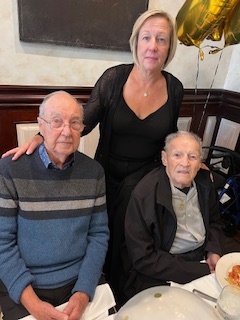
left to right, My Dad (blue shirt, 93), Me, My Uncle (90)

My father has always been a purpose driven man, getting his Bachelor and Masters Degree in his early 50s, while raising three children. He was a Police Officer in NYC and didn’t need to do that, but his drive pushed him to do so. My father always believed in education and building knowledge. When my mother was diagnosed with Alzheimer’s Dad’s sole purpose was to care for her. He did everything for her and treated her as if nothing had changed. When she was in a care center full time, his purpose was to be there every single day without fail and he was. See a post on his dedication here, The Notebook.

At my first session of a new six week learning program, the doctors were talking about longevity and brain health. It was stated that, research found people who had longevity, and were still cognitively sharp, engaged in common behaviors. Specifically, they engaged in physical exercise, ate more plant-centered diets and engaged their brains in complex tasks, leading a purpose driven life. When I heard that, I immediately thought of my father, who at 93 is cognitively sound.

My whole life I have taken after my father. I pray I have his longevity and cognitive health, for the women in my family have not been as lucky. My purpose, or why, is to avoid, or delay this fate. This purpose motivates me to learn, grow and move my body every day. I’ve learned that the risk of getting Alzheimer’s is not mainly driven by genetics. Approximately 3% of the total number of Alzheimer’s patients have specific genetic disease risks that cannot be avoided. Over 95% do not have that risk factor, meaning lifestyle and diet matter most in avoiding, or delaying onset of cognitive decline. (Sherazi, Dr.)

Diet and lifestyle matter, for what we do today and most importantly for our future. Here is what was shared regarding lifestyle choices for brain health and longevity.

Movement

We all should aim to move our bodies every single day for a minimum of 30 minutes. Brisk walking is highly recommended, as is tennis and racquet sports such as pickleball. The type of exercise we engage in matters. For brain health, it is recommended that we do the following:

  • Frequency – We need a regimented system of exercising, meaning organized and scheduled. Should be a minimum of 4-5 days per week for at least 30 minutes a day. Personally, I believe that brisk walks should be done daily for at least 30 minutes. The best time, in my opinion, is first thing in the morning to let the sunlight reset your circadian rhythm.
  • Strength – We lose muscle mass as we age. We need to engage in muscle-building routines, such as circuit machines, use of body weight or dumbells. We should work all the muscles in our body, but for brain health specific attention should be given to our legs. These large muscles keep us physically moving and are connected to vascular health.
  • Aerobic – We need to get our hearts pumping regularly as this increases blood flow through our bodies. Swimming, jogging or any other activity that increases your heart rate should be engaged in at least 3 times per week.
  • Consistency – This is a lifestyle, not a reach your target weight and stop. We are signing up to do this for life, as our life depends on it. I move every single day, as does my 93-year-old dad. When we stop moving, we start declining. Make a doable schedule and stick to it. I use my calendar and book it on there and I’m retired. If you are working, you will need to book this time for yourself and make it happen. For too many years, I skipped workouts. Those days are over.
  • **As with all recommendations it is imperative you speak to your health care provider about your specific abilities and limitations. Start slow and build up to these recommendations. I started with a slow walk around the block.

I’ve written many blogs on this topic if you’d like to read more, Move to Live, Healthy Lifestyle: Food, Exercise, and Joy in My Daily Routine

Lifestyle

  • Food – the research is clear that eating more plant based foods is good for our health. When my grandmother was alive, she advocated eating our fruits and vegetables, so this is not new. Processed foods need to be greatly reduced, better yet eliminated. Eat whole foods whenever possible. I eat whole food plant based and have been for six (6) months. I also do not eat any dairy products. I feel better than ever and will continue on this path. If giving up meat is not for you, you can greatly reduce your reliance on it as your main source of protein and increase your meatless days. Eat food that loves your brain, leafy greens and berries to name two. For more information on brain healthy food, see this https://www.health.harvard.edu/healthbeat/foods-linked-to-better-brainpower. Past blogs on my food choices – Change Our Thinking About Food, Eat to Live
  • Socialization – Far too many elderly people become isolated, due to various reasons. Ensure you have systems to keep you engaged with others built into your retirement plans. That is the main reason my husband and I moved when we retired. We loved our home, but knew the challenges to stay fully engaged and active would cause too much time alone at home. We had friends, but they were working still and to do anything, we would have had to constantly leave our area. We now have a full array of things to do right here in our community. Join a club, or senior center if you do not. Like my dad, who never wanted to join one, it gives him something to do each day and he’s around people. Isolation is not good for our brains.
  • Sleep -Quality sleep is one of the most critical aspects of our health. It is when our body rests, recharges and when our brain organizes and cleans out waste. Many people struggle to get fully restorative sleep, myself included. I am doing much better these days. I went into greater detail about getting quality sleep in the blog post – Sweet Dreams. I highly recommend you read it and work on your sleep, your life and brain health depend on it.
  • Stress – Stress almost killed me and it destroyed my health, no doubt about it. It takes a huge toll on us emotionally, physically and healthwise. We need to reduce our stress. Exercise, yoga, meditation and mindfulness all help. I wrote about these in great detail in these posts – Finding Myself, Just Breathe

Purpose

Some studies suggest that having a sense of purpose in life can be associated with increased longevity and a healthier life. A 2019 Harvard Health study found that people with a higher sense of purpose were less likely to die during a four-year study period, and less likely to die from heart, circulatory, or blood conditions. A 2022 study of older adults in the United States found that people with the strongest sense of purpose had a 15.2% lower risk of death, and that this association was stronger in women than men. 

I recommend your purpose be grounded in your why. Why do you want to be healthy? Why does this matter? Why do you get up each day? This will serve to motivate you to keep going when the going is tough. Believe me, my why keeps me focused and working toward my goal. It matters to me. Find what you are trying to achieve and ask why. Frame your decisions around that why.

I love learning and was an educator my whole career. I have been keeping my brain active in retirement, taking courses, along with completing my yoga certification. I am cooking in different ways now and needed to learn how to do that as well. All of the courses I’ve taken were connected to my why – to live a long, healthy, active life and keep my memories. I do not want to be a burden to my family, nor do I want them to watch me slip away, as my mother and grandmother did. I hope you will find your why and join me on this journey to reclaim your health.

I’d love to hear from you about your journey. Feel free to reach out to me via email at laurakump@reclaiminghealth.blog. You can find me on Instagram and Facebook as well, or just leave a comment below.

Sweet Dreams

“AMAZING BREAKTHROUGH! Scientists have discovered a revolutionary new treatment that makes you live longer. It enhances your memory and makes you more creative. It makes you look more attractive. It keeps you slim and lowers food cravings. It protects you from cancer and dementia. It wards off colds and the flu. It lowers your risk of heart attacks and stroke, not to mention diabetes. You’ll even feel happier, less depressed, and less anxious. Are you interested?”
― Matthew WalkerWhy We Sleep: The New Science of Sleep and Dreams

During my time as a school leader, I worked with many talented professional developers. One thing we always did was, “get our house in order” before making change. You can’t just add new initiatives without taking stock of what you already have in place. We call this cleaning our house to prepare for the work. The same premise holds true as we move through our health journey. Before adding new initiatives, we need to take stock of where we are at, and see what we already have in place. It can be less complicated to build upon what we have, or make simpler changes. Other times, we need to do a deep cleaning and just start over. In order to know which direction you need to go, you need to take stock of your current state of health.

Taking Stock

When taking stock of your health, I recommend you start with a complete physical from your health care provider. If you prefer, seek out a functional medical expert in your area and make an appointment. Sadly though, most of these practitioners don’t take medical insurance making it unaffordable for many of us. In any event, you want to have a full panel of bloodwork done to check in on your cholesterol, glucose, hormone and nutritional levels. This testing can give you a clear baseline and idea of your current state of health.

Another, critical measure of our health is our sleep patterns. Most of us are not aware of the importance of sleep to our well being, I know I wasn’t. Sleep is so foundational to our health, that a lack of sleep can wreak havoc on it. It’s not just about the amount of time we sleep we get each night, rather it’s about the quality of that sleep.

Matthew Walker, in his New York Times bestselling book, Why We Sleep:The New Science of Sleep and Dreams lays out clearly for us the true scope of the importance of sleep. He examines how sleep affects our physical and mental well-being, including how to prevent disease and slow the effects of aging, while increasing longevity. Further, he provides actionable steps that will help you sleep better every night.

In all honesty, nothing I have done in my eight (8) year journey to reclaim my health, has had more of an impact than improving my sleep.

How to Assess and Measure Sleep

They say, what get’s measured, gets improved and this applies to your sleep as well. Without some form of measurement, how would you truly know the quality of your sleep. I assessed and measured my sleep in two distinct and different ways.

  • Sleep Study – I went to a sleep doctor at the beginning of last year to have a sleep study conducted. You can have this done at the center, where you spend the night and they monitor your sleep. I chose to do the study in my home, in my own bed. The doctor provided me with a ring, that was worn on my finger throughout the night. The data went through my cellphone and the doctor then provided me with a report on the quality of my sleep.
  • Daily Monitoring – I wanted to continue monitoring my sleep on a regular basis to notice patterns in my sleep, specifically disruptions. This has helped me immensely, in that I can identify what impacts my sleep each night. Identifying these conditions can help me make changes to improve. I wear a Fitbit Versa 3 watch to monitor my daily activity and health. This watch provides me a comprehensive report on my sleep each night, along with monthly reports that identify trends. I have worn the watch for over 5 years and not had any issues with it. It has been one of the best purchases I made. If you want a smaller faced version of this watch, I recommend the Fitbit Charge 5. That will be what I purchase when it’s time to upgrade, but since mine is working well I’m keeping it.

What Keeps Us From Sleeping Well

Interrupted sleep, or lack of sleep, can be caused by many factors. For me personally, I was living with constant stress from my professional life, especially during and post COVID. This stress caused me to be unable to fall asleep and stay asleep. Each night, my mind wold be racing with worry over tasks to complete, or concerns over children and their families. I would lay awake each night and it would be common to find I sent an email, posted on Twitter, or Instagram at 3 AM. It was eye opening to see how many colleagues and friends were also awake to interact with at that time.

Each of us has a unique experience with sleep, including the cause for any sleep disturbances.

Impact on My Health

The inability to get a good night’s sleep for extended periods of time took a huge toll on my health. I was exhausted physically, mentally and emotionally. I started to get serious brain fog and began to wonder if I was showing early signs of dementia. It was frightening to me when I felt this confusion, especially given our family history of Alzheimer’s. I had great difficulty losing weight and my doctor told me point blank, if I didn’t get my sleep in order, I wasn’t going to see results. It was so frustrating to me and only caused more anxiety and worry for my brain to go over each night. I felt like I was on a merry go round ride and couldn’t get off.

Ways I’ve Improved My Sleep

  1. Daily Routine – Consistency in our rhythms and routines can foster predictability to our body. I have a specific bedtime each night, 10 PM, and stick to it whenever possible. I wake at the same time daily, generally around 5 AM these days.
  2. Sleep Routine – I turn off electronic devices, including phones, an hour before going to bed. I do not watch TV in bed and try not to watch news, or violent shows before going to bed.
  3. Food Routine – I eat my main meal of the day at lunchtime. My dinner is lighter and this helps me sleep better. I have a cup of Organic Chamomile Tea after dinner to begin winding down my body. Before I get into bed each night, I drink 4 ounces of Rootcology Magnesium supplement. This helps me relax and provides needed minerals to my body.
  4. Room Routine – My bedroom is kept cool, quiet and dark, with no nightlights. This is important, as being comfortable is a critical component of sleep. My phone is face down on my night table and set to Sleep Mode. If I wake at night to use the bathroom, I do not look at the phone to see what time it is. This only caused anxiety and lack of sleep in the past.
  5. Alcohol – This really needs its own blog post, but I will mention it here. I do not drink alcohol anymore. When tracking, it was clear as day that it impacted my sleep in a huge way. Yes, you may fall asleep easier, but you won’t sleep well. If I do have a drink, I won’t have it later in the day and I will have no more than one.
  6. Massage – I use Banyan Sleep Easy Oil every night and apply when I get into bed. I massage a small amount on my temples and the soles of both feet each night. You only need a very small amount of this oil and I put on when I get into bed to avoid getting it on my floor. Banyan makes very high quality Ayurvedic products that I personally use.

Matthew Walker’s book gives other specific ideas from which you can choose. These are the main areas I personally worked on this past year and I have seen strong improvement in the quality of my sleep and overall health. I have lost 60 pounds and my LDL cholesterol went down 30 points. I have made nutritional changes as well, but know from past experience, without sleep improvement I would not have had these results. I hope you consider reading the book and making some improvements to your sleep. It will be worth the investment!

If you have any questions, or want to discuss more ideas for better sleep, do not hesitate to reach out to me via email at, laurakump@reclaiminghealth.blog, on Instagram or in the comment section below.

*As an Amazon Associate, I may receive compensation on any links provided. This helps support the running of this website and I thank you for your support.

Growing Wings

“There is freedom waiting for you,

On the breezes of the sky,

And you ask “What if I fall?

Oh but my darling,

What if you fly?”

Erin Hanson

When I was teaching, I absolutely loved being in the classroom. I was first asked to be an Instructional Coach back in my early years of teaching and didn’t want to leave the classroom. My Principal at the time said to me that within my classroom, I would impact the lives of my students for the year they are with me, maybe beyond. If I stepped outside the classroom and worked with educators, I’d have impact on many more students through this work. In the end, I made the transition and loved it, going on to become a Principal a short time later.

My Principal was right in his advice, sometimes we have to step outside our comfort zone and share our knowledge and learning with others. It has been said, that the knowledge we gain, if not shared or used, is knowledge wasted. That’s one of the reasons I started this blog years ago, as both a source of strength for me on my journey and to engage with others on similar paths. It is through these connections that I both learn and share my learning.

Over the past year, I have engaged in the study of nutrition and wellness. I am now a Certified Wellness Coach. I am finishing up my 200 hour yoga teacher certification to become a Yoga Alliance Certified Yoga Teacher and taking an additional 20 hour course on Somatic Yoga for Therapy. Additionally, I am completing an 8 week deep dive into Whole Food Plant Based Nutrition. I know it sounds like a lot, but I have always been a certified knowledge junkie. I love to learn and would have chosen full time student as my best career! I am now beginning to think of ways I can share my learning with others. I’m developing plans to begin sharing my learning in a more systematic way.

What I believe I can offer to the conversation on health and wellness, is a deeply rooted understanding of what high stress, example, from executive level positions, can do to one’s health and wellness. I have lived through that journey and know that most corporations don’t offer plans, or take into account how to provide continuous systems to address wellness. Merely offering discounts on outside plans, or apps is truly not enough, as most people don’t take advantage of them. I am hesitant to dip my toes in the wellness water, as I feel the imposter syndrome voice raising her voice in my ear, but will push through those doubts.

I’d also like to work with women like me, who have tried many times to get this right and failed. I’ve lived that journey as well, starting over time and again. I have learned so much this past year, that I wish I knew during the past eight years of my health journey. Perhaps I would have had more success along the bumpy road. Perhaps, I was meant to fail over and over to push me to learn more and find my way. Perhaps I am right where I’m supposed to be. Many of you have reached out and shared your connections to my journey and that has fueled me forward. I’d love to get some groups going and will launch one in the coming months on my Instagram page. I will offer fully online groups, as well as in person for local people.

I’d like to deepen the sharing of my personal journey and use that as the vehicle to help others get started. Most of us are afraid to put ourselves out there and ask for help. We fear judgement from others who are in optimal shape and fear we are too far gone to be able to make this journey. I am living proof that it is never too late to try again. I am going to put together some specific content to help others get started on their path to reclaiming their health.

As you know, I am a small steps, big results person. I know full well that if it feels complicated, it likely won’t happen. In the coming months, I’ll be working on building some content and will be sharing information here and on my Instagram page. I hope you’ll take this journey with me in some form. I always learn from your journey and feedback. Even if just one person is helped by something I share, I will consider myself successful.

If you have any questions, feedback, or comments on any of my blogs, reach out to me via email at laurakump@reclaiminghealth.blog, on Instagram or in the comment section below.

Just Breathe

“Yoga is not about touching your toes. It is what you learn on the way down.” – Jigar Gor

John Hopkins Medicine released the following list of nine health benefits resulting from engaging in a yoga practice:

  • increased strength, balance and flexibility
  • helps with back pain
  • eases arthritis symptoms
  • benefits heart health
  • improved relaxation and sleep
  • increased energy and improved moods
  • manage stress
  • connection to supportive community
  • promotes better self-care

The health benefits of yoga are truly remarkable and include more than just the nine listed. In fact yoga, when practiced regularly, can improve many more aspects of your life. I have practiced yoga on and off for over thirteen years (13) and am still learning just how beneficial it is to me on my health journey.

Branches of Health Journey

I like to think of my health journey as containing three distinct branches:

  • Nutrition
  • Movement – including yoga practice
  • Connection to Nature – including attitude

Nutrition

Nutrition is the driving force to our health. I’ve discussed in past blogs how proper nutrition is critical to our body. For me, right now, I am in week six of my shift to Whole Food Plant Based eating and my gut health has improved. I have more energy and my sleep seems to have some bright spots. I never thought I’d be able to shift to this lifestyle, but I have and I believe it has made an improvement. I will follow up with lab work and a doctor visit in the coming weeks to check in and make adjustments as necessary. That said, I have also discussed that one lifestyle does not work for all bodies. You will need to find what works best for you, under the guidance of a health coach, nutritionist or doctor.

Connection to Nature

Connection to Nature is a critical component of my health journey and one I have also wrote about in past blogs. I believe our bodies and mental wellness are connected to the patterns and beauty of nature. I ensure I get a minimum of thirty (30) minutes each and every day outside in nature, irregardless of the weather. That said, I would not go outside and walk in a hurricane or any other extreme weather pattern. I would go outside in the rain and snow though and do quite often. There is calming of my mind to be found outside, especially on the wooded trails and at the beach. These walks have a meditative quality for me, settling and grounding me emotionally. I highly advocate you make this one of your health goals.

Movement

Movement is one of the secrets to longevity. Dr William Sears stresses that we must move our bodies to maintain our health. Of course, genetics, nutrition, overall health are to be considered, but we must move to stay healthy. Movement doest not need to be extreme exercise, something I’ve learned the hard way. Rather, we simply need to commit to move our bodies daily for a minimum of thirty (30) minutes. You can pair this goal with your connection to nature goal, as they both require a minimum of thirty (30) minutes daily.

Crafting a Health Plan for Movement

When I craft my health plan for movement, I include some weight training, daily walking, short run 1-2 times a week and pickleball. The key to my movement plan however, is my yoga practice. Whenever I move away from yoga, I notice a huge difference in my physical and emotional well being. Yoga is truly a mirror to our current state of health.

When we have certain health concerns we may be sent for an MRI or X-ray, which allows our doctor to see what is happening inside our body. Yoga, can allow us to see inside our selves. Whenever I step on my mat and begin a practice, I can notice my breathing patterns. I can also feel tightness in certain parts of my body. I think of this as noticing where I have blockage, or what is holding me back. As you learn and practice yoga more often, you will learn a lot about yourself. You learn how to quiet the endless chatter in your mind, through breath, which can help you reduce stress or anxiety. You will learn how to concentrate better and move through the places where you feel stuck. You will truly connect with your body and mind in ways you never experienced before.

Yoga

Yoga is transformational for your body in so many ways. I highly recommend when crafting your plans for movement you add it to your program. Yoga is for every body and there are many options for you to choose from. If you are physically limited right now, look for chair yoga options, or use the props provided, such as straps and blocks. Personally, I like Hatha classes and traditional Iyengar yoga classes. I have indulged in and enjoyed Baptiste Power yoga classes, though they are quite physical. The options are there for you to select from. I recommend starting with gentle classes to learn the proper alignment for poses and that you work with a highly qualified yoga instructor. When I first started, I had some private sessions with a yoga teacher who worked with me on my alignment. I am far from perfectly aligned in my practice, but that is why it is called a practice. The key is to be consistent and continue learning. I am currently at the next stage of my learning and adding Yoga Alliance Certified Yoga Teacher to my health resume. I learn by doing and by teaching. I look forward to sharing my practice with others in the future.

Dag Hammarskjold said, “The longest journey of any person is the journey inward.” I believe our journey to reclaim health should include the study of self in a yoga practice. It is my hope that you join me on the mat and begin that study, for I believe that is where many of the answers we are seeking are to be found.

Looking forward to hearing your comments about this week’s blog. Feel free to email me at laurakump@reclaiminghealth.blog , on Instagram or in the comment section below.

Things I’m Letting Go Of

 “Authenticity is the daily practice of letting go of who we think we’re supposed to be and embracing who we are.”

— Brené Brown

2023 was quite the year of change for me, not because I wasn’t good enough as I was, but because it was needed to thrive. Fate has a way of getting our attention sometimes and you just know it’s go time. My health was at what I’d describe as my lowest place and it was starting to manifest itself in scary ways. I felt like I was struggling to think clearly and the lack of sleep for months was starting to put my body in a dangerous health space. Having the option to retire, but not feeling it was the right time to do it, fate gave me the clear signal it was time. My husband became ill suddenly in late November 2022 and required surgery. With a 90% blockage in what is called the “widow maker” artery in his heart, I realized just how close we came to losing it all. These life events really make you stop in your tracks.

Realizing just how lucky we were to have gotten through this, I knew it was time to make some changes to my lifestyle choices. My husband was in far better health than I was, or so we thought, so I worried about what was happening inside my body. Following full medical checkups, I began again the journey to reclaim my health. Where in the past, it may have been easy to become derailed, this time I knew the actual stakes involved in making these necessary changes.

2024 will be the continuation of this journey as I continue to focus on learning and growing my knowledge base to improve my choices. I am continuing my focus on self growth and plan to take a deeper dive into my yoga practice starting this month. I am taking a yoga teacher training course to deepen my understanding of Hatha yoga. Self reflection will remain the cornerstone of my work when it comes to life choices and health. With that in mind as I begin 2024, I am reflecting on things I will be letting go and things I will grow. 

Things I Will Be Letting Go Of

  • Making assumptions - I have no way of knowing another’s motives, so I will not engage in trying to.
  • Negative self talk – I am breaking up with my inner critic.
  • Overthinking – I can’t analyze everything
  • Saying no too quickly
  • Alchohol – I never knew just how much it ages me
  • Doing too much – Overdoing just exhausts me and I don’t have to do it all
  • Fear of failure – I don’t have to be perfect all the time to succeed, especially as I try new things

Things I Will Grow

  • Relationships – Continue making new friends and deepen the relationships I have
  • Self Love – Continuing to be kinder to myself through self reflection and meditation walks
  • Saying Yes – Stepping outside the comfort zone and trying new things. Adding to the bucket list.
  • Boundaries – Being more conscious of creating healthy boundaries as I engage in my relationships.
  • Healthy Lifestyle – What can I learn and do to continue on this journey?

These are my thoughts as of today, January 2, 2024. I am sure there are more items I need to reflect on and will grow or revise this list as I go through the year. What can you let go of this year, what can you keep and grow? I’d love to hear about your journey, so feel free to reach out through email at laurakump@reclaiminghealth.blog or comments below. May you have a healthy and happy year of growth in 2024.